What is there to do in the Corralejo dune park?
According to the tourism portal spain.info, the Parque Natural de Dunas de Corralejo covers 2,668.7 hectares on the north-east coast of Fuerteventura. It runs from Playa Puerto Remedios in Corralejo to the Montaña Roja and belongs to the municipality of La Oliva.
Another source gives 2,482 hectares. Without an official figure, nobody can say which number is right.
The key rule also comes from spain.info: anyone entering the dunes stays on the marked paths. No confirmed information exists on fines for breaking it.
The park lies along the FV-104 between Puerto del Rosario and Corralejo. The FV-1 road crosses it.
Visitors walk, watch birds and take photos in the park. Wildlife includes seabirds, waders, reptiles and beetles.
Trips by bike, Segway or buggy are also on offer. Prices for these are not confirmed.
Inside the park, the Grandes Playas form a strip of white sand and clear water several kilometres long. The park itself is free to enter.
The tourist office is at Avenida Marítima 16 in Corralejo, according to spain.info. You can reach it on +34 928 866 235 and info@visitcorralejo.com, but opening hours are not confirmed.
The site spain.info does not give the year the park was protected. Other sources point to 1982, together with Isla de Lobos, and a separate classification in 1994, but the official text in the BOC (the Canary Islands’ official gazette) is unchecked.
What do you need to visit Isla de Lobos?
For Isla de Lobos you need two separate things: a permit and a ferry ticket. The Cabildo de Fuerteventura (island government) issues the permit free of charge.
The permit is personal, non-transferable and applied for online through the LobosPass website. According to travel portals, booking sites that charge for the permit itself are a warning sign.
Travel portals report 400 people a day, split into two shifts of 200 places, morning and afternoon, with four hours on the island. Some sources say 200 people at a time, and it is unclear whether that describes the same rule.
The sources also differ on lead time, saying three to five days before the visit. The wording of the Cabildo is what counts.
According to a ferry portal, two operators sail from Corralejo. Isla de Lobos offers up to 5 departures a day, taking about 15 minutes, and Naviera Nortour up to 3, taking about 20 minutes.
Nortour sails daily, says spain.info. The exceptions are 1 January, 6 January, 16 July, 25 December and days of bad weather.
The prices contradict each other. For the ferry-and-visit offer, spain.info quotes from 17 euros per person for four hours, with no year given.
The permit must be in hand beforehand or be included in the booking. A ferry portal quotes from 8.50 euros per ticket for the 2026 season.
It is unconfirmed whether that price is for a single or a return trip. Nor is it proven that these are different products.
According to notes on spain.info, the island has only one small restaurant, which is not always open. Visitors should bring water, food and sun protection.
The Faro de Martiño lighthouse on the Bocaina strait dates from 1865, according to Wikipedia, and La Caldera is the highest point at 127 metres. There is also the sheltered lagoon of Playa de la Concha and El Puertito, a former fishing hamlet with a small wooden jetty.
The paths are marked and easy. The island measures about 4.6 square kilometres.
Which hidden gems and sights are there around Corralejo?
According to hellocanaryislands.com, the hike to the Bayuyo volcano is about 4 kilometres long, takes around 1.5 hours and is of medium difficulty. It starts in Lajares or Corralejo, follows a marked path that is part of the GR-131 and costs nothing.
A lava flow formed the Malpaís (lava field) between Corralejo and Lajares. On the way, the views reach Calderón Hondo, Las Calderas and the Montaña Colorada, say Guía Repsol and hellocanaryislands.com.
Shade is scarce on a lava field, and there is no current information on weather or path condition. Current values and warnings are at CITA weather (cita.news/de/wetter.html) and AEMET (the state weather agency).
At 312 metres, the Montaña Roja marks the southern end of the dune park. The hiking portals komoot and visorando say it offers views of Isla de Lobos and the dunes.
The mountain is thus a counterpart to the beach stretches. It lies inside the park, where the marked paths apply.
The interior lies in La Oliva, not in Corralejo itself. The Casa de los Coroneles stands there at Calle Los Coroneles 28.
Reported opening hours are Tuesday to Saturday, 10:00 to 18:00, and general admission is 3 euros, free for under-12s, telephone 928 868 233. The year of this information is unknown, so visitors should check with the house.
Resellers offer boat trips from Corralejo from about 19 euros for adults and 12 euros for children. Sunset cruises start at around 65 euros, snorkelling trips at around 85 euros.
The offers give no year. These are intermediaries’ prices, not the operators’, so they are only a rough guide.
How did Corralejo come about?
Gadifer de la Salle landed in the area around 1402, during the conquest of Fuerteventura. In the 17th century the place served as a port for smuggling and piracy.
A permanent settlement came only in the 19th century, according to the historical sources. Corralejo arose between about 1810 and 1850, when fishermen bought land and built houses.
The first settlers came from Lanzarote, Galicia and Portugal. That explains why the town is still shaped by the harbour and the sea.
Tourism arrived in the 1970s, moved from the south of the island to the north and brought hotels, apartments and foreign residents, mainly British and Irish. In the early 1970s the English writer John Mercer wrote that Corralejo was becoming “a growing building site”.
What else should you check before visiting?
Several details are unconfirmed, and the list is longer than for the dunes. Still open are the current timetables and operator prices of the Lobos ferries for 2026, and the exact visitor cap.
The Cabildo de Fuerteventura and the operators can clarify this. On crowds, RTVC reported on 17 August 2025 that about 1,200 visitors a day come in August.
The management plan sets the cap at 400 visitors a day. According to the reports, the Cabildo is considering an eco-tax.
No fee has been approved, and no date is known. Anyone wanting to avoid queues and crowds should visit Lobos outside August and book a morning slot early.
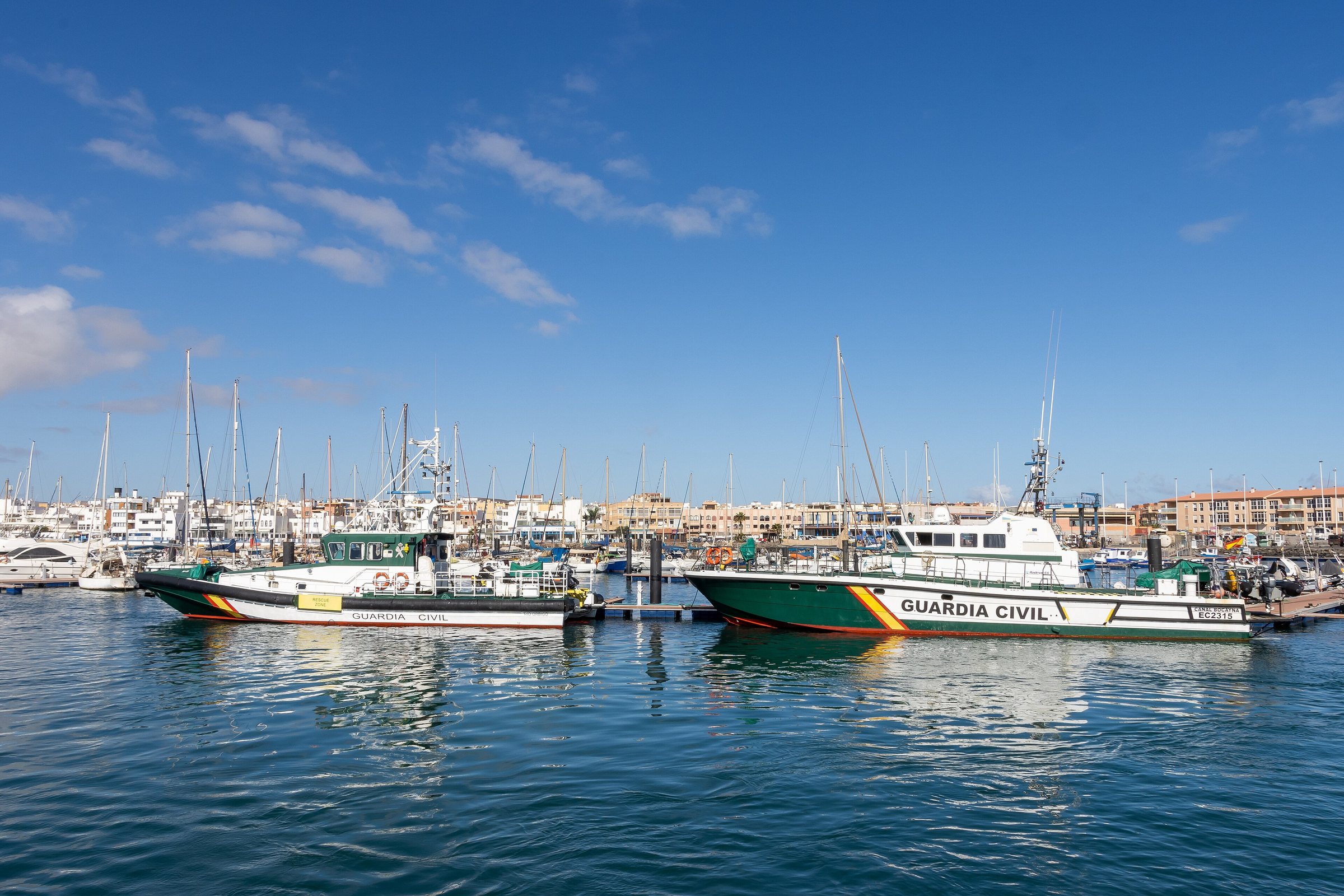
The dune park and the Grandes Playas need no permit. A ferry to Lanzarote also leaves from the same port.
Its timetables and prices are not confirmed. Also unconfirmed are museum opening hours and prices in Corralejo, market days in Corralejo or Lajares, and changes for 2026.
The rules for the dune park and Isla de Lobos may change. The Cabildo de Fuerteventura remains the authority for permits and any new fees.