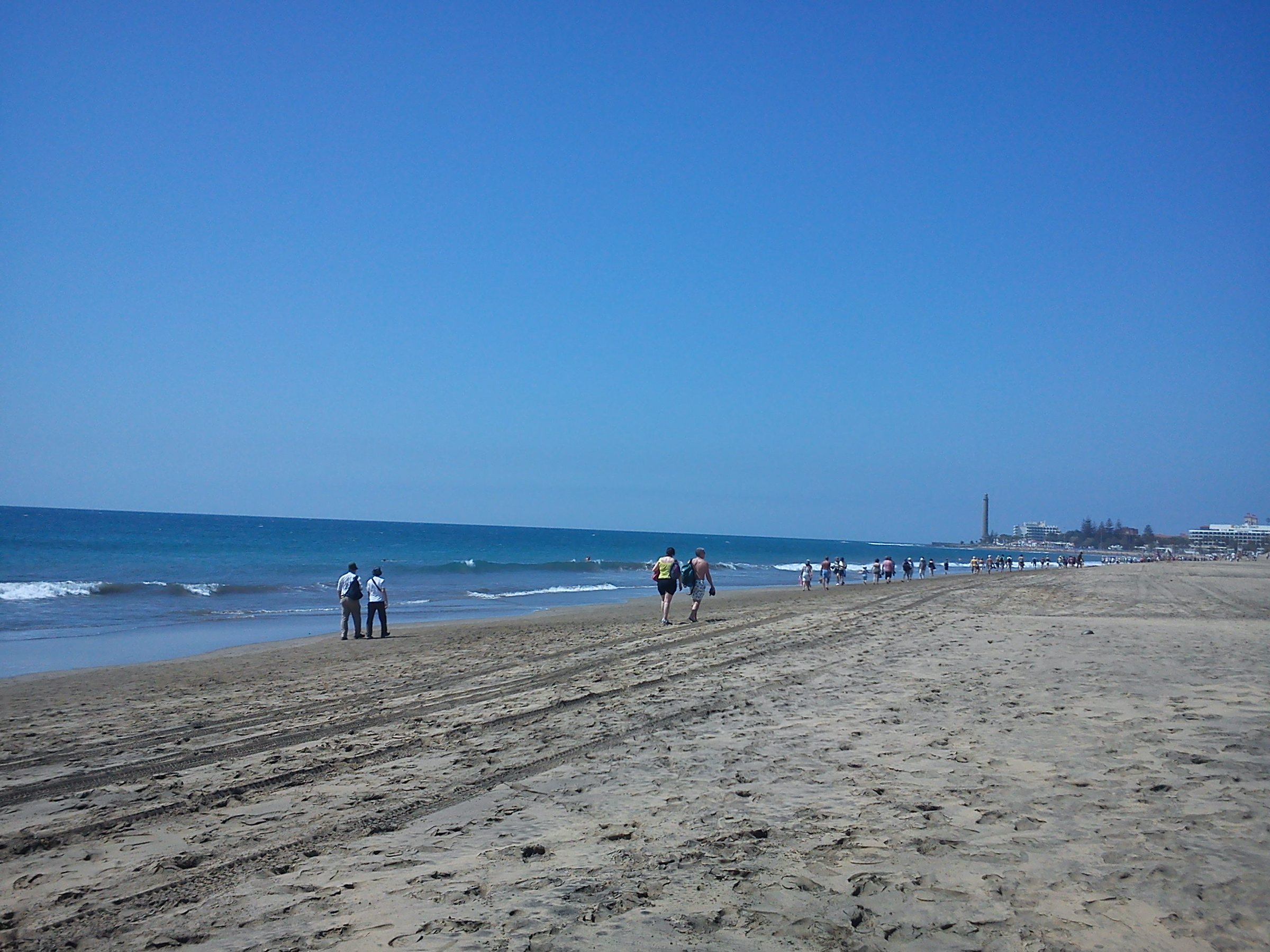
Which places does this page compare?
Updated 21 October 2026. Ten well-known LGBT beach and city destinations are compared: Gran Canaria (Maspalomas), Tenerife (Playa de las Américas), Sitges, Torremolinos, Ibiza, Mykonos, Barcelona, Lisbon, Brighton and Berlin.
The selection does not claim to name the ten largest or best destinations in Europe. It mixes classic beach resorts and big cities, and there is no ranking.
Four items stand side by side for each place: the country's score and rank in the ILGA-Europe Rainbow Map 2026, the year same-sex marriage became legal, the 2026 Pride dates and the annual hours of sunshine. Where no source exists, the profile reads “no sourced figure”.
Map and comparison of the ten destinations
The map shows the ten places, and a tap on a pin opens the key figures. Below it, a profile of each place lists all values with source links.
Gran Canaria (Maspalomas)
Spain · Focus of this page
Tenerife (Playa de las Américas)
Spain
Sitges
Spain
Torremolinos
Spain
Ibiza
Spain
Mykonos
Greece
Barcelona
Spain
Lisbon
Portugal
Brighton
United Kingdom
Berlin
Germany
No ranking: the order of the profiles is the editors' selection, not a rating. Every figure carries a source link.
Where does Gran Canaria stand in the comparison?
On the law, Gran Canaria stands level with Tenerife, Sitges, Torremolinos, Ibiza and Barcelona, because the Rainbow Map rates countries, not places. All six Spanish destinations in the comparison therefore carry the same score of 89%.
On sunshine, the comparison gives Gran Canaria 2,822 hours a year, calculated from the AEMET monthly values. Only the figure for Torremolinos is higher, at 2,905 hours from the Málaga airport station, and the stations and periods of the weather services are not identical.
On the calendar, Maspalomas stands out: Maspalomas Pride ran from 4 to 10 May 2026 and Winter Pride follows from 2 to 8 November 2026. The other documented dates in the comparison fall between late May and early August.
The comparison does not measure nightlife, range of venues, prices or travel. The gay map of the Canary Islands and the Gran Canaria guide lead on from here.
What is the legal situation?
The ILGA-Europe Rainbow Map 2026 rates 49 countries on 76 criteria and appeared on 12 May 2026, according to ILGA-Europe. The average score is 43% in Europe and 52% in the EU.
Spain leads the ranking for the first time with 89%, Germany is 7th with 70%, Greece 11th with 68% and Portugal 12th with 67%. The United Kingdom follows in 22nd place with 44%.
Same-sex marriage has been legal in Spain since 2005, in Portugal since 2010, in England and Wales since 2013 and in Germany since 2017. For Greece the comparison gives 2024, the year parliament passed the marriage equality law.
The Rainbow Map measures laws and policy frameworks, not safety at a particular place. That applies to all ten destinations alike.
Pride dates and sunshine hours at a glance
Pride 2026
All Pride dates except Winter Pride in Maspalomas were in the past on 21 October 2026. The 2026 dates are: Sitges: 10–14 June 2026; Ibiza: Gran Marcha 13 June 2026; Torremolinos: 26 May – 6 June 2026; march 6 June 2026; Lisbon: march 6 June 2026; Barcelona: march 18 July 2026; Brighton: Community Parade 1 August 2026; Arona on Tenerife: 22 June – 1 July 2026 (Arona Vive con Orgullo); Berlin: 25 July 2026.
There is no sourced figure for Mykonos. Maspalomas appears with Maspalomas Pride on 4 to 10 May and Winter Pride on 2 to 8 November.
Sunshine hours
The figures come from AEMET (1981–2010), IPMA (1971–2000), the Met Office (1991–2020) and DWD (1991–2020), so from different stations and periods. For Gran Canaria, Tenerife, Ibiza and Barcelona, AEMET publishes only monthly values, and the comparison shows their sum as a CITA calculation.
Brighton is represented by the Eastbourne station and Torremolinos by Málaga airport. CITA could not source a station value for Sitges or Mykonos.
How is this page kept up to date?
ILGA-Europe publishes the Rainbow Map every May, and CITA updates the legal scores afterwards. Pride dates are checked when organisers publish new details and at least once a year.
Cells without a source stay at “no sourced figure” until a source exists. Sunshine hours change only when a weather service publishes a new normal period.