How do I get to La Gomera?
La Gomera can be reached by plane and ferry. According to AEMET, La Gomera Airport only serves inter-island routes within the Canaries.
Scheduled flights connect La Gomera with Tenerife North and Gran Canaria. These connections are subject to a state Obligación de Servicio Público (OSP), a public service obligation to maintain scheduled services.
For arrival by sea, the ports of San Sebastián de La Gomera and Valle Gran Rey are particularly relevant. The ferry from Los Cristianos on Tenerife to San Sebastián de La Gomera takes about 50 to 60 minutes.
Anyone arriving from Europe normally has to fly via Tenerife or Gran Canaria. A practical alternative is to fly to Tenerife South and then take the ferry, as the port of Los Cristianos is close to Tenerife South Airport.
What should I sort out in the first few hours?
San Sebastián de La Gomera is the island's main arrival point and home to key administrative and everyday services. The official tourist office is located there and is open Monday to Friday from 8:00 to 15:00.
In the first 24 hours, newcomers should keep their accommodation details, rental contract and identity documents to hand. They should also work out the route to the supermarket, pharmacy, health centre and bus stop.
If your accommodation is remote, check in advance whether you need a hire car or a bus connection. For hikes, keep offline maps and the emergency number ready.
How do I get around the island?
The planned inter-island ferry service is intended to connect San Sebastián, Playa de Santiago and Valle Gran Rey and shorten journeys between these places.
For 2026, improvements to the road between Paredes, Alajeró and the airport were also being pushed forward. The project covers the CV-11 and CV-13 roads.
Because the works were carried out in sections, roadworks, diversions and delays may occur. Allow extra time for airport transfers.
Buses connect the main towns, but timetables and frequencies are more limited than on the larger islands. For remote accommodation, a hire car or taxi is often necessary.
What weather can I expect on arrival?
For reliable climate data, the AEMET station at La Gomera Airport is the official reference source. AEMET publishes monthly averages there for temperature, precipitation, days with precipitation, cloud cover and sunshine indicators.
AEMET climate normals are monthly averages and not a forecast for individual days.
For arrival, light clothing is advisable, plus an extra layer for windy or higher-altitude areas. Sturdy shoes are useful if you plan a walk on your first day.
Sun protection is advisable regardless of the season. A rain jacket should be packed for the north, the central highlands and changeable weather.
What fees and residency rules apply?
For 2026, a combined subsidy applied to inter-island ship journeys within the Canaries for Canarian residents. A subsidy was also mentioned for island journeys on La Gomera.
The subsidy applies to residents and should not be equated with a general discount for visitors or people newly moving to the island. Requirements, procedure and eligible routes must be checked with the ferry company or the relevant Canarian authority before purchase.
For a move, the general Spanish and Canarian rules apply. EU/EEA citizens typically need to register as residents for a longer stay; non-EU citizens need the appropriate residence status.
Registering with the municipality, the empadronamiento (entry on the municipal register), is practically required for many administrative services. Anyone working, starting a business or living permanently should clarify tax, social security and health matters in advance.
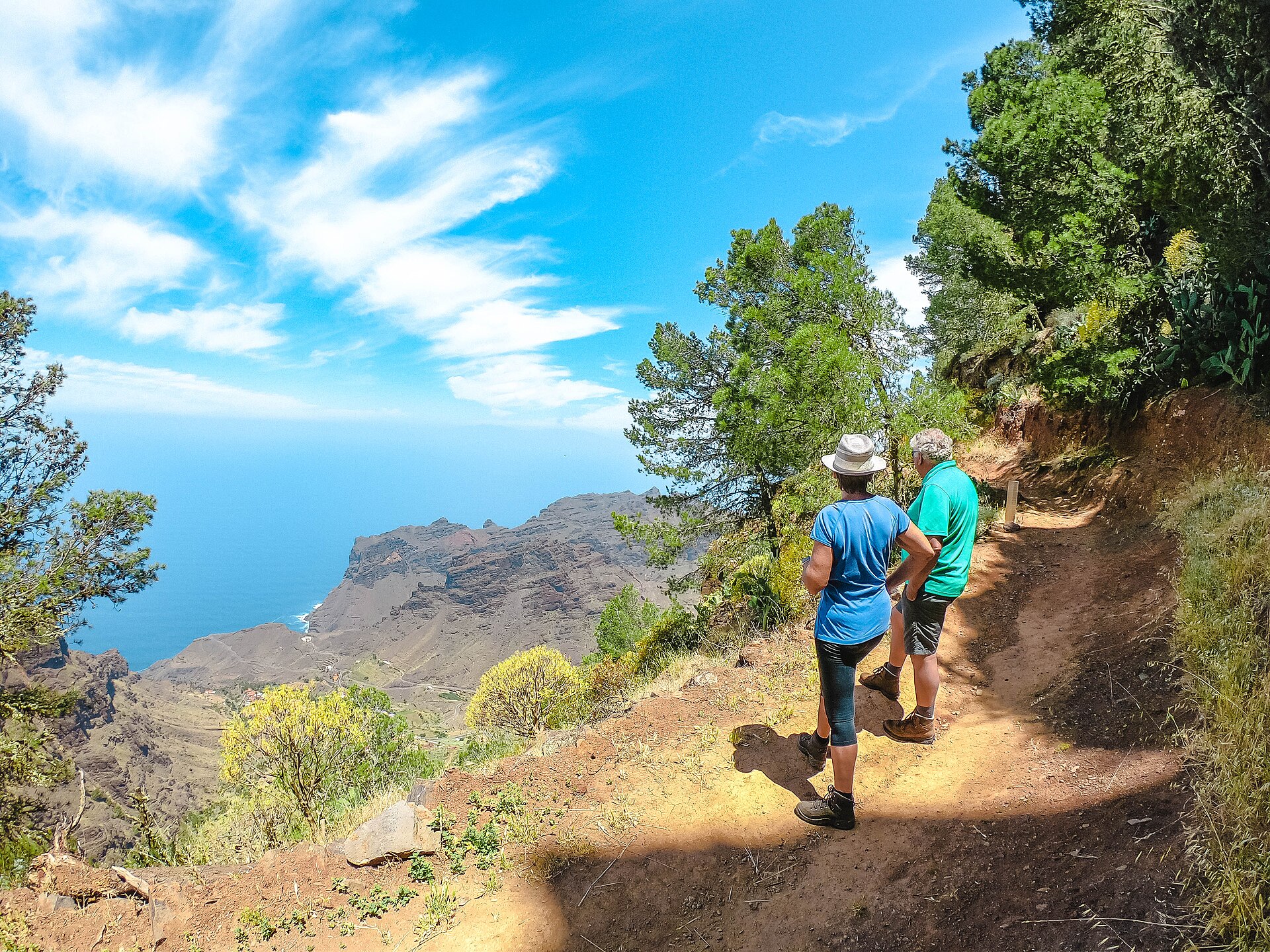
What should I bear in mind when hiking and in protected natural areas?
For hikes, use only authorised paths and observe local closures. Especially in ravines, on cliffs and in the national park, weather, rockfall, fog and lack of mobile coverage can affect safety.
Before every outing: check the weather and trail status, tell someone your route, return time and emergency contact, and take enough water. In heat, strong wind or fog, avoid exposed routes.
Garajonay National Park protects the largest continuous laurel forest in the Canaries and is a UNESCO World Heritage Site. In addition, a large part of the island is recognised as a biosphere reserve.
Binding rules for Garajonay National Park, protected areas, fire, drones and camping must be checked with the relevant protected area authority or the Cabildo (island government). The available sources did not contain complete, current rule texts on these matters.