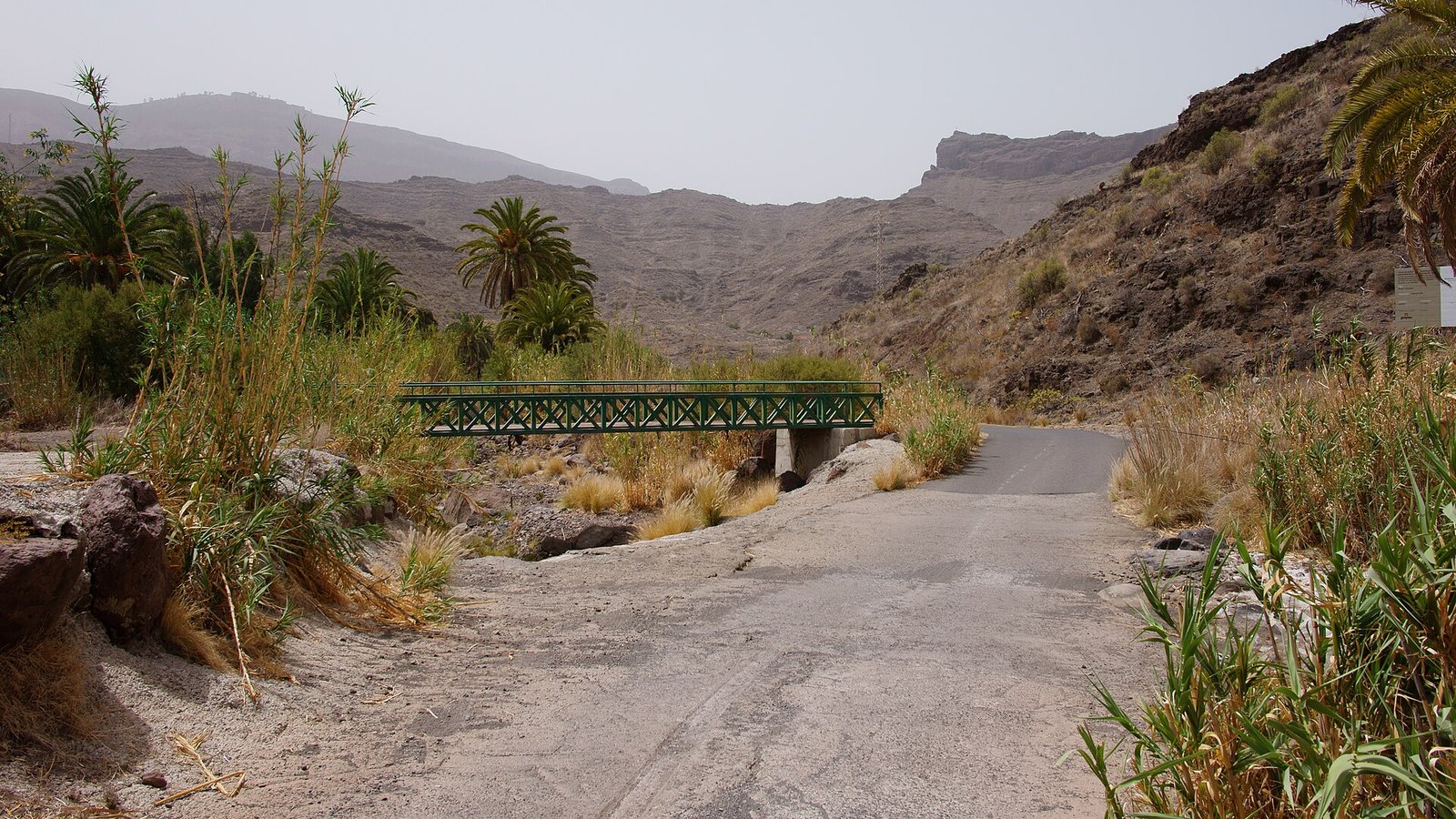
There is a certain magic in knowing a place has fought to stay exactly as it is. Playa de Veneguera, tucked away at the end of a deep ravine in Mogán, is not just a beach. It is a symbol. For decades, this stretch of dark sand and smooth pebbles was at the centre of one of Gran Canaria’s most famous environmental battles. The slogan “Salvar Veneguera” still echoes in local memory, a reminder that this wild coastline was nearly lost to development. Today, thanks to its inclusion in the Parque Rural del Nublo, it remains gloriously undeveloped – no sunbeds, no beach bars, no buildings at all. The recent reopening of the public access track means you can once again make the journey down the barranco to experience this raw corner of the island. But this is not your typical beach day. It demands preparation, respect, and a sense of adventure.
The closure of the access track earlier this year was a temporary hiccup, most likely linked to the challenging nature of the route itself. The final stretch into the barranco is a rough dirt track, vulnerable to erosion and damage. While the exact cause of the July 2026 closure is not publicly detailed, the reopening signals that the track is once again considered passable. This cycle of access and restriction is part of life in a protected natural space, where the balance between public enjoyment and conservation is constantly managed. For those willing to make the effort, the reward is a beach that feels genuinely wild, a rarity on an island known for its bustling coastal resorts.
The Road Down: What to Expect on the Track
Let’s be clear from the start: the drive to Playa de Veneguera is an adventure in itself. You leave the main GC-200 road and descend into the Barranco de Veneguera on an unpaved track that winds for roughly 8 to 10 kilometres. This is not a graded gravel road; it is a single-vehicle track with occasional passing places, uneven surfaces, and sections that can be steep and rocky. Local guides consistently describe it as tricky, and the consensus is that a high-clearance vehicle or a 4x4 is strongly advisable. Some visitors have managed the route in a normal car during very dry conditions, but it requires extreme care and a willingness to accept the risk of scraping the undercarriage. If you have any doubt about your vehicle, the smartest choice is to park before the roughest section begins and continue on foot.
The drive itself is slow and immersive. The barranco walls rise around you, dotted with palm groves and typical Canarian flora. You will likely encounter few other vehicles, which is part of the appeal but also means help is not close at hand. There is a parking area near the shore, a simple unpaved space facing the sea that can accommodate roughly 50 vehicles. On busy weekends or holidays, it can fill up, so an early start is wise. If you choose to walk the final stretch, expect a hike of about 40 minutes from the end of the paved road. The walk is beautiful but exposed, so carry plenty of water and wear sturdy shoes. This is not a flip-flop kind of place.
A Wild Beach with a Story
Playa de Veneguera is what a Canarian beach looks like when left entirely to nature. The sand is a mix of dark volcanic grains, grey-black in colour, interspersed with pebbles and rounded stones known locally as callaos. The waters are generally calm to moderate, though there is no lifeguard surveillance, so swimming is at your own risk. The beach is long and wide enough to feel spacious, but the real luxury here is the silence. You will hear the waves, the wind, and perhaps the distant call of a bird of prey circling above the ravine. There are no buildings, no sunbeds, no umbrellas, and no kiosks. You bring everything you need, and you take everything back with you.
This pristine state is no accident. In the late 20th century, Veneguera became a flashpoint for environmental activism in the Canary Islands. Plans for large-scale tourism development threatened to transform the barranco into a resort zone, sparking a powerful grassroots campaign under the banner “Salvar Veneguera.” The movement succeeded, and the area was eventually declared a protected natural space, incorporated into the Parque Rural del Nublo in 2003. That protection is the reason you will not find a concrete promenade or a row of sunbeds here. It is a living monument to the idea that some places are worth more in their natural state. Visiting Veneguera is, in a small way, participating in that legacy of conservation.
How to Prepare for a Visit
A trip to Veneguera is closer to a nature excursion than a conventional beach day. Because there are absolutely no services – no toilets, no drinking water, no restaurant, no shade structures – you need to be self-sufficient. Pack at least two litres of water per person, more if you plan to walk any significant distance. Bring food that can handle the heat, and a hat or a beach umbrella for shade, as the sun can be relentless. Sturdy footwear is essential, not just for the track but also for navigating the pebbly shoreline. A charged mobile phone is a sensible precaution, but do not count on having reliable signal in the depths of the barranco.
The beach is remote, and that is precisely its charm, but it also means you should let someone know your plans before you go. Check the weather forecast and avoid the track if rain is expected, as the unpaved surface can become dangerously slippery. The drive back up the ravine can be more challenging than the descent, especially if you are in a vehicle without four-wheel drive. Take your time, use low gears, and be prepared to reverse into a passing place if you meet another vehicle. The effort is part of the experience, and the sense of arrival – stepping onto that dark sand with the vast Atlantic before you – makes it all worthwhile.
Responsible Enjoyment in a Protected Area
When you visit a place like Veneguera, you are a guest in a fragile ecosystem. The barranco and its beach are part of a protected natural park, and their continued preservation depends on the behaviour of every visitor. The rule is simple: leave no trace. Take all your rubbish back with you, including organic waste like fruit peels, which can disrupt local wildlife. Avoid disturbing the dunes and the shoreline vegetation, which play a crucial role in stabilising the sand and providing habitat. Keep to established paths and the main track to minimise erosion. If you see others leaving litter or damaging the environment, a friendly word can go a long way.
Respect also extends to the driving experience. The track is narrow and shared with occasional hikers and cyclists. Drive slowly, give way to pedestrians, and avoid revving your engine unnecessarily. The peace of the barranco is one of its greatest gifts, and the rumble of a vehicle carries far in the ravine. If you are unsure about your driving skills on rough terrain, consider parking earlier and walking. The beach will feel even more rewarding after the journey on foot. Veneguera is not about convenience; it is about connection – to nature, to the island’s history, and to the simple pleasure of a wild shore.
Common questions
- Is Playa de Veneguera suitable for children?
- It can be, but only for families comfortable with remote, facility-free environments. Bring shade, water, and sturdy shoes, and supervise children closely near the water, as there is no lifeguard.
- Can I reach the beach by public transport?
- No, there is no public transport to the beach itself. You will need a car to reach the start of the track, and then either drive or walk the remaining unpaved section.
- Is it safe to swim at Playa de Veneguera?
- The waters are generally calm to moderate, but there is no lifeguard surveillance. Swim with caution, never alone, and be aware of changing sea conditions.
- Are dogs allowed on the beach?
- As a protected natural area, restrictions may apply. It is best to check the latest local regulations for the Parque Rural del Nublo before bringing a dog.
- What is the best time of year to visit?
- Spring and autumn offer the most comfortable temperatures for the drive and the beach. Summer can be very hot in the barranco, while winter may bring occasional rain that makes the track impassable.
Read on
- Playa del Inglés: the big Gran Canaria beach guideGran Canaria · 4 October
- Beach Office Canary Islands: A Realistic Guide for Digital NomadsGran Canaria · 30 July
- Tenerife: Playa de las Teresitas beach guideTenerife · 4 October
- Gran Canaria volcano: last eruption 2,000 years agoGran Canaria · 29 October
- Vecindario: San Rafael ends 1 November with Shaila DúrcalGran Canaria · 28 October
- All events on Gran Canaria →
Stand 31 July 2026. Access conditions can change quickly depending on weather and track maintenance. Always check local advice before setting out.