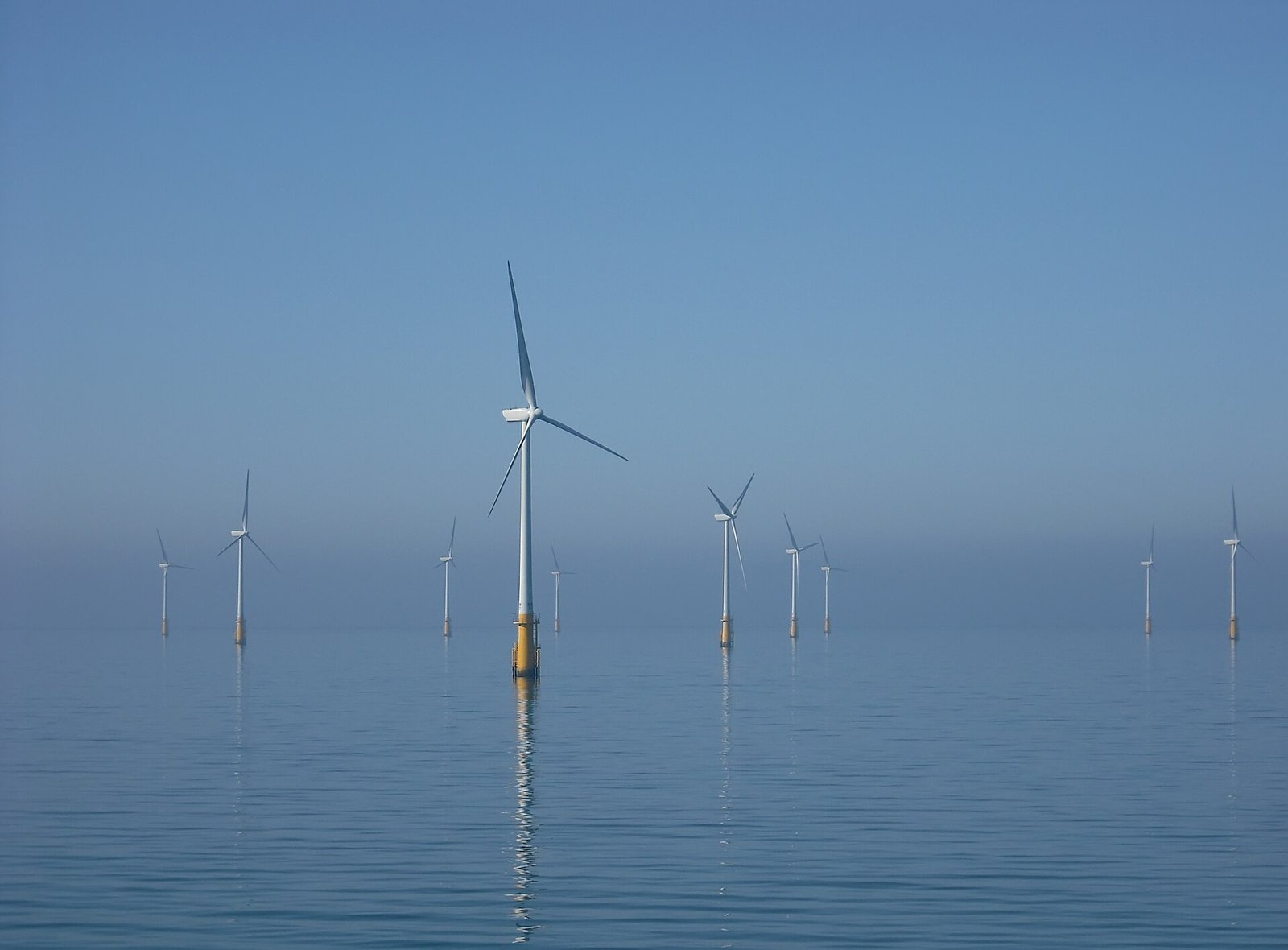
Tenerife is writing a new chapter in its technological story. The Oceanic Platform of the Canary Islands, better known as PLOCAN, has officially landed in the Parque Científico y Tecnológico de Tenerife. The move is more than a simple office opening; it represents a strategic bet to weave artificial intelligence, advanced robotics, and marine observation deep into the fabric of the island's economy. For a destination famous for sun and volcanic landscapes, this is a quiet but profound shift towards a knowledge-driven future.
PLOCAN is not a startup. It is a solid public consortium co-financed by the Spanish Government and the Canary Islands Government. For years, its main test site off the coast of Telde, Gran Canaria, has served as a real-world playground for offshore and marine technologies, complete with a 23 km² test area and submarine power and communications cables. Now, by planting its flag at Barranco Grande, the platform is tapping directly into Tenerife's growing research and development ecosystem, aiming to spark new collaborations and attract fresh talent to the island.
A €6.3 Million Project Package with a Clear Focus
The new Tenerife hub is not starting empty-handed. PLOCAN has already anchored three significant international projects on the island, with a combined budget of around €6.3 million. These initiatives offer a concrete glimpse into what the blue economy actually looks like in practice, moving the concept from abstract policy papers into the water and onto computer screens.
One of the standout projects is Atlantic Whale Deal, which tackles a very real and tragic problem in the waters around the archipelago: collisions between ships and whales. The project develops and tests systems to prevent these accidents, protecting marine life in one of the world's most important cetacean corridors. Another initiative, Oceansentinel, deploys high-resolution coastal cameras paired with AI algorithms to monitor marine life in real time. Imagine a smart, automated lookout that never blinks, constantly scanning the surface to understand animal movements and alert vessels. The third project, UPWELLING, focuses on fostering international cooperation to strengthen the Atlantic blue economy, positioning the Canary Islands as a central node in a growing network of marine innovation.
Why the Canary Islands Are a "Natural Laboratory"
The decision to expand in Tenerife is not just about office space. It is a recognition of the archipelago's unique geographical and political position. The Canary Islands are increasingly promoted as a "natural laboratory" for marine and maritime research. The deep Atlantic waters, consistent trade winds, and year-round mild climate create conditions that are hard to replicate elsewhere. For companies and researchers testing offshore wind prototypes, underwater robotics, or new sensor arrays, this is as real as it gets without being in the middle of a storm in the North Sea.
PLOCAN's Gran Canaria test site already provides open-sea experimentation with a level of infrastructure that is rare globally. The expansion to Tenerife adds a new dimension: proximity to a dense network of tech companies, university departments, and research centers housed in the science park. The goal is to shorten the path from a bright idea in a lab to a working prototype in the ocean, and eventually to a commercial product that creates qualified local jobs. This is the core of the regional strategy: productive diversification beyond tourism, building resilience through knowledge and technology.
Connecting the Dots: Submarine Cables and Digital Growth
The blue economy is not just about what happens in the water; it is also about the digital infrastructure that connects the islands to the world. Tenerife's tech ambitions are being quietly supported by a new generation of submarine cable projects. A €34 million system is set to link Gran Canaria, Lanzarote, and Fuerteventura, massively boosting data capacity. Meanwhile, the EU-backed CANARY-SUBCAB study is exploring the feasibility of additional cables to further integrate the archipelago into global data flows.
For a platform like PLOCAN, which deals with vast amounts of oceanographic data, AI model training, and real-time sensor networks, this connectivity is not a luxury; it is a necessity. The combination of a unique physical testing environment and world-class digital links creates a compelling package. It allows researchers on a dock in Tenerife to collaborate seamlessly with partners in mainland Europe, Africa, or the Americas, processing data from underwater gliders in near real time. This digital backbone is a silent but critical enabler of the entire blue economy vision.
From Research to Real Jobs: The Economic Promise
The ultimate test for any public research infrastructure is whether it translates into tangible benefits for the local community. The push behind PLOCAN's Tenerife expansion is explicitly tied to the promise of qualified jobs and new economic activity. The focus areas—artificial intelligence, robotics, marine renewable energies, digital maritime operations—are not niche academic pursuits. They are sectors with massive global growth potential, and the Canary Islands are positioning themselves to capture a slice of that market.
The strategy involves a tight-knit collaboration between administrations, universities, companies, and research centers. By co-locating in the science park, PLOCAN aims to create a gravitational pull, attracting more teams and companies to set up shop nearby. The idea is to build a cluster effect, where knowledge spills over naturally between different actors, sparking innovation that no single entity could achieve alone. For a young engineer or data scientist from the islands, this means the possibility of building a high-tech career without having to leave home. That, perhaps more than any single project, is the real measure of success for this blue economy drive.
Common Questions
- What exactly is PLOCAN?
- It is a public marine science and technology infrastructure, managed as a consortium between the Spanish and Canary Islands governments, with a major offshore test site near Gran Canaria.
- Where are the new PLOCAN offices in Tenerife?
- They are located in the Parque Científico y Tecnológico de Tenerife in the Barranco Grande area.
- What kind of projects will be run from Tenerife?
- The initial focus is on three international projects covering whale-ship collision prevention, AI-powered marine life monitoring, and Atlantic blue economy cooperation.
- Is this only about research, or will it create jobs?
- The explicit goal is to convert knowledge into innovation and economic activity, creating qualified local jobs in marine and tech sectors.
- Why are the Canary Islands good for marine tech?
- The archipelago is considered a "natural laboratory" with ideal year-round conditions, deep waters, and existing test infrastructure like PLOCAN's offshore site.
Read on
- Tenerife Bets on Quality Tourism and a More Diverse EconomyTenerife · 26 July
- Gáldar Gets a High-Tech Boost: Inside the New ITC LaboratoryGran Canaria · 14 July
- Tenerife: Police seek more victims after Añaza DNA arrestTenerife · 24 October
- Icod de los Vinos: 12 new self-guided routesTenerife · 24 October
- Tenerife Peñón Fest: Loquillo and Amaia on 23–24 OctTenerife · 24 October
- All events on Tenerife →
Stand: 25 July 2026. This article is based on verified public reports and official PLOCAN information. All figures are grounded in the referenced sources.