Funding: 45% companies/foundations, 30% the Church, 20% public bodies, 5% small donations
Public money in the Canaries: 2 million euros from the regional government + 0.5 million each from the Gran Canaria and Tenerife island councils = 3 million euros
Not in the budget: security, road closures, venues, transport of the popemobiles (in-kind contributions)
The "return" of 150 million euros: an advance estimate by the organisers for ALL of Spain — not a measured result
Sources: Spanish Bishops' Conference (CEE), Canarias7, eldiario.es, Infobae, COPE
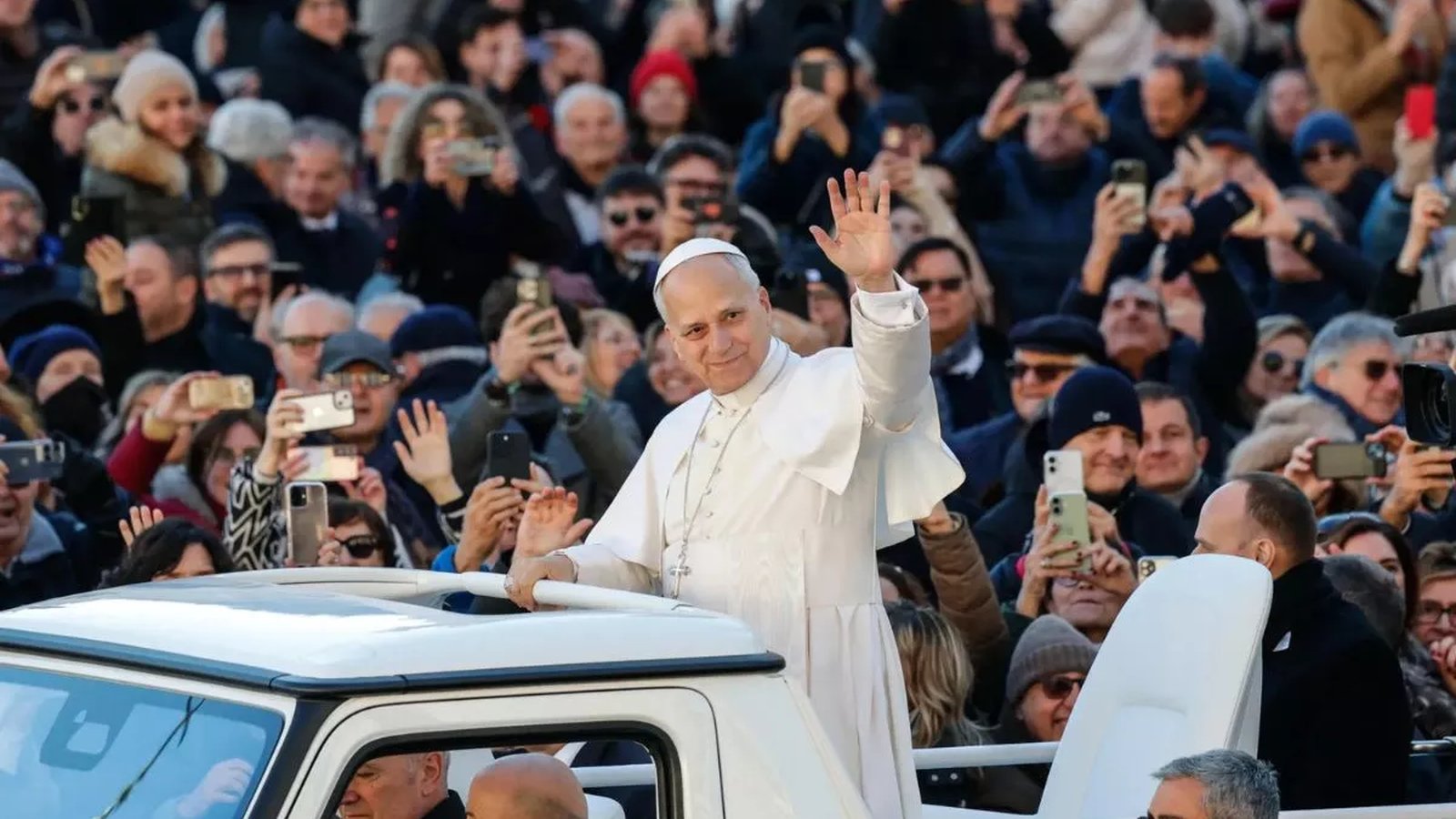
The headline that circulated after the visit is temptingly simple: the Pope had delivered the Canaries a 500 percent return — 25 million euros invested, 150 million euros earned. The problem: these two figures do not belong together at all. Setting them side by side compares apples with oranges.
First: the 25 million is not the Canarian cost
The figure of around 25 million euros is given by the Spanish Bishops' Conference (CEE) as the cost of the Pope's entire trip to Spain — that is, for all four stops in Madrid, Barcelona, Gran Canaria and Tenerife combined. Most of it naturally fell on the large mainland events. Only a fraction of that sum is attributable to the Canaries.
The budget is funded 45 percent by companies and foundations, 30 percent by the Church itself, 20 percent by public bodies and 5 percent from small donations. In the Canaries, the regional government contributed 2 million euros — one million each to the dioceses of Canarias and Nivariense — plus 500,000 euros each from the island councils of Gran Canaria and Tenerife. That makes 3 million euros of public money for the Canarian leg. Importantly: the security operation, road closures, venues provided and the transport of the popemobiles are expressly not included in the 25 million — so the real burden on the public purse is higher.
Second: the 150 million is an estimate — and a national one
The second figure rests on shaky ground too. The 150 million euros in "returns" is a projection by the organisers, made before the visit, and it refers to all of Spain, not the Canaries. It is not a measured result but a forecast based on previous visits — Benedict XVI's 2011 visit was later put at around 240 million euros.
Just how uncertain the ground is can be seen in the Canarian coverage itself: one newspaper published two different versions on the same day — first a "200 percent ROI" with more than 60 million euros for the islands, and a few hours later a "500 percent ROI" with 150 million for the Canaries and Spain. Two contradictory headlines are the clearest sign that what is being juggled here are figures no one can pin down with any rigour.
Third: why the ROI calculation does not add up
The real flaw lies in the linkage. Anyone who pits "25 million in costs" against "150 million in returns" and derives a 500 percent return from it is setting a national cost figure against a national estimate — and then selling the result as a Canarian success. Only one of two approaches would be sound: either national against national, or Canarian against Canarian. Mixing the two yields an impressive percentage but no reliable statement.
That an event of this scale benefited the island economy is beyond doubt: full hotels, busy restaurants, tens of thousands of pilgrims, plus the "shop-window effect" of worldwide coverage. But that benefit simply cannot be squeezed into a snappy return figure. Official Canary-specific final accounts were not available at the time the headlines were circulating; the Church announced it would present the definitive balance only after the trip had concluded.
Frequently asked questions
- How much did the Pope's visit cost the Canaries?
- In direct public money, 3 million euros (2 million from the regional government, 0.5 million from each of the two island councils). The widely cited 25 million is the total cost of the entire Spanish trip, not the Canarian share.
- Is the 150 million euros in returns accurate?
- It is an advance estimate by the organisers for all of Spain, not a measured Canarian result. Reliable final figures for the islands were not initially available.
- Where does the "500 percent return" figure come from?
- It arises when the national 25 million cost is set against the national 150 million estimate — and the result is wrongly presented as a Canarian success.
- Did the visit benefit the island economy?
- Very probably yes — full hotels, streams of pilgrims, international attention. But the effect cannot seriously be captured in a single return figure.
- What is not included in the 25 million budget?
- In-kind contributions by public bodies such as security forces, road closures, venues provided and the transport of the popemobiles.
Read on
- A compass, a golf cart and a dead man's last wish: the small stories behind the papal visitCanary Islands · 11 June
- Canary Islands 1 November: fiestas, fado and finalesCanary Islands · 1 November
- Canaries to Dakar: Binter direct flight, entry rules, DSSCanary Islands · 30 October
- Canary Islands 16–18 October: fiestas, concerts, partiesCanary Islands · 16 October
- Canaries: 211,400 homes empty as new rental scheme opensCanary Islands · 28 October
- All events on the Canary Islands →
As of 15/06/2026. Sources include the Spanish Bishops' Conference (CEE) / Fernando Giménez Barriocanal, Canarias7, eldiario.es, Infobae and COPE. The return figure of 150 million euros is an advance estimate by the organisers for all of Spain and not a measured Canarian result. ROI claims from opinion-led sources have not been adopted.