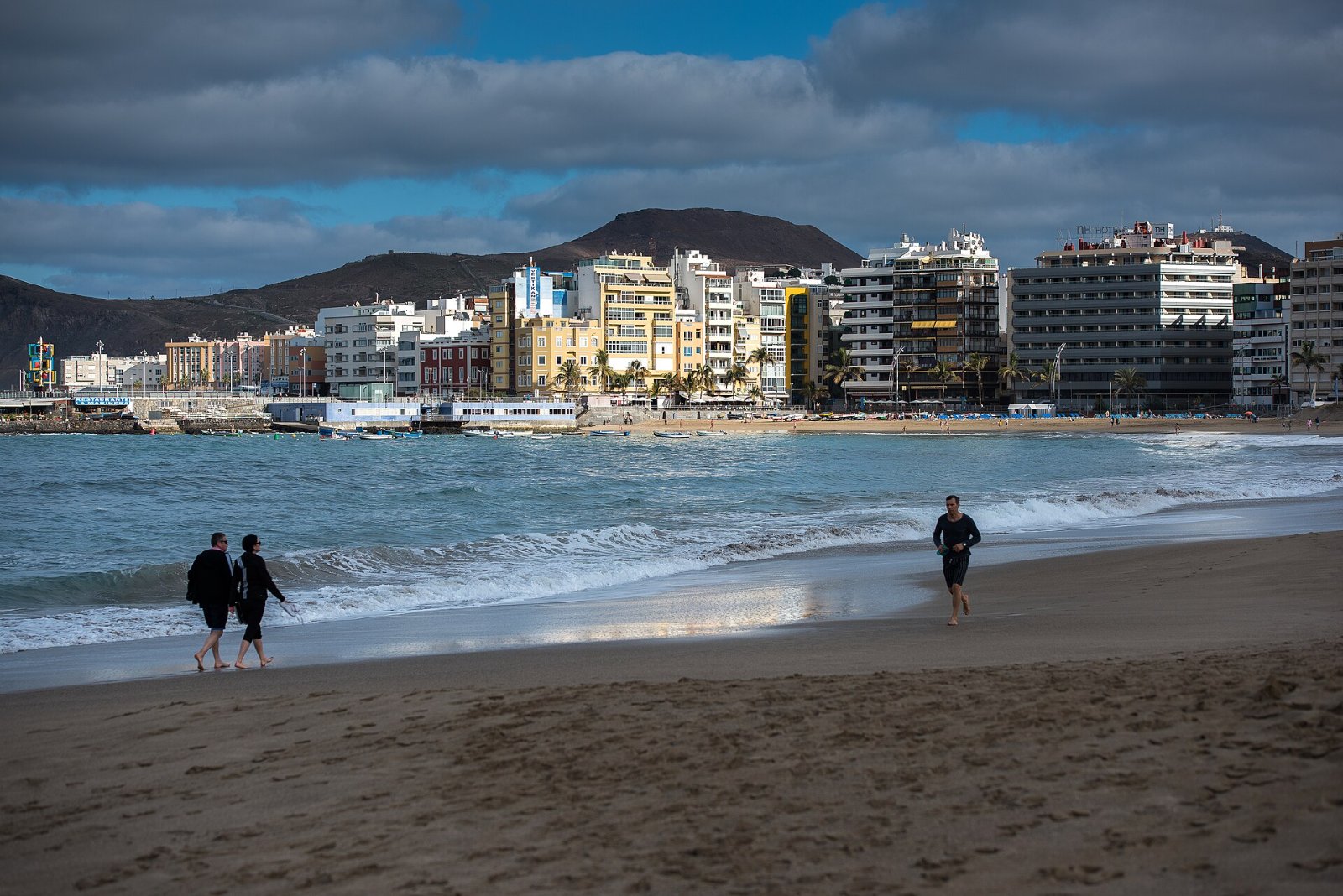
The Canary Islands have long been one of Europe's favourite bases for digital nomads. Las Palmas de Gran Canaria turns up year after year in the rankings of the best remote-work cities — and for good reason: a mild climate all year round, the same time zone as mainland Spain and Portugal, fast internet and a growing coworking scene right by the sea.
But anyone wanting to stay longer than three months needs more than a tourist visa. That is where the digital nomad visa comes in, which Spain has offered since 2023. It makes working remotely for foreign clients legal — and opens the door to a longer life on the islands.
Who qualifies
The visa is for non-EU citizens who work remotely. There are two routes: as an employee of a company outside Spain (the job should be at least three months old, the company more than a year) or as a freelancer. Freelancers may have Spanish clients too, but only up to 20% of their income from them.
You also need to show your qualifications: a university degree or at least three years of professional experience in the field.
How much you need to earn
The minimum income is around €2,850 a month, that is 200% of the Spanish minimum wage. Bringing family means proving more: about €1,070 extra for a partner and around €360 a month for each additional member. You prove it with contracts, invoices and bank statements.
How to apply
You have two options: apply at the Spanish consulate in your home country — you then get one year to start — or apply directly in Spain at the relevant office (the UGE) while you are in the country as a tourist. The route through Spain gives you a residence card for up to three years straight away. You will need a passport, an employment contract or proof of assignments, a criminal record certificate for the last five years (apostilled and translated), private health insurance with no co-payment and with repatriation, and proof of income.
Taxes and the small print
A big plus is the so-called Beckham rule: employees can apply to pay a flat 24% on income up to €600,000, instead of the normal, higher rates. The application must be made within six months of registering with Social Security.
Frequently asked
- Can I get the visa as both an employee and a freelancer?
- Yes. Employees work for a company outside Spain; freelancers may earn up to 20% of their income from Spanish clients.
- What is the minimum income?
- Around €2,850 a month for one person, more for accompanying family.
- How long is the visa valid?
- One year via the consulate, or up to three years if you apply in Spain. Renewal is possible.
- Does the visa lead to permanent residency?
- After five years of continuous legal residence you can apply for permanent residency.
- Why the Canaries?
- Mild climate, a European time zone, good internet and a lively nomad scene — above all in Las Palmas.
Read on
- Canary Islands on 13 Oct: fiestas, opera and storytellingCanary Islands · 13 October
- Grandchildren’s Law: vote suspended for 163,020, report saysCanary Islands · 13 October
- Beach Office Canary Islands: A Realistic Guide for Digital NomadsGran Canaria · 30 July
- Digital empadronamiento in the south: the practical guide for Mogán, Maspalomas and Vecindario — with all the linksGran Canaria · 8 July
- Canaries 12 Oct: Pilar fiestas, Fetish Pride, DJ brunchCanary Islands · 12 October
- All events on the Canary Islands →
This article is general orientation, not legal or tax advice. Conditions can change; for your case you should consult a qualified lawyer or a gestoría.