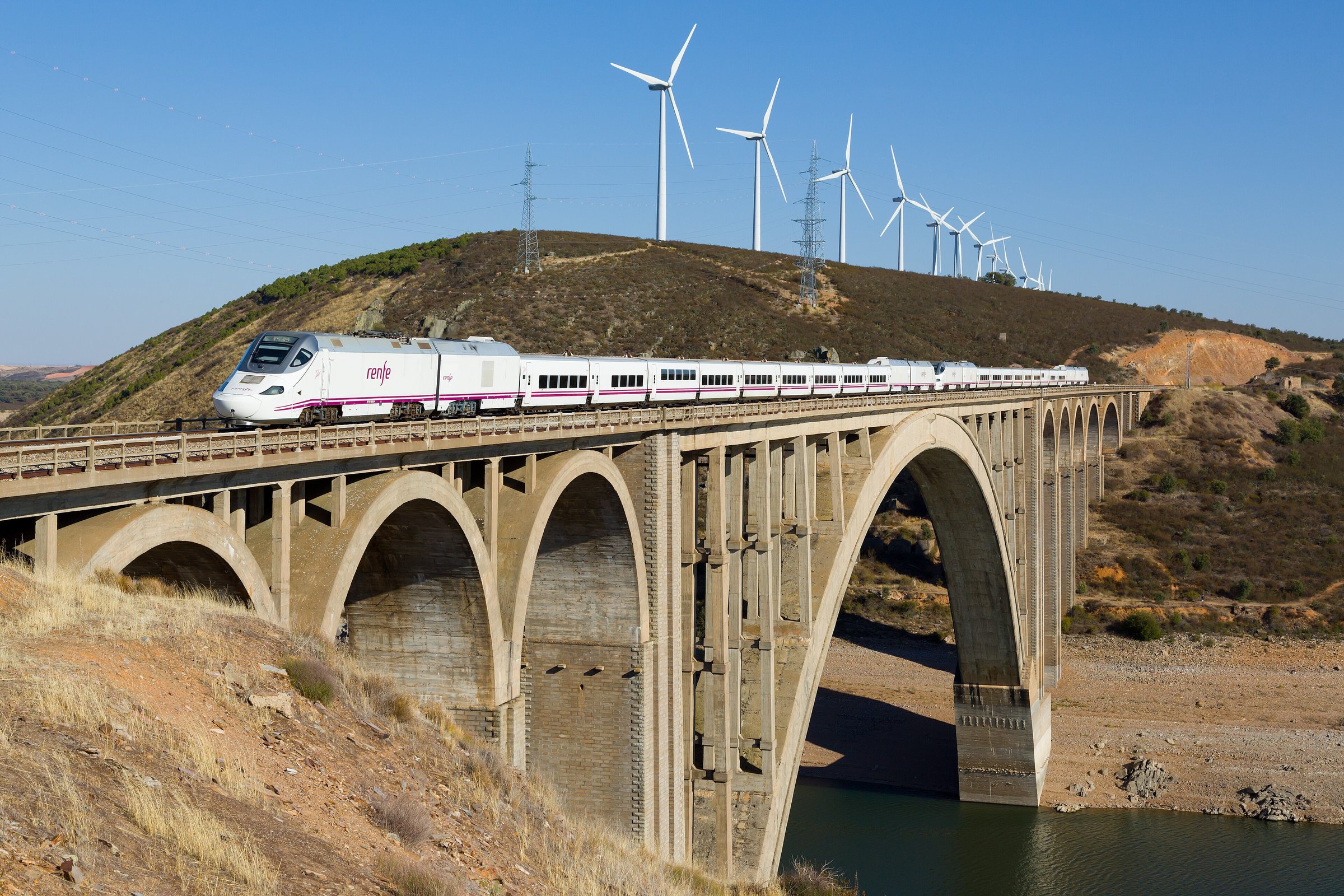
What does the Renfe strike mean for visitors to Tenerife?
Research found no Renfe train service in the Canary Islands, and Tenerife's only railway is the Metrotenerife tram. It belongs to the transport company of the Cabildo (island government) and has nothing to do with the Renfe strike.
Travellers who have booked a Renfe train on the mainland for 10 or 12 November are affected. They should check the train number in the Renfe app or on the Renfe website.
If Renfe cancels a train, it offers free rebooking or a full refund. It also advises passengers to postpone non-urgent journeys and contacts those affected by text message or email.
Alsa long-distance coaches or a hire car are alternatives. Whether trains will be cancelled on 10 and 12 November, and how many, is not yet known.
What happens next in the talks?
The first meeting between Semaf and the transport ministry on Thursday 5 November ended “without progress”, according to the union. The ministry plans to receive the drivers again on Friday 6 November, before the first strike day.
Carlos Cuerpo sits at the table, and since Wednesday he has run the transport ministry as well as the economy brief. His predecessor Óscar Puente resigned on Tuesday.
The strike calendar stays unchanged for now. It has 24 hours on 10 November and three time windows on 12 November.
Hosteltur reports a further Semaf call for 17 November. It covers drivers at eight operators, including Renfe, Iryo and Ouigo.
Semaf wants concrete, verifiable measures from the ministry before it lifts the strikes. The ministry had published no timetable for them by Thursday.
Why are the train drivers striking?
Semaf (Sindicato Español de Maquinistas Ferroviarios, the Spanish train drivers' union) cites an agreement of 9 February 2026 with the transport ministry, Renfe and Adif. That deal called off strikes planned for 10 and 11 February and set up working groups on safety rules and emergency protocols.
Semaf accuses the authorities of letting the promised work stall. General secretary Diego Martín says the commission meant to monitor it has not met.
The union lists its demands: binding protocols for bad weather, better emergency communication and more drivers. It also wants help for staff injured in collisions and more reliable rolling stock.
Renfe rejects this: it says the demands lie outside its remit and it has met every obligation under the February agreement. The July collective agreement, it adds, did not cover these topics.
The dispute sharpened after the train crash near Urda (Toledo) on 28 October. According to current figures 69 people died, though other counts give 68, and it was the second accident of this scale on the Madrid–Andalusia line in nine months.
Which trains still run despite the strike, and what applies on 11 November?
As far as research could establish, the transport ministry had published no minimum services for 10 and 12 November by Thursday. These set the minimum number of trains that must run despite a strike.
The rules for the 29 October strike give a guide: 73% for AVE and Avlo (high-speed) and 65% on medium-distance routes. On Cercanías suburban trains, 75% ran at peak times and 50% otherwise.
On 11 November, between the two Renfe strike days, CCOO and UGT have called a 24-hour general strike. Reports say it is the first general strike since 2012 that both unions back together.
The unions explicitly ask for broad take-up in the Canary Islands. Which services are affected there, and which minimum services apply, has not been published.
What is still open, and what comes next?
It is open what the transport ministry offered Semaf on 5 November and what will be on the table on 6 November. The number of cancelled trains is not fixed either.
Semaf has called off strikes before, for example in March 2024 after an agreement. Whether that happens this time depends on the talks, which continue on Friday.
On Tenerife, the train remains a plan for now. A protocol of 4 September 2025 commits the state, the Canarian government and the Cabildo to pushing the “Tren del Sur” forward, and the first section would be San Isidro–Adeje, about 30 kilometres costing 800 million euros.
The next dates are fixed: 10 November Renfe strike, 11 November general strike, 12 November partial strikes, and 17 November a call to eight operators (according to Hosteltur). Anyone planning a return trip via the mainland from the south of Tenerife should check the Renfe app again shortly before.