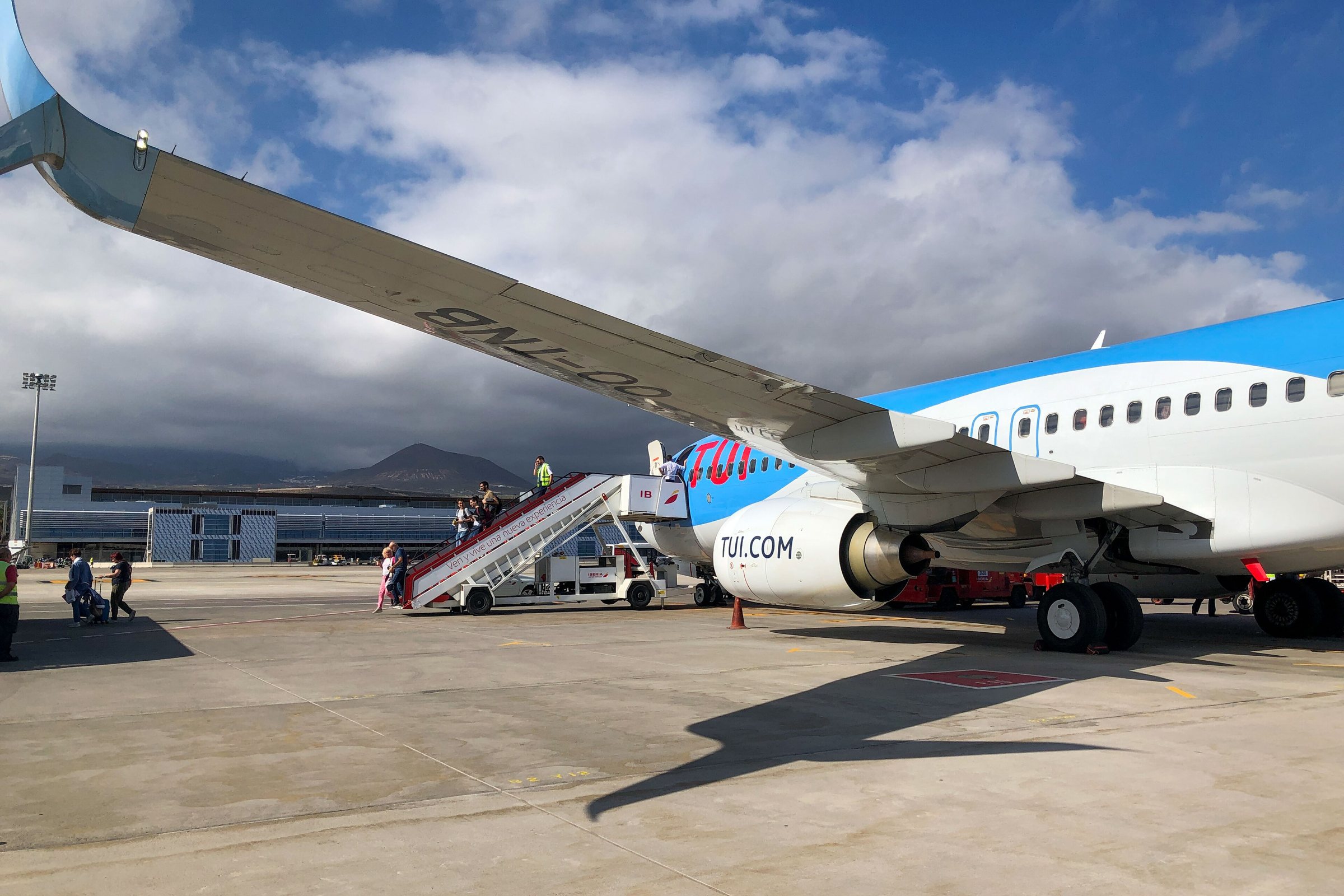
What changes for holidaymakers in the south of Tenerife?
Nothing changes for Tenerife on the available information: no source names new rules, fees or deadlines. No closures of Canary Islands airports have been reported so far.
The effects are felt only when a threat hits your own aircraft. Then the sources describe delays, passengers having to get off and fresh checks.
In June 2026, passengers at Tenerife South left the cabin with their hand luggage. Security staff checked the aircraft and the hold luggage in the meantime.
What has happened in Europe since the start of the week?
Already on Monday a flight from London to Sofia had to divert to Budapest. On Tuesday 3 November seven more flights received similar warnings, and one of them, from Manchester, landed in Murcia.
Hoax bomb threats hit flights and airports for the third day running on Thursday 5 November 2026, counting from Tuesday. Depending on the count, more than 15 to about 20 were affected, and media figures differ.
The countries affected are Spain, France, Italy, Belgium, Bulgaria, Czechia, Austria, Poland, Denmark and Greece. A flight from Dublin to Rome diverted to France, and an aircraft from Tel Aviv to Vienna made an emergency landing in Bulgaria.
In Spain, Aena says the threats affected three flights, including Air Europa Madrid–Paris. The message reached Madrid-Barajas in the morning, Aena formed a crisis committee with the security forces, and the threats were ruled out after checks.
The two Iberia aircraft landed normally at about 10:00. The Air Europa flight had not yet departed, so passengers had to get off before operations resumed.
Which incidents have already happened in the Canary Islands?
On 25 September 2026 a passenger on Jet2 flight LS1536 from Tenerife South to London Stansted said there was a bomb in their luggage. The Guardia Civil cleared the Boeing 737-800, scheduled to leave at 11:20, as a precaution and checked all the luggage.
Nobody found an explosive device, and the aircraft took off between 13:46 and 14:00, depending on the report. No arrest was reported, and the passenger was not named.
On Saturday 27 June 2026 a false alarm held up Eurowings Discover 4Y307 to Frankfurt until 19:30, not 16:55. Air traffic control sent the taxiing plane back to its stand, passengers got off with hand luggage and security staff checked the aircraft and hold baggage.
On 26 October 2026 a false threat against a Vueling flight from Barcelona triggered a special security operation at Gran Canaria airport, in the Bay of Gando. The aircraft landed without incident, and who is behind the warning is unknown.
There is no evidence of a link with the later incidents. A similar case happened on 21 June 2025 in Lanzarote: a TUI flight from Cardiff landed safely at 10:55, and TEDAX bomb-disposal officers found nothing.
Who is behind the threats?
Nick Careen, IATA vice-president for operations and safety, commented on X. He called the threats “attempts to disrupt air traffic”.
No perpetrators have been identified so far. No formal charges exist either.
Luis Vicente Pérez Gil, law professor at the University of La Laguna and analyst at the Instituto Español de Estudios Estratégicos, considers a hybrid offensive possible and points to Moscow. There is no evidence of who is responsible, and the theory comes from a single analyst.
In mid-October the Policía Nacional (national police) arrested two young men in Málaga and Murcia over bomb threats against two Spanish airports. The investigation, called “Aviación”, has run since September 2026, and the source did not name the airports.
The detainees allegedly used other people’s DNI data (identity card details) for an internet phone service, spoofed phone numbers and altered voices with AI. The police are investigating threats, extortion and disturbing public order, and the research found no link to the November wave.
What happens to people who make false threats?
Article 561 of the Código Penal (criminal code) punishes false alarms that mobilise police or rescue services with three months to one year in prison or a fine. That is the reported legal position, and it has not been checked against the BOE (Spain’s official state gazette).
Lawyers say a conviction requires intent, so a genuine joke would not count. According to an unchecked claim, up to six years in prison are possible where air traffic is disrupted.
The Guardia Civil, air traffic control and Aena order evacuations under a joint protocol. Judges decide in court.
What is still open, and what happens next?
It is unclear whether a Canary Islands flight or airport was targeted in the November wave, and there is no evidence that one was. The origin of the threats, possible links and the exact number of flights are also unknown.
What the EU or Europol will do next is not known, and the research found no dates. There is also no official statement from Europol, Eurocontrol or the European Commission.
No consolidated statistics on such threats turned up in the research. Figures therefore come from individual reports.