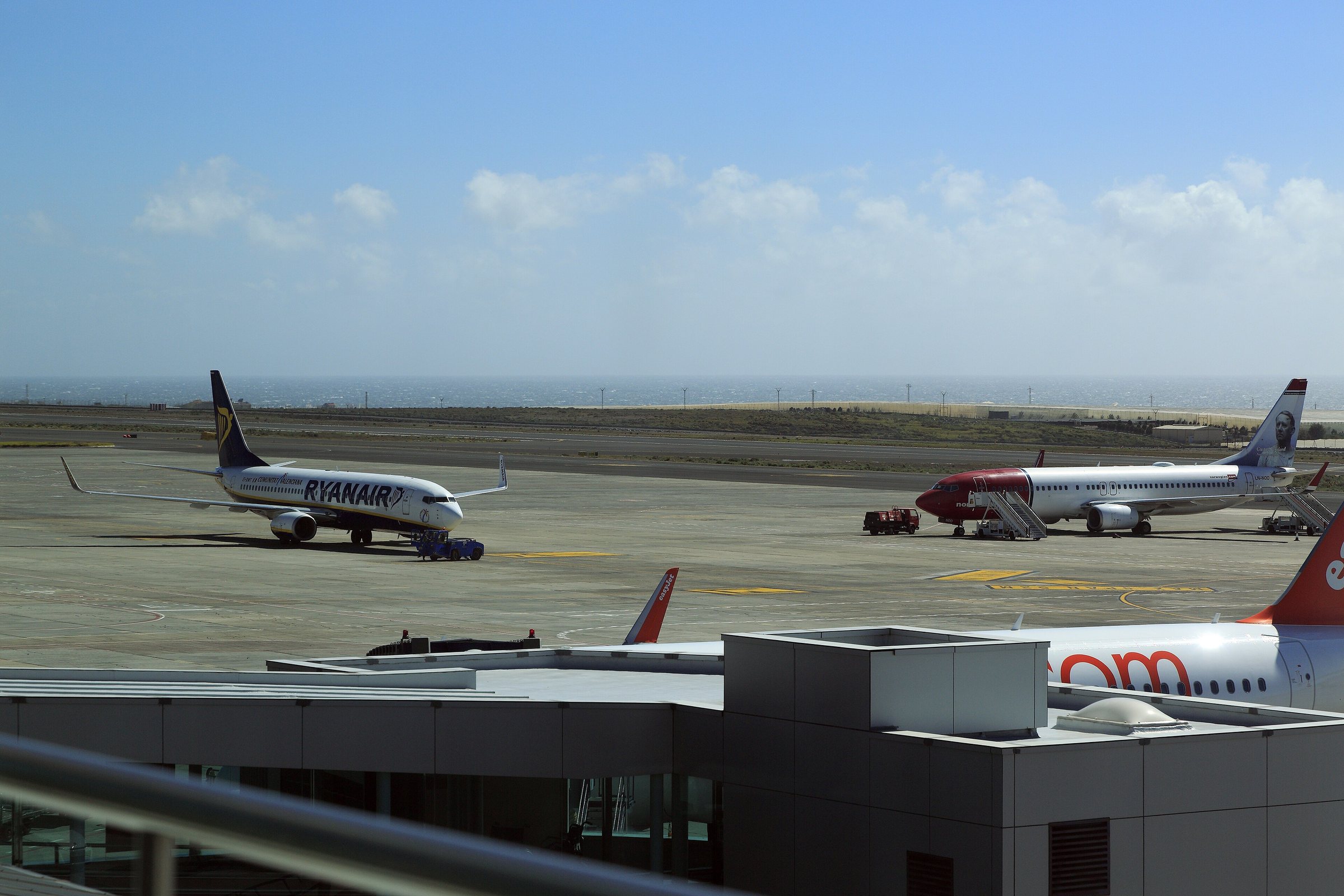
What does this mean for visitors to southern Tenerife?
Nothing changes for passengers at Tenerife Sur, because Aena's release contains only counts and no new rules, prices or deadlines. Aena, the state airport operator, published the October figures on Thursday 12 November 2026.
The airport in the south of the island handled about 1.1 million passengers in October, 1.9% fewer than in October 2025. That is a headcount, and it says nothing about delays, cancellations or ticket prices.
The release gives flight movements for Gran Canaria, but not for Tenerife Sur. If you are flying this winter, check times and prices directly with the airline.
How does Tenerife Sur compare with the big airports?
Madrid-Barajas led in October with 6.4 million passengers, up 6.4% on the same month last year. Barcelona-El Prat followed with 5.2 million (up 0.3%), then Palma de Mallorca with 3.5 million (up 1.8%).
Alicante-Elche Miguel Hernández grew 10.1% to 2 million passengers, the steepest rise among them. Málaga-Costa del Sol rose 4.7% to 2.6 million, and Valencia gained 5.5% to reach 1.1 million.
Tenerife Sur is the odd one out: of the eight airports Aena lists individually, it is the only one in decline. It had 1.1 million passengers (down 1.9%), while Gran Canaria reached 1.3 million (up 2.6%).
According to Aena, Tenerife Sur handled 1,163,847 passengers in October 2025, up 1.0%. That made it the second-largest airport in the Canaries at the time, after Gran Canaria.
How is 2026 going for the Canaries as a whole?
The Canaries are running clearly below the Spanish average in 2026. According to Aena, the first half of the year saw 26,847,826 passengers, 0.7% fewer than a year earlier.
In August the Canary airports handled 4,768,328 passengers (up 0.8%), and in September 4,204,223 (down 0.9%). Across Spain, growth in September was 4.2%.
For January to October, Aena reports 287.7 million passengers in Spain, up 4%. The national release gives no total for the Canaries in October 2026.
In full-year 2025, Tenerife Sur handled 13,969,678 passengers (up 1.7%) and Tenerife Norte 7,174,977 (up 6.1%). Added together, the two Aena figures give about 21.1 million for both airports.
What do the figures say about airfares and charges?
Aena and the regulator are at odds over airport charges. Aena sets them in multi-year regulatory documents known as DORA, and its board approved the draft DORA III for 2027 to 2031 in February 2026.
Under that draft, average revenue per passenger would rise from 10.52 euros (2026) to 12.69 euros by 2031, about 0.43 euros a year on average. The regulator CNMC recommended the opposite on 2 June 2026: a cut of 0.59% a year, against a 3.82% rise at Aena.
According to the airline associations IATA and ALA, carriers want an even bigger cut of 4.9% a year. Airlines pay the charges per passenger and flight, and usually build them into the ticket price.
The Council of Ministers, the Spanish government's cabinet, takes the final decision, and its deadline ran to 30 September 2026. None of the sources reports a decision, so the outcome is unconfirmed.
What is still open?
Aena's national release gives no figure for Tenerife Norte and no total for the Canaries for October 2026. It also leaves out the split between domestic and international traffic at Tenerife Sur.
Last year Aena published the Canaries figures for October on 14 November 2025. There is no confirmed date for 2026.
The year-earlier comparison shows what to expect: in October 2025 the Canaries handled 4,618,986 passengers, 2.3% more than in 2024. Aena has not said whether October 2026 lands above or below that.