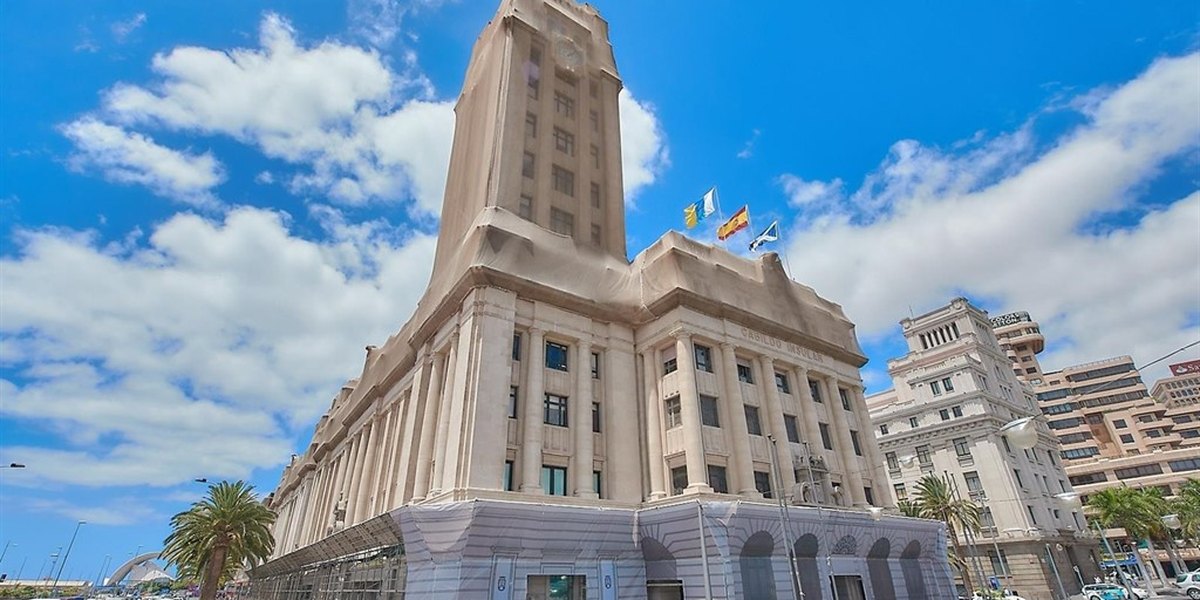
The story begins with a genuine crisis. In May 2024, Tenerife's water was not up to its neck but far below it: reservoir reserves had fallen below 15 percent, and the island was dragging itself through its sixth consecutive year of drought. On 29 May 2024 the Cabildo officially declared a water emergency — unanimously, with a package of 75 measures. Crisis times bring crisis rules, and the price was adjusted too: back in October 2023 the supply contracts had been amended and water prices raised.
Then the rain came — and stayed
The winter of 2025/26 did what the previous six had failed to do: it poured. The reservoirs filled, first to 66 percent, then to 70, in places as high as 90. Reserves rose by a staggering 146 percent on the previous year — the best figures in six years. On 1 March 2026 the Cabildo drew the logical conclusion and declared the emergency over. Crisis past.
Only one thing apparently didn't get the message: the price. While the water stood behind the dam walls as high as it had in years, the public company Balten went on billing it at the expensive emergency rates. Weeks passed, the reservoirs stayed full, the bill stayed high. This is exactly the point at which a dry question of tariffs becomes a story: how can an emergency price survive when the emergency that justified it has been called off?
An entrepreneur asks the awkward question
It was not the politicians who first asked, but an entrepreneur. In a letter to the Cabildo and to Balten he pointed out the contradiction: full reservoirs but drought prices — that did not add up, and ought to lead either to a price cut or at least to an explicit justification. Otherwise there was a risk of an "unjustified extra cost" and possible harm to the public purse.
When satisfactory answers failed to materialise, the letter became a complaint. On 2 June 2026 the association Corrupción 0 — represented by the entrepreneur Juan Manuel Pérez León from Gran Canaria — took the case to the Court of Auditors (Tribunal de Cuentas). Its secretary-general confirmed receipt on 10 June; shortly afterwards the court referred the matter to its own prosecutor's office, with instructions to carry out "such inquiries as it deems appropriate regarding possible criminal offences".
The delicate hypothesis
Why would a public body voluntarily overpay? The complaint offers a hypothesis — explicitly as conjecture, not proof: the high prices may have served to keep the suppliers on board. Rising energy and production costs might otherwise have prompted them to pull out of the contract and stop delivering. Put another way: better to keep buying expensively than to risk the water stopping altogether in an already tense situation. Whether that reading holds is now for the prosecutor to establish.
The Cabildo, for its part, points in general terms to a legal obligation to update its tariffs — so the pricing follows legal requirements rather than any arbitrary act. The inquiry will show whether that covers keeping emergency prices in place after the emergency has ended.
Frequently asked questions
- What is being investigated?
- Whether the public company Balten wrongly continued to bill irrigation water at "emergency" rates even though Tenerife's water emergency ended on 1 March 2026.
- Who is investigating — and is this a criminal case?
- The prosecutor's office of the Court of Auditors (Fiscalía del Tribunal de Cuentas) is examining possible offences after a complaint. It is a preliminary inquiry, not yet a prosecution.
- Who filed the complaint?
- The association Corrupción 0, represented by the entrepreneur Juan Manuel Pérez León from Gran Canaria, on 2 June 2026.
- When were the prices raised?
- In October 2023, via amendments to the supply contracts with the firms Elekagua and Savasa — in the run-up to, and context of, the later emergency declaration.
- What does the Cabildo say?
- It points to a legal obligation to update its tariffs. The inquiry must establish whether that justifies keeping the emergency prices in place.
Read on
- Now the public prosecutor is investigating too: the Tenerife water-price case gets more seriousTenerife · 21 June
- Canary Islands fuel prices: 78 stations probedCanary Islands · 17 June
- Puerto de la Cruz: 4 verified bars for evening drinksTenerife · 30 October
- Güímar Paseo Romero 15 Nov: date set, time still unknownTenerife · 29 October
- Buenavista del Norte: Expo Bandas 2026 on 1 NovemberTenerife · 29 October
- All events on Tenerife →
As of 16/06/2026. Sources include Atlántico Hoy (reporting by Álvaro Oliver González), the Canary Islands official gazette (BOC) and RTVC. This is a preliminary inquiry by the Fiscalía del Tribunal de Cuentas; the presumption of innocence applies. The possible motive cited in the complaint is an unproven conjecture.