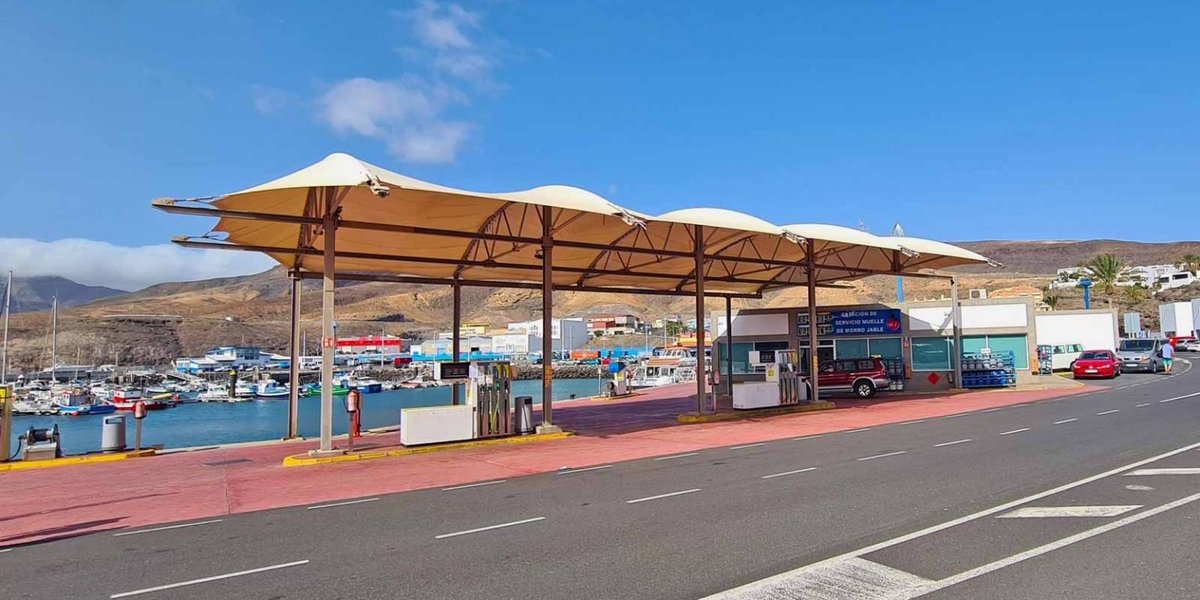
It's a suspicion every motorist already feels in their gut — only now a government has put it into figures. Early this year, shortly after war erupted in the Middle East and the vital Strait of Hormuz was shut, the price of crude shot up. Fair enough. What makes the regional government suspicious is something else: that prices at different stations belonging to different operators rose almost simultaneously and by almost the same amount. "Al unísono", as the Spanish puts it — as if with one voice.
Up like a rocket, down like a feather
Behind the suspicion sits a phenomenon experts describe with a neat image: the "rocket and feather effect". When the price of crude rises, the increase is at the pump within 48 to 72 hours — bang, like a rocket. When crude falls again, it suddenly takes 10 to 13 days for the cut to arrive — and then often only in part. Up fast, down slow. It is exactly this asymmetry that the authority documented in its reports after analysing 499 stations.
For you as a customer, in practice that means you pay for the world's bad news instantly but benefit from the good news only after a long delay. Over the course of a year, that imbalance adds up to a noticeable sum — especially on islands where, for many, the car is the only option.
Why four brands make the difference
For prices to move in lockstep as if by themselves, you don't necessarily need a back-room conspiracy — often a market with few large players is enough. And that is precisely what the report describes as a second "anomaly": on the Canaries, four brands control around 76.7 percent of all petrol stations. Independent operators, who could stir things up with genuinely competitive prices, are the exception.
In such a concentrated market, everyone watches everyone else — and when all are roughly equally expensive, no one has any reason to be the first to go cheaper. Whether everything on the Canaries is above board, or whether lines were crossed, is what the inspection is meant to clarify.
What happens now
In concrete terms, the inspection means the 78 selected stations must formally produce documents — exactly how their prices were formed between 1 January and 25 May, and whether consumers' rights were respected. Vice-President Manuel Domínguez spoke of a "clear concern about the impact on citizens" and of wanting to "analyse rigorously" whether this was normal market behaviour or an anomaly.
Should the suspicion harden, a third stage is possible: referral to the competition authority (Competencia) and fines. Until then: it is a review, not a verdict.
Frequently asked questions
- What exactly is being investigated?
- Why fuel prices at stations belonging to different operators rose almost simultaneously after war broke out in the Middle East — and whether the pricing complied with consumer and competition law.
- How many stations are affected?
- 78, selected from 499 stations previously analysed across the archipelago.
- What is the "rocket and feather effect"?
- Prices rise very fast (48–72 hours) when crude gets dearer, but fall only slowly (10–13 days) and often only partly when it gets cheaper.
- Does this prove price-fixing?
- No. It is a preliminary review. The lockstep is striking but may also have legitimate market causes. The presumption of innocence applies.
- What could come of it?
- If irregularities emerge, the case can go to the competition authority, with the possibility of fines.
- How do I find the cheapest station?
- Through the Spanish Energy Ministry's official portal geoportalgasolineras.es, which shows up-to-date prices for every station.
Read on
- Canary Islands fuel prices stable on 17 OctoberCanary Islands · 18 October
- Tenerife water prices: prosecutor opens probeTenerife · 16 June
- Canaries to Dakar: Binter direct flight, entry rules, DSSCanary Islands · 30 October
- Canaries: 211,400 homes empty as new rental scheme opensCanary Islands · 28 October
- Canary Islands 16–18 October: fiestas, concerts, partiesCanary Islands · 16 October
- All events on the Canary Islands →
As of 17/06/2026. Sources include Canarias7, Diario de Avisos, eldiario.es / Canarias Ahora and Canal 11 La Palma; statements by Vice-President Manuel Domínguez. This is an administrative inspection and preliminary review; no breach has been established, and the presumption of innocence applies. Fuel prices change daily.