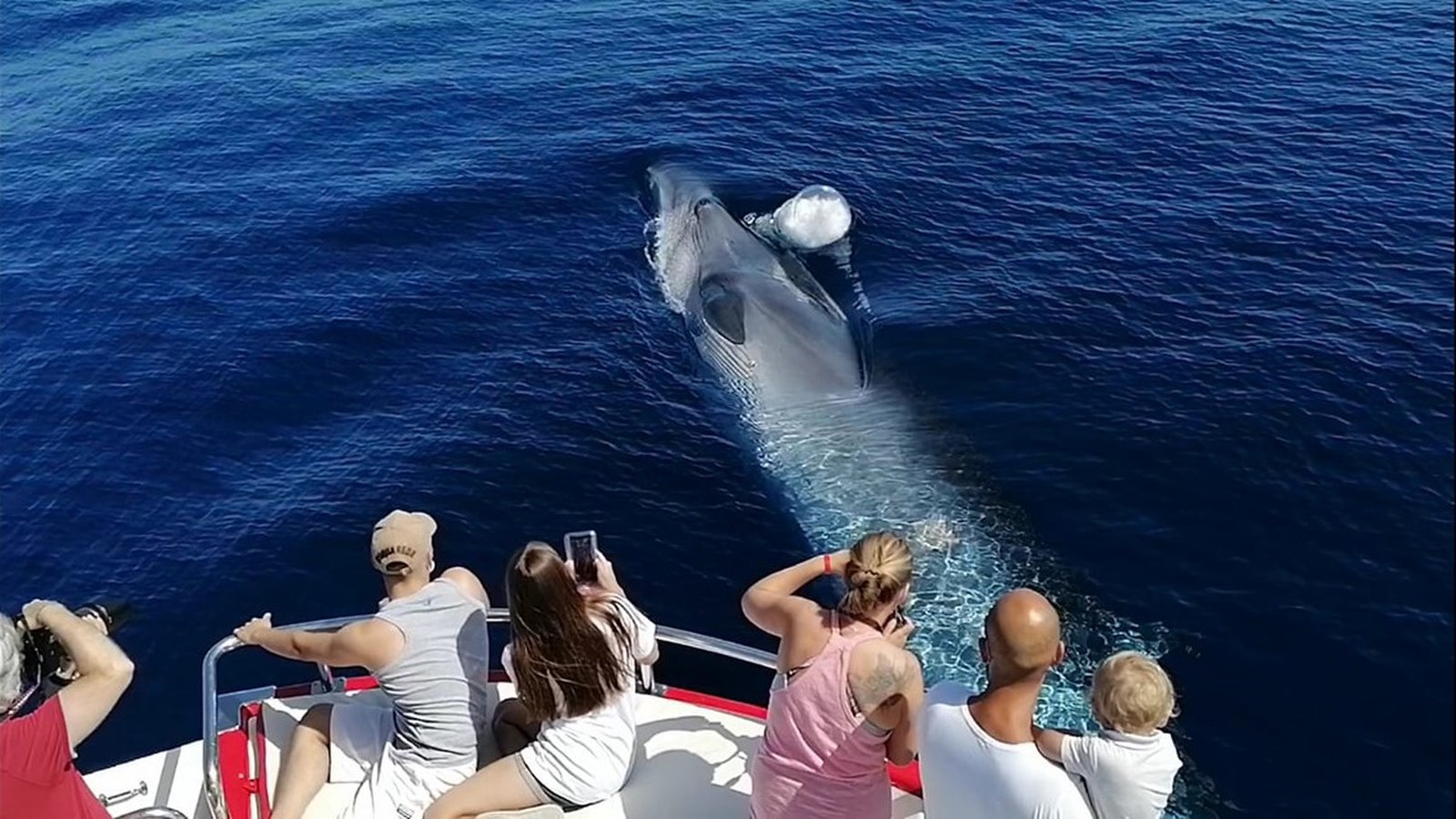
Why here? Europe's front-row seat
Most places in the world sell whale watching as a seasonal gamble: a few weeks a year, a lot of crossed fingers, often nothing. Gran Canaria works differently. Off the south-west coast the seabed drops steeply into deep, nutrient-rich water — a dining hall some species never bother to leave. The result: dolphins and pilot whales live here all year, not just passing through.
Across the whole Canary archipelago, around 30 species of whale and dolphin have been recorded — one of the highest concentrations in Europe. And you don't have to travel to the ends of the earth for it. From hotel pool to the bow of the boat is often less than an hour. That mix — near-guaranteed sightings, short distances, all year round — is exactly why the boat trip is the island's single most popular excursion.
Who you'll meet out there
The stars are two dolphin species that are almost always around: the playful bottlenose dolphin (the "Flipper" dolphin — sturdy and curious) and the smaller, faster common dolphin, which loves to ride the bow wave in big groups. If someone promises you'll see "Flipper", these two are what they mean — and the odds are good.
The quiet headliner, though, is the pilot whale: a jet-black member of the dolphin family up to six metres long, living in tight family groups off the coast. Then come the seasonal and rarer guests: sperm whales passing through, fin whales, the occasional other migratory species. And with a bit of luck a sea turtle or a shoal of flying fish crosses your path. No aquarium, no show tank — all wild, all on the animals' own terms.
The harbours: Puerto Rico, Mogán, Arguineguín
Almost all tours leave from three harbours in the sunny south-west — where the animals actually live. Puerto Rico (Puerto Base, to be precise) is the biggest departure point, with the widest choice of boats. Puerto de Mogán, the pretty "Little Venice" with its canals, is often part of combo tours — dolphins first, then a few hours wandering the fishing village. Arguineguín is home to many glass-bottom boats.
The good news: you don't have to stay right by the harbour. Most operators pick you up from the big resorts — Maspalomas, Playa del Inglés, Meloneras, Taurito, San Agustín, Bahía Feliz. Just add "transfer/pick-up" when you book.
Which tour suits you?
There are broadly four kinds — and your choice decides whether your day leans towards wildlife watching or a swim outing:
The watching-only tour (around 2–2.5 hours): fast motor catamaran, straight out to the animals, a cetacean guide explaining what you're seeing. Ideal if it's the animals you're after and you don't want to be on the water forever.
The tour with a swim stop (around 3 hours): find the dolphins first, then anchor in a bay to swim and snorkel. The classic for a relaxed half-day, often with snacks and drinks on board.
The sailing catamaran: quieter, wind-driven, almost silent — lovely for anyone who enjoys the feel of sailing and isn't in a rush.
The glass-bottom boat: with underwater windows, mainly from Arguineguín. Great for families with small children who want to look beneath the surface too.
The blue pennant: your most important trick
Now the part the booking portals won't tell you. Whale and dolphin watching is regulated by law in the Canaries — and reputable boats carry an official mark: the "Barco Azul / Blue Boat", a yellow pennant with a blue boat symbol and the current year. Only licensed operators may fly it, and there must be a trained cetacean guide on board.
Behind the pennant sit binding protection rules that also happen to deliver the better sightings: at least 60 metres' distance from the animals (500 metres if calves are present), no more than 30 minutes with one group, slow lateral approaches rather than wild pursuit, no flash photography. A boat that breaks these rules to get you "closer" stresses the animals — and ends up delivering a worse experience, because the dolphins move off.
What to bring — and when to sail
You don't need much, but you need the right things: sun cream (the glare off the water is merciless), a hat, sunglasses, a light jacket or windbreaker — it's cooler out on the Atlantic than the beach suggests. For swim tours, swimwear and a towel. Have the camera ready, but: no flash.
As for timing: mornings often bring calmer, glassier seas, which helps both the spotting and your stomach. Afternoons on the water tend to get choppier. If you're sensitive, book the early sailing.
With kids, against seasickness
Boat trips are a family hit — little thrills children quite like a dolphin surfacing beside the boat. For the youngest, the glass-bottom boat is often the best bet: steadier, and there's something to see even when no dolphins are about. Look for boats with child-sized life jackets.
Against seasickness, the tried and tested helps: don't eat too heavily the night before, fix your eyes on the horizon, sit low and in the middle (that's where it rocks least), and if you're prone to it, take a remedy from the pharmacy beforehand. The calmer morning sea is your friend here too.
Frequently asked questions
- Do you really almost always see dolphins?
- The chance is very high — many operators quote rates above 90% and offer a free repeat trip if nothing is sighted. There's still no guarantee: these are wild animals in the open Atlantic.
- What animals can I expect?
- Year-round mostly bottlenose dolphins, common dolphins and pilot whales. Seasonally and more rarely sperm whales, fin whales and other migratory species, plus the occasional sea turtle.
- Which harbour should I leave from?
- Puerto Rico (Puerto Base) has the widest choice, Puerto de Mogán is lovely for combo tours with a village stroll, Arguineguín is home to many glass-bottom boats. Pick-up is available from most southern resorts.
- How long does a tour last?
- Watching only is about 2 to 2.5 hours; tours with a swim or snorkel stop around 3 hours.
- How do I recognise a reputable, animal-friendly boat?
- By the yellow "Barco Azul / Blue Boat" pennant with the year on it, and a trained guide on board. Licensed boats keep their distance and limit time with the animals.
- Is it suitable for small children?
- Yes, especially the glass-bottom boat. Aim for calm morning seas, child-sized life jackets and shaded seats.
- What if I get seasick?
- Sail in the morning (calmer seas), fix on the horizon, sit in the middle, eat lightly and, if needed, take a remedy from the pharmacy beforehand.
- When is the best time to visit?
- There's no bad time — dolphins and pilot whales are here all year. For calmer seas, the winter months and mornings in general are often more comfortable.
Read on
- Where to Stay in Gran Canaria? How to Find Your SpotGran Canaria · 9 June
- Gran Canaria: Luis Zahera show moved to 11 April 2027Gran Canaria · 29 October
- Gran Canaria: Finaos in Vega de San Mateo postponedGran Canaria · 29 October
- Gáldar Carnival 2027: 29 Jan to 13 Feb, Enchanted ForestGran Canaria · 29 October
- Gran Canaria volcano: last eruption 2,000 years agoGran Canaria · 29 October
- All events on Gran Canaria →