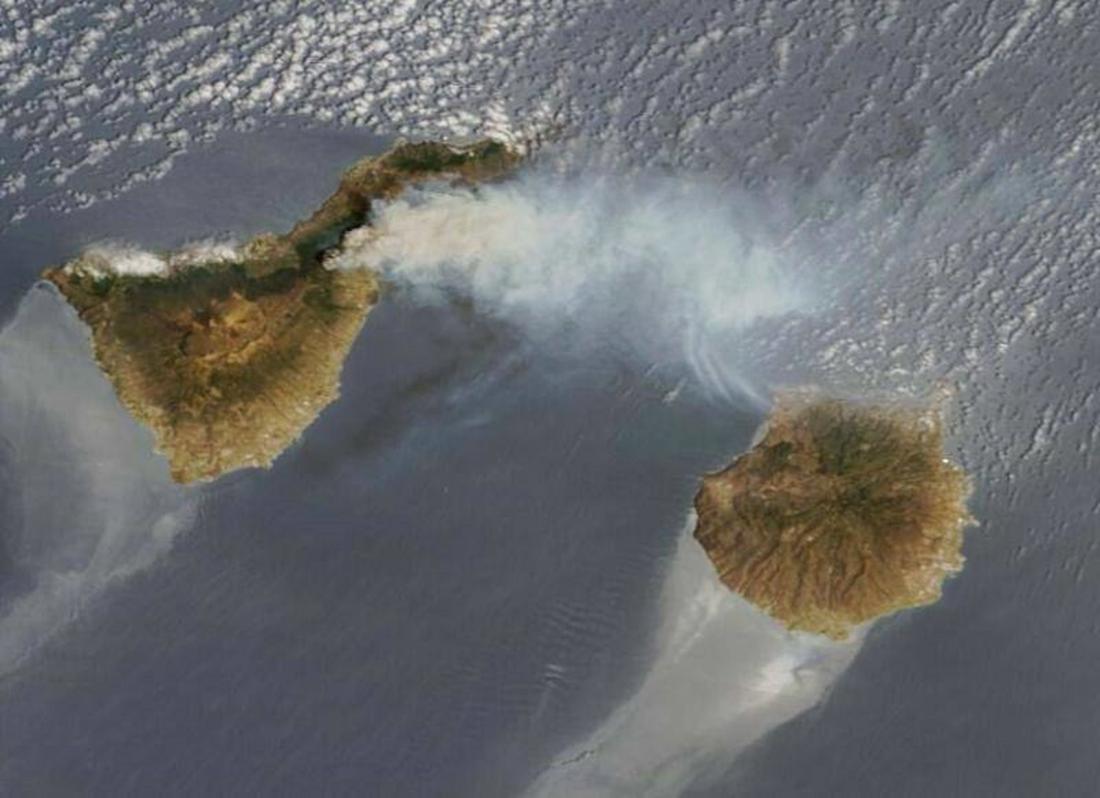
It's 00:00 in the night to Monday. At that second, on five of the eight Canary Islands an administrative decision takes effect that will change the behaviour of thousands of residents and tourists over the next four months: the Prealerta por riesgo de incendios forestales is activated. It is the pre-alert — the lowest of the three INFOCA levels (Prealerta → Alerta → Alerta Máxima). But it is real, binding, and it affects anyone moving through the countryside or owning land here.
What the Prealerta is — and what it isn't
The Prealerta isn't an evacuation. It isn't a closure. It is a raised state of readiness for the authorities — and a set of conduct rules for the population. The thinking behind it: most wildfires on the Canary Islands aren't caused by natural phenomena, but by human activity. A discarded cigarette butt, a poorly extinguished campfire, a barbecue on dry ground, a spark from a machine. When temperatures rise above 30 °C, humidity drops below 30 % and wind comes from the south to southwest — the classic Calima conditions — that turns into a major fire within minutes.
The western Canaries plus Gran Canaria are particularly vulnerable: pine forests, scrubland, dry grass, hard-to-reach mountain terrain. Lanzarote and Fuerteventura are different — little forest, but plenty of drought. They aren't on the Prealerta list this time.
What you can no longer do from today
The decree doesn't prescribe every detail — it refers to the measures of each Cabildo (island council) and Ayuntamiento (municipal council), which can be stricter depending on the local situation. But in general:
- No camping outside authorised areas. Wild camping — even just one night in the mountains — is prohibited. Even authorised areas may be closed at short notice.
- No open fires near forest or scrubland. No barbecues, no campfires, no gas stoves in risk zones. Established recreational areas («áreas recreativas») with permanent grill spots will generally remain in operation — but only if the Cabildo of the island specifically authorises them. Check the island council's website before any outing.
- No work that creates sparks. Welding, grinding, machinery with internal combustion engines — all prohibited or subject to permits in risk zones. This also applies to rural homeowners cutting hedges or wanting to burn dry material.
- No burning of garden waste. Generally banned during the high-risk period on the Canaries. If you cleared your garden in spring, don't burn the cuttings now — take them to the «Punto Limpio» (recycling centre) instead.
- Cigarettes only in closed containers. Throwing them out of a car window isn't just careless — it's an administrative offence that can, in the worst case, be prosecuted as the cause of a wildfire.
What to do if you spot a fire
Anyone seeing smoke or open flames has two tasks:
- Call 112 immediately. Clear information: location (GPS coordinates if possible; otherwise the nearest recognisable road or trail marker), size, wind direction, whether people or buildings are at risk.
- Get out of the area. Don't try to put it out yourself — Canary Islands fires spread extremely fast. The records of the Tajogaite volcanic eruption in 2021 and the major Tenerife fire of 2023 (12,000 hectares, 12,000 evacuated) show that exactly these minutes are decisive.
For evacuation with pets, the Dirección General de Emergencias recommends: keep an emergency bag ready with a carrier, vaccination documents and three days of food; use just one family vehicle if possible to avoid blocking escape routes. Anyone finding injured wildlife should wrap the animal in a blanket and contact a rehabilitation centre — phone numbers are listed by the respective Cabildo.
What is different in 2026
Two structural improvements are worth noting:
First: the third EIRIF helicopter on El Hierro. Until now the western islands (La Palma, La Gomera, El Hierro) relied on a single helicopter. Now two aircraft share a base — faster response times, less waiting on parallel deployments. This isn't just symbolic: the western islands have the toughest terrain for ground crews, and every saved minute counts.
Second: the 23 thermal-imaging drones. This is standard in modern firefighting, but a leap for the Canary Islands. The drones detect hotspots at night, when ground crews are sleeping or visibility is limited — and they identify ember nests left over from a main fire that can act as ignition sources for days. Six drones belong to GES (Grupo de Emergencias y Salvamento), 17 to the EIRIF units.
What Tajogaite and Tenerife 2023 taught us
The memories are fresh. The Cumbre Vieja eruption (Tajogaite) on La Palma in autumn 2021 caused mainly lava damage, but accompanying brush fires made the situation much worse. The Tenerife wildfire of August 2023 destroyed over 12,000 hectares of forest on the north of the island, evacuated 12,000 people and burned for two weeks. Both events have left their mark — political, financial and emotional.
The authorities' message: it's not a question of whether but when the next major fire will come. 2025 was a quiet year (INFOCA didn't have to be formally activated), but that's no reason to relax — it's the exception. The Canaries' pine forests need fire to regenerate — but controlled fire, not megafires that strip entire hillsides.
What residents should do now
If you live in a risk zone — on a forest edge, in a rural area, in an Aldea or Vega — a few preparations should be made now:
- Prepare an emergency bag: documents (NIE, passport, insurance), a week of medication, emergency phone numbers, chargers, cash, a list of important contact addresses.
- Clear the firebreak around your home: cut back dry vegetation in a 30-metre radius. On the Canary Islands this is also a legal requirement for homes in risk zones.
- Know your evacuation routes. If you live on the island, know at least two different ways to the nearest major road in case one is blocked.
- Install the authorities' apps. The «112 Canarias» app gives real-time warnings. Some Cabildos have their own apps or WhatsApp channels.
And perhaps most importantly: when the authorities order an evacuation — follow it. Even if your own house is not yet visibly threatened. The experience of 2023 shows that those who wait too long end up stuck in their car on a road that may be cut off by the fire at any moment.
Frequently asked questions
- What exactly is the Prealerta?
- The lowest level of the INFOCA hierarchy (Prealerta → Alerta → Alerta Máxima). It activates the entire firefighting deployment in raised readiness and imposes conduct rules on the public. It will often remain active throughout the summer.
- Which islands does it apply to?
- La Palma, La Gomera, El Hierro, Tenerife, Gran Canaria. Lanzarote and Fuerteventura are not on the list as they have little forest.
- Until when does the Prealerta apply?
- Initially until 30 September 2026, under Decreto 180/2025. It can be extended, shortened or upgraded to «Alerta» depending on weather conditions.
- Can I still have a barbecue?
- On your own property with a permanent barbecue: most likely yes, depending on the municipality. In «áreas recreativas» (public picnic areas with installed grills): only if the island's Cabildo specifically authorises them. In open countryside, by the roadside, in nature: no.
- Can I still go hiking?
- Yes, on marked trails. But: some trails may be closed if the situation worsens. Before every trip, check the website of the island's Cabildo or the «112 Canarias» app. Anyone in a closed area without permission may be held responsible.
- What do I say if I see smoke?
- Call 112. Be as precise as possible about the location (GPS coordinates ideal). Don't try to extinguish it yourself. Get out of the area.
- What about tourists?
- Tourists are bound by the same rules as residents. Anyone breaking a camping or picnic ban can be fined — and in the case of causing a wildfire faces serious criminal consequences.
- What about rural homeowners?
- Anyone owning a house in a risk zone is required under Spanish law to maintain a firebreak («franja de protección») of 30 metres around the building — clearing dry vegetation. This is a real obligation and failure can be penalised.
- What was last year like?
- 2025 was a surprisingly quiet year: 41 small fires, 39 of them under 1 hectare. 88% affected only grassland, just 2% reached forests. INFOCA didn't have to be formally activated — only preventive readiness was maintained. That is statistically the exception, not the rule.
Read on
- Canary Islands 15 October: book fair, fiestas, concertsCanary Islands · 15 October
- Canary Islands: Calima lingers, Saturday rain, DANA possibleCanary Islands · 15 October
- 50th Rally Islas Canarias: It starts today — and this edition is a special oneCanary Islands · 23 April
- Luchada Cósmica on El Hierro starts today — seven sessions only the ticket shop listsEl Hierro · 2 October
- Canary Islands 14 October: fiestas, opera and club nightsCanary Islands · 14 October
- All events on the Canary Islands →