Canary Islands second-hand homes: two indices, two figures
The price of second-hand housing in the Canary Islands rose 6.7 per cent year on year in August 2026, reaching 3,336 euros per square metre, according to the index published by the property portal idealista. The Fotocasa property index, for the same month and the same region, gives 7.5 per cent and 3,375 euros per square metre. Both figures are correct, and neither is a mistake.
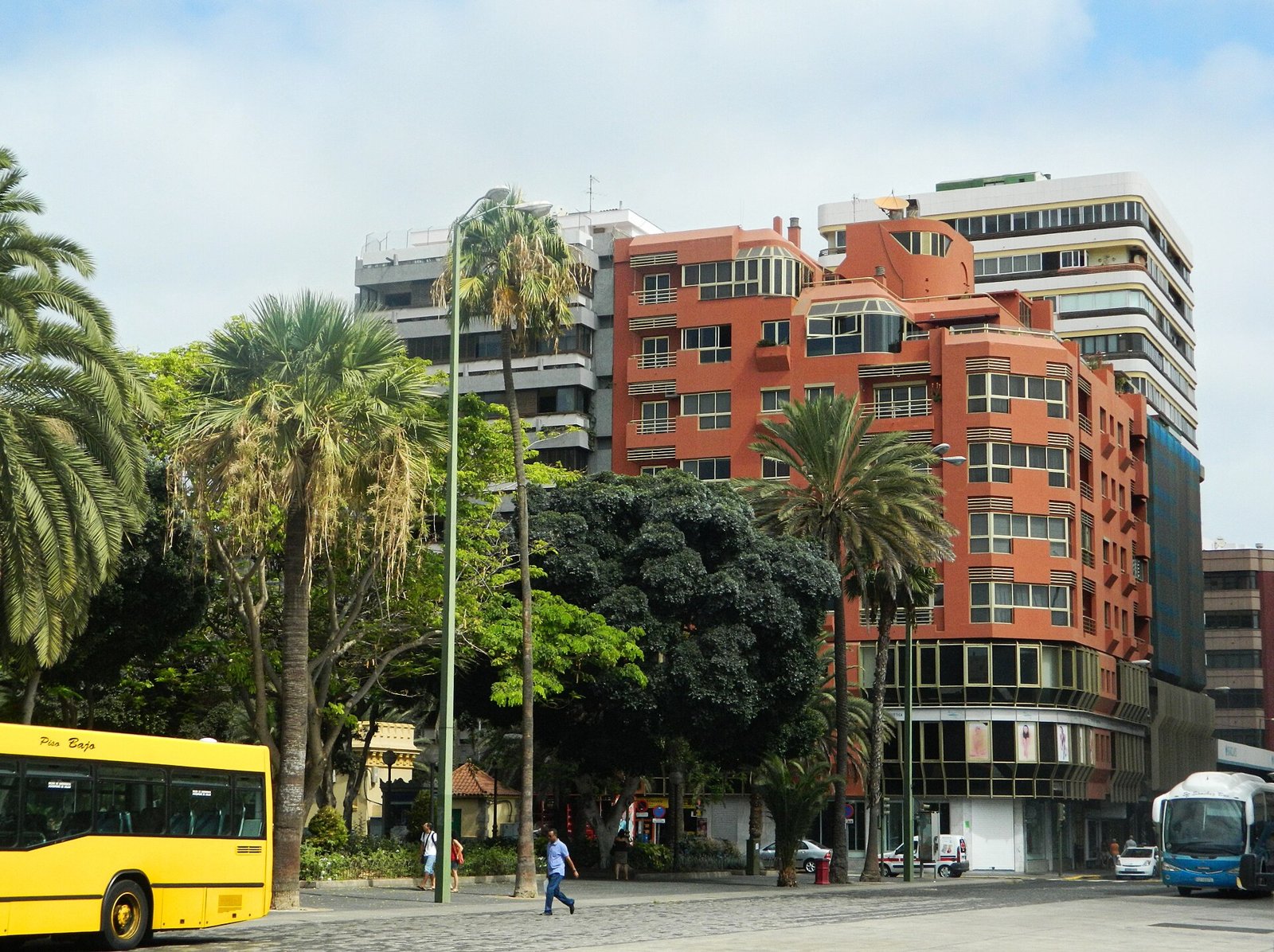
Photo: hh oldman, CC BY 3.0 (Symbolbild).
The gap of almost a percentage point and 39 euros per square metre is not a detail. It explains why two headlines published in the same week can describe the same market differently. What follows sets out who publishes each index, what each one actually measures, and what can safely be said about August in the islands.
The August numbers, one by one
According to idealista, the Canary Islands ended August 2026 at 3,336 euros per square metre, up 6.7 per cent on the year. In that table the archipelago is the fourth most expensive autonomous community, behind the Balearic Islands (5,595 euros per square metre), Madrid (5,059) and the Basque Country (3,784).
According to Fotocasa, the islands stood at 3,375 euros per square metre, up 7.5 per cent year on year but down 0.7 per cent on the previous month. In its ranking the Canaries come fifth, behind Madrid, the Balearics, the Basque Country and Catalonia. Translated into a typical 80-square-metre flat, Fotocasa calculates that the asking price went from 251,008 to 269,997 euros in a year.
Fotocasa also breaks the region down by province: Las Palmas at 2,899 euros per square metre, up 14.7 per cent, the sharpest rise in the archipelago, and Santa Cruz de Tenerife at 3,687 euros per square metre, up 3.6 per cent. The more expensive province is the one rising most slowly, and the cheaper one is accelerating fastest. Any regional average hides that contrast entirely.
Why two credible indices disagree
Idealista and Fotocasa appear to measure the same thing, but not over the same universe. Each builds its index from the listings published on its own portal, so these are asking prices, what the seller wants, not what the buyer eventually signs before a notary. Each portal sees only its own catalogue, with its own mix of locations, property types and sizes, and applies its own filters and weightings. If one portal takes in more coastal villas in a given month while the other takes in more urban flats, the average moves without the market having changed.
There is also the arithmetic of the annual rate. A change is always measured against the same month a year earlier, so if the August 2025 base differed between the two portals, the percentages diverge even when today's levels are almost identical. In practice, a point of difference between two asking-price indices is methodological noise rather than disagreement about direction: both point upwards.
A different family of indicators sits alongside them. The Colegio de Registradores, Spain's association of property registrars, works with registered transactions, that is, prices actually recorded in deeds. The House Price Index of the national statistics office INE is built on real sales and is quarterly, not monthly. Tinsa starts from valuations, a figure estimated by a professional appraiser. Three ways of looking, three results, and they cannot be strung together as if they were a single series.
The Canaries against the rest of Spain
Here is the most counter-intuitive finding. Both portals place the Canary increase well below the Spanish one. Idealista puts Spain as a whole at 2,924 euros per square metre in August, up 12.5 per cent on the year and down 0.3 per cent on the month, and notes that the country has now recorded twenty consecutive months of double-digit annual rises. The Canaries, at 6.7 per cent, fall outside that group, along with the Balearics (5.1 per cent), Madrid (7 per cent) and La Rioja (7.8 per cent). Fotocasa, for its part, puts the Spanish August increase at 15.6 per cent, the seventieth consecutive month of rises.
Read together, the two indices say the same thing: the Canary Islands remain among the most expensive regions in Spain in absolute terms, but no longer among those getting more expensive fastest. In relative terms the archipelago is decelerating against a national market that is running harder. Regions that have been under strain for longer tend to reach that phase before the rest.
The transaction-based indicators tell a similar story on a different calendar. According to the registrars' statistics reported by the newspaper La Provincia, the Canary Islands passed the 3,000 euro per square metre mark for the first time in the second quarter of 2026, reaching 3,052 euros, a rise of 13.1 per cent on the previous quarter, while the number of sales fell 15.3 per cent to 5,970. From the INE, the most recent regional breakdown we were able to verify is the first quarter of 2026: 10.76 per cent for the Canaries against 12.9 per cent nationally. The Canary figure for the second quarter could not be confirmed for this article and is therefore not asserted here.
What is driving it
The diagnosis repeated across the sources consulted is an imbalance between scarce supply and demand that is not letting up. In June 2026, around 77 per cent of transactions in the Canaries involved second-hand homes and only 23 per cent new builds, according to La Provincia. The market depends almost entirely on the existing stock.
New construction is moving, but not necessarily to where it is missing. The outlet Canarias en Pleno reports that building permits along the islands' coast grew 39 per cent year on year, while warning that development is aimed above all at the holiday and second-home segment, which is more profitable than building for permanent residents.
Outside demand is the other visible factor. According to the Colegio de Registradores, foreign buyers accounted for around 29.3 per cent of home purchases in the Canaries in the second quarter of 2026, with 32.2 per cent in Santa Cruz de Tenerife and 26.5 per cent in Las Palmas; buyers from the European Union made up roughly 18 per cent of the total. On the specific effect of holiday-let regulation on sale prices, the sources consulted contain no quantitative measurement. Holiday lets appear as a factor squeezing the residential supply, but attaching a number to their share of the price rise would go beyond what the data say.
What it means in practice
For buyers, the figure that matters is not the percentage but the effort. Tinsa put the cost of buying in coastal municipalities at around 40 per cent of the average household's disposable income in the first quarter of 2026, above the 35 per cent usually cited as a prudent threshold. A study by idealista puts the purchase effort in the Canary capitals at about 25 per cent in Las Palmas de Gran Canaria and 24 per cent in Santa Cruz de Tenerife, figures that are highly sensitive to which income and which mortgage terms are assumed.
For renters, the pressure is more immediate. Fotocasa put the average rent in the Canaries at 16.09 euros per square metre in July 2026, 7.2 per cent higher than a year earlier, which for 80 square metres works out at roughly 1,287 euros a month. According to an idealista study reported by La Provincia in August, rent now absorbs around 31 per cent of income in the Canary capitals.
For owners, the August message has two sides. The asking-price level is still rising in annual terms, yet the monthly change was negative both in the Fotocasa figure for the islands (down 0.7 per cent) and in idealista's national figure (down 0.3 per cent). A single month does not mark a turn in the cycle, and the price a listing asks is not the price a registry eventually records. This article describes market indicators; it contains no recommendation to buy, sell or invest.
Key figures
- Canary Islands, August 2026: 3,336 euros per square metre, up 6.7 per cent year on year, according to idealista
- Canary Islands, August 2026: 3,375 euros per square metre, up 7.5 per cent year on year and down 0.7 per cent on the month, according to Fotocasa
- Spain, August 2026: 2,924 euros per square metre and up 12.5 per cent according to idealista; up 15.6 per cent according to Fotocasa
- Provinces, August 2026 (Fotocasa): Las Palmas 2,899 euros per square metre (up 14.7 per cent); Santa Cruz de Tenerife 3,687 euros per square metre (up 3.6 per cent)
- Canary Islands, second quarter of 2026: 3,052 euros per square metre in registered prices, with sales down 15.3 per cent on the quarter, according to the Colegio de Registradores
- Foreign buyers: 29.3 per cent of Canary home purchases in the second quarter of 2026, according to the Colegio de Registradores
FAQ
- How much did second-hand housing rise in the Canary Islands in August 2026?
- By 6.7 per cent to 3,336 euros per square metre according to idealista, and by 7.5 per cent to 3,375 euros according to Fotocasa. Both are asking-price indices and both figures refer to the same month.
- Why do idealista and Fotocasa not agree?
- Because each measures the listings on its own portal, with different samples, property types and weightings, and because the August 2025 comparison base also differed. Neither measures registered sale prices.
- Which index comes closest to the price actually paid?
- Those of the Colegio de Registradores and the INE House Price Index, which are built on real transactions. Both are quarterly and are published later than the portal figures.
- Are Canary prices rising faster than in the rest of Spain?
- Not according to either portal. Idealista gives 12.5 per cent for Spain against 6.7 per cent for the islands, and Fotocasa 15.6 per cent against 7.5 per cent. The Canaries remain expensive in level, not in pace.
- Is there a difference between the two Canary provinces?
- Yes. According to Fotocasa, in August Las Palmas stood at 2,899 euros per square metre and was up 14.7 per cent, while Santa Cruz de Tenerife stood at 3,687 euros and was up 3.6 per cent.
Read on
- Industrial prices in the Canary Islands jump 18.5% in July, second-steepest rise in SpainCanary Islands · 26 August
- Canary Islands Records Second-Highest Mortgage Surge in SpainCanary Islands · 20 July
- Canary Islands: Police warn of WhatsApp dance vote scamCanary Islands · 22 October
- Binter Canarias: Routes, Baggage and Resident DiscountCanary Islands · 21 October
- Canary Islands: Clásico on 25 October, Barça favouritesCanary Islands · 21 October
- All events on the Canary Islands →