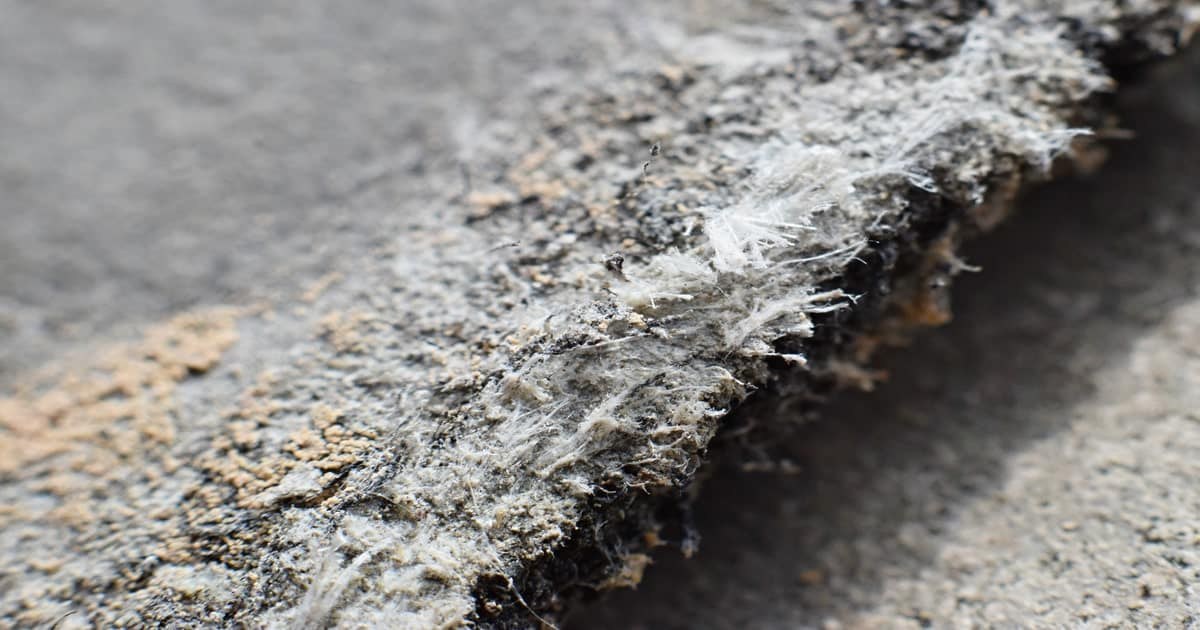
It is a word that makes parents sit up: asbestos. In around 30 schools across the Canaries the material is still in place, mostly in roof sheets, downpipes or conduits. The education authority confirmed this in the regional parliament in recent days. The good news first: it is far fewer than the roughly 60 schools affected in 2021 — and the authorities have a timetable. The less good: just as the pace ought to pick up, the islands lack a place to dispose of the toxin at all.
How dangerous is asbestos in a school?
This question first, because it governs everything else. The expert answer is clear and reassuring at once: asbestos is not dangerous as long as it is left untouched. The risk only arises when the material is handled, damaged or broken — then microscopic fibres are released which, if inhaled, can cause serious respiratory diseases and cancer, including the dreaded mesothelioma. So as long as the sheets are intact and undisturbed, they pose no acute danger to pupils.
That is exactly what those responsible stress. Iván González, director-general for educational infrastructure, emphasises that in none of the affected schools is there «a danger to people's health» — and that at any risk they would «act immediately». Asbestos was a common building material in Spain until it was banned on 1 January 2002; the buildings affected mostly date from the 1970s to the 1990s.
Where the problem is concentrated
Not all islands are equally affected. The bulk of cases lies in the province of Santa Cruz de Tenerife, because that is where the archipelago's oldest school buildings stand. On Fuerteventura and Lanzarote there is currently not a single affected school, the authority says — simply because building there is more recent. For the province of Las Palmas and for La Gomera and El Hierro, the government wants to bring the problem «practically to zero» this term. The focus thus remains Tenerife.
Of the 30 schools, work is already under way at twelve (measures in 2025 and 2026), with 18 still pending. Canarian schools are to be completely asbestos-free by 2027. The budget for it was doubled this year to €2 million.
The second problem: where to put the toxin?
Here it gets complicated — and this concerns far more than schools. Until now, asbestos waste was shipped from the Canaries to a landfill in Andalusia. But Andalusia has closed its doors: relying on Spain's 2022 Waste Act, which allows each region to refuse hazardous waste from other territories, it no longer accepts outside asbestos. Catalonia takes a similar line. The law's aim is to prevent a single region from becoming the final destination for asbestos from across Europe.
The problem: the Canaries have no authorised asbestos landfill of their own. And the waste mountain is growing fast — the amount of asbestos removed has quadrupled in just two years, from around 1,000 tonnes (2022) to over 4,100 tonnes (2024). The reason is the deadline in that same law: by end of 2028, asbestos must be gone from the riskiest public buildings, which is speeding up demolition work everywhere.
For now, the stopgap is interim storage: six months are allowed, plus six more — about a year's buffer. After that, a jam looms that reaches well beyond schools: asbestos can also turn up in plumbing and photovoltaic work. The federation of metal and technology firms is already warning that without a solution the construction and renovation sector faces a blockage; more than 1,000 member companies could no longer meet their legal obligations.
The solution that is stuck
The regional government says it has been working for around two years on a way out: landfills of its own on Tenerife and Gran Canaria. One idea is to use the «thousands of voids» left by quarrying rock. Ángel Montañés, director-general for environmental quality, urges calm: asbestos is stored sealed and «inertised», emits no radiation and, once correctly contained, is «no problem for people or the environment». But the plan is stalling: the Gran Canaria island council has already rejected a first project. That leaves the islands only about a year to find a workable solution.
What this means for families
For parents, the key message is: acute panic is not warranted. As long as asbestos is intact and undisturbed, there is no immediate danger, and the authorities are obliged to step in at once if it is damaged. The real test is not the individual roof but the system behind it: the Canaries have to get rid of their toxin but still have nowhere to put it.
How they resolve this bind will determine whether the timetable — 2027 for schools, 2028 for all public buildings — can be met. Until then, asbestos follows the rule experts have always stated: the real risk arises not from leaving it in place, but from removing it improperly. Which is precisely why it matters that, in the end, speed does not win out over care.
Frequently asked questions
- Is my child in danger at an affected school?
- As long as the asbestos is intact and undisturbed, there is no acute danger. Risk arises only when the material is broken or worked on and fibres are released. The authorities must intervene at once if it is damaged.
- Which schools are affected?
- Around 30, mainly in the province of Santa Cruz de Tenerife. On Fuerteventura and Lanzarote there are no affected schools, the authority says. A full public list has not been published.
- By when should the asbestos be gone?
- Schools are to be asbestos-free by 2027. For all high-risk public buildings, the 2022 Waste Act sets a deadline of end-2028.
- Why is disposal a problem right now?
- Andalusia, the previous destination for Canarian asbestos waste, no longer accepts outside hazardous waste. The Canaries have no authorised landfill of their own, and the volume has quadrupled since 2022. About a year's buffer remains through interim storage.
- What is the government planning?
- Landfills of its own on Tenerife and Gran Canaria, for instance in old quarry voids. But the Gran Canaria island council has already rejected a first project.
Read on
- Canaries: Plenilunio ends with over three million effectCanary Islands · 5 October
- Canaries threaten court action over screening of minorsCanary Islands · 8 September
- €177 a day, €24.4 billion a year: the Canaries are catching up with Catalonia — but does «quality over quantity» really pay off?Canary Islands · 24 May
- Canary Islands: Police warn of WhatsApp dance vote scamCanary Islands · 22 October
- Binter Canarias: Routes, Baggage and Resident DiscountCanary Islands · 21 October
- All events on the Canary Islands →
As of 08.06.2026. Sources include the Canarian education authority (statements by Iván González and minister Poli Suárez), the directorate-general for environmental quality (Ángel Montañés), Diario de Avisos, Canarias7, eldiario.es, RTVC, and the business federation CREM/Femete/Femepa. The ban on asbestos in construction has applied in Spain since 1 January 2002. Figures may change as work progresses.