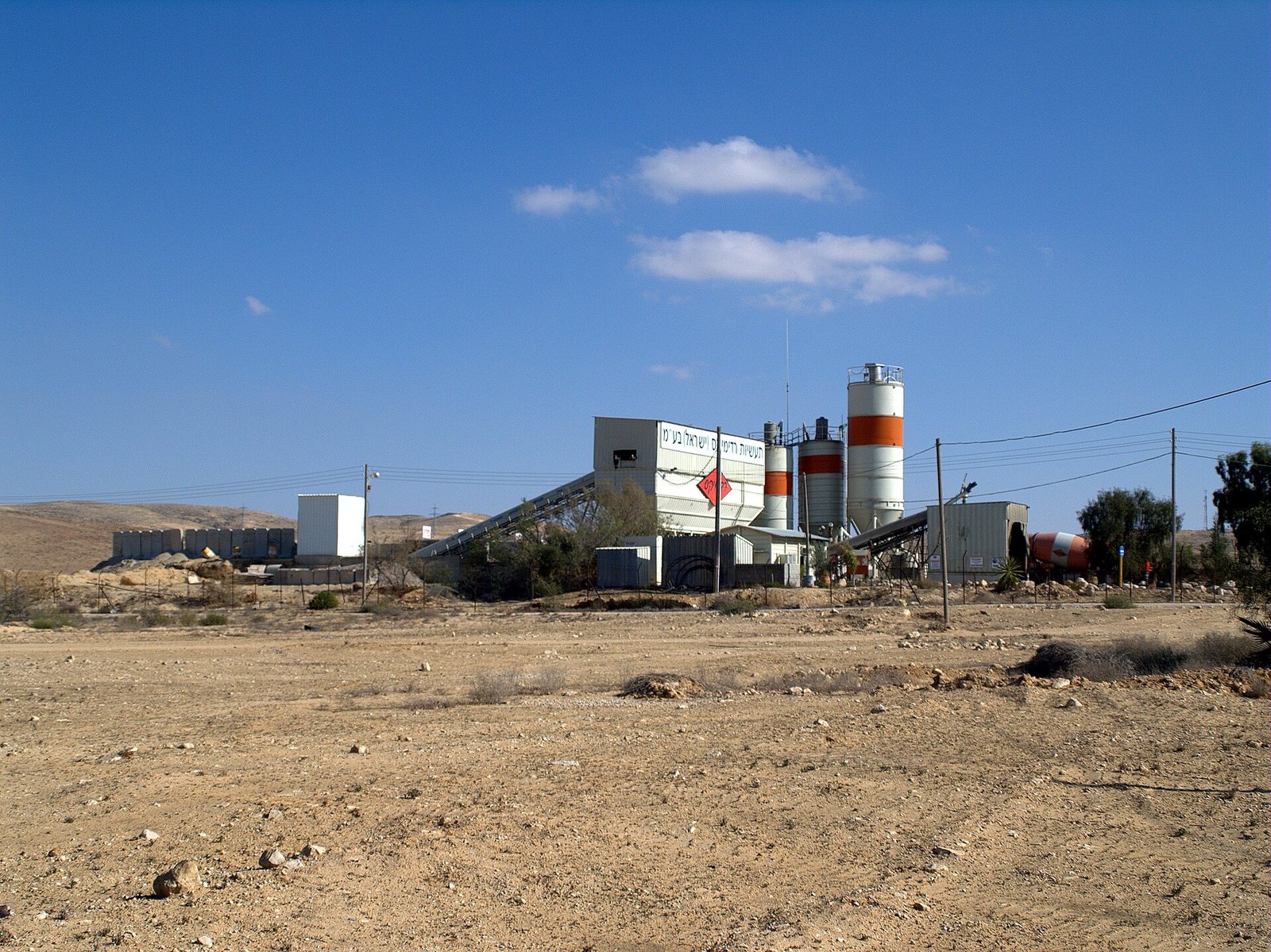
Drive along the sun-baked roads of Gran Canaria's southern coast, and the landscape tells a story of two economies. On one side, the sprawling resorts, golden beaches, and sparkling pools that have made San Bartolomé de Tirajana a global tourism powerhouse. On the other, the functional, robust infrastructure of an industry that quite literally provides the foundations for the island's development. At the heart of this second narrative is the CEISA cement plant, a facility whose presence sparks a complex and often uncomfortable conversation about what the future of the south should look like.
The plant, officially named Cementos Especiales de las Islas (CEISA), is situated in the area of El Pajar, near Arguineguín, with its official address on Bahía de Santa Águeda. It is not a small operation. The company functions as a group with its headquarters in Las Palmas and a significant network of 15 points spanning production, storage, and sales across the Canary Islands. This footprint suggests a vital industrial player, one that supplies the essential cement needed for everything from new hotel complexes and residential villas to public infrastructure projects. For a growing island, this role is undeniably crucial.
The Economic Anchor: More Than Just Dust
It would be easy to view the plant solely through the lens of its environmental impact, but its economic role provides a necessary counterweight. A facility of this scale is a source of direct and indirect employment, offering jobs that are often different in profile from the service-heavy tourism sector. It supports a logistics chain, from the transport of raw materials to the delivery of finished products, creating a web of economic activity that extends beyond its gates. In an archipelago where the cost of importing building materials can be prohibitive, having a local production hub helps to stabilize prices and ensure a steady supply for the construction industry, a sector that is itself a major employer.
The presence of CEISA means that when a new project breaks ground in Maspalomas or a local family renovates their home in Vecindario, a critical component likely originates just a few kilometers away. This short supply chain is an often-overlooked advantage, reducing the carbon footprint associated with shipping vast quantities of cement from the Spanish mainland or beyond. The plant is, in many ways, a silent partner in the region's physical evolution, a partner whose contribution is set in concrete, quite literally, but whose day-to-day value is rarely acknowledged by those who walk on the finished pavements.
The Friction Point: When Industry Meets Paradise
The challenge, however, is impossible to ignore. The very nature of cement production involves the generation of particulate matter and dust. Technical and environmental assessment documents on cement and storage activities consistently point to impacts on air quality, the deposition of sediment, and negative effects on the immediate landscape. When such a facility is located on a coastal strip in a municipality that lives and breathes tourism, these industrial realities are amplified. The proximity to residential areas and hotel zones means that any episode of heavy dust or increased heavy vehicle traffic is not just an operational note; it becomes a community concern.
This is the core of the tension. San Bartolomé de Tirajana's brand is built on images of pristine environments, clear skies, and relaxation. The visual and environmental footprint of a cement plant—the silos, the machinery, the quarrying activity nearby at the San José site—sits awkwardly within this postcard. It raises legitimate questions about land use and planning. Should an activity with these inherent impacts occupy such a sensitive coastal location? The concern is not necessarily about a single catastrophic event but about the cumulative, long-term effect of industrial coexistence on the perceived and actual quality of the tourist experience. It is a classic conflict of uses, where the business of building and the business of leisure are forced into an uneasy proximity.
A Delicate Balance: Jobs vs. The View
This is not a simple story of a villainous industry and a victimized community. The reality is far more nuanced. The plant provides stable employment in a region where the job market can be highly seasonal. For many local families, it represents a reliable paycheck that is not dependent on the fluctuating fortunes of the global travel industry. The economic argument is powerful: a diversified economy is a resilient one. To push out all industry in favor of a tourism monoculture would be a risky long-term strategy, leaving the area vulnerable to external shocks, as recent history has shown.
On the other side, the complaints from residents and those invested in the tourism sector are not without merit. The perception of a degraded environment, even if localized, can have an outsized impact on a destination's reputation. The dust that settles on a nearby terrace or the rumble of trucks on a road also used by holidaymakers are tangible reminders of this clash. The debate, therefore, is not about whether we need cement or tourism, but about how to manage the coexistence more intelligently. It is a conversation about mitigation, about the highest possible environmental standards, and about a transparent dialogue between the company, the local council, and the citizens who live between the cement silos and the sun loungers.
Looking Ahead: The Future of the Southern Coast
The path forward for the area around Arguineguín and El Pajar requires a pragmatic vision that acknowledges both realities. The CEISA plant is not a temporary installation; it is a deeply embedded part of the industrial fabric of Gran Canaria. The question is how it can modernize and adapt to minimize its footprint. This could involve investment in advanced dust suppression technologies, stricter monitoring of air quality with public access to the data, and a thoughtful landscaping plan to better integrate the facility into its surroundings. The goal should not necessarily be to hide the industry, but to demonstrate that it can operate with the utmost respect for its sensitive neighbors.
For the municipality of San Bartolomé de Tirajana, this is a defining planning challenge. It must reconcile its identity as a premier tourist destination with its role as a functional, lived-in territory that includes industrial activity. The solution will not be found in absolutes. It lies in a carefully negotiated middle ground where economic necessity is balanced with environmental and social responsibility. The cement plant is a test case for a much wider question facing the Canary Islands: how to build a future without undermining the very beauty that makes the islands so special. The conversation, long overdue, is only just beginning.
Common questions
- What exactly is the CEISA plant?
- It is a cement production and storage facility officially named Cementos Especiales de las Islas, located in the El Pajar area near Arguineguín in the south of Gran Canaria.
- Why is the plant's location considered controversial?
- Its coastal location in a tourism-dependent municipality creates a conflict between the industrial activity, which generates dust and heavy traffic, and the pristine image required by the nearby resort areas.
- Does the plant provide important benefits to the local economy?
- Yes, it provides direct employment, supports a local logistics chain, and supplies essential building materials for construction across the Canary Islands, helping to avoid the higher costs of importing cement.
- Who owns and operates the CEISA plant?
- The company operates as a group with its headquarters in Las Palmas and a network of 15 facilities across the Canaries. The exact ownership structure is not fully confirmed in public corporate records.
- What are the main environmental concerns associated with the plant?
- The primary concerns, based on technical documents for similar activities, are emissions of particulate matter and dust, which can affect local air quality, deposit sediment, and have a negative visual impact on the landscape.
Read on
- Southern Gran Canaria: growing unease over mass tourismGran Canaria · 22 August
- Canary tourism: new land-use rules and a July hotel recordCanary Islands · 26 August
- Canary Islands end tourism moratorium fight, trading building rights for €500 millionCanary Islands · 21 August
- Gran Canaria: 9 events on 23–25 November weekendGran Canaria · 24 October
- Tejeda: free wine festival with 8 bodegas on 1 NovemberGran Canaria · 24 October
- All events on Gran Canaria →
Stand 25 July 2026. This article is based on publicly available corporate information, technical environmental assessment documents, and an analysis of the local economic context. Specific financial figures for the company are not publicly verified.