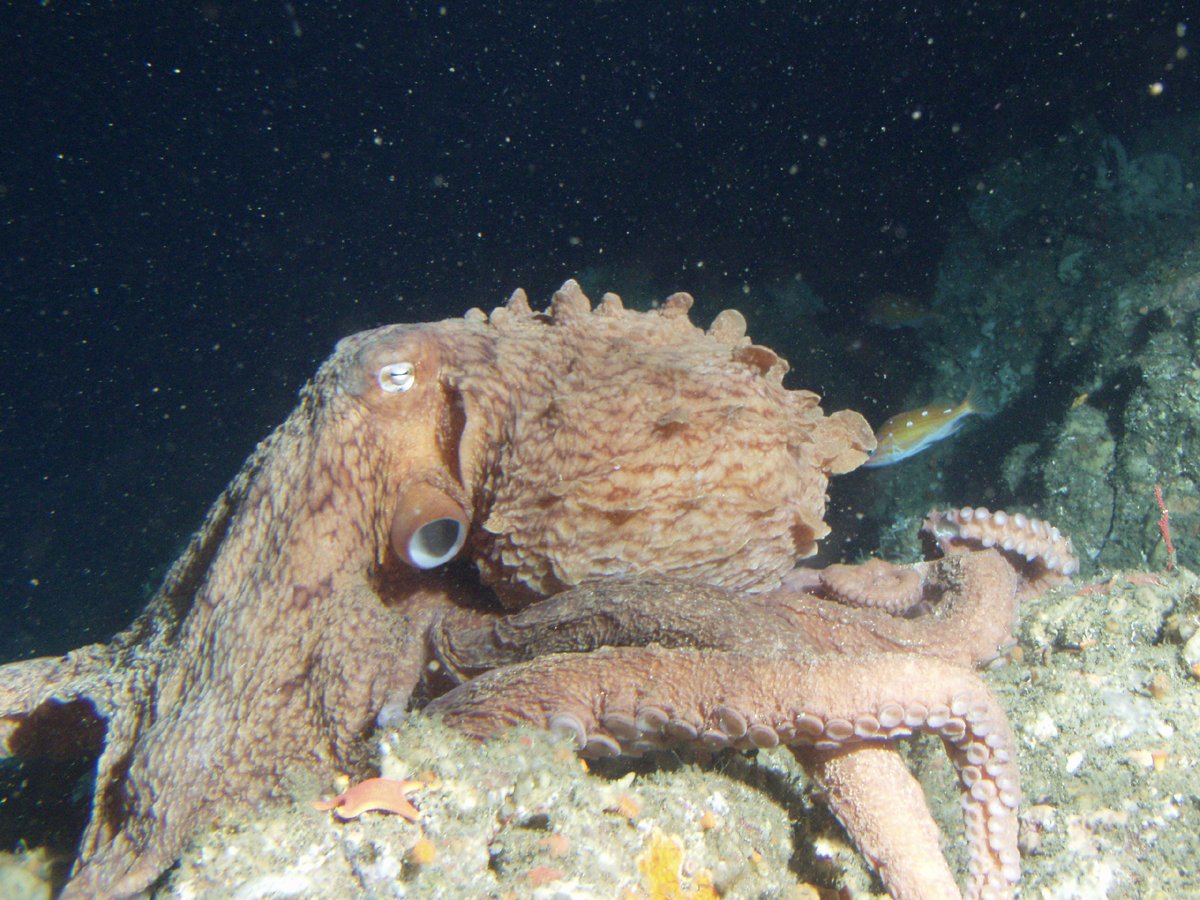
It was a project that divided opinion like few others in the Canary Islands. On one side, the promise of hundreds of jobs and a new high-tech industry for Gran Canaria. On the other, a global storm of protest from scientists, animal rights groups and even the European Parliament. Now, after more than five years of administrative battles, the plan for the world's first large-scale octopus farm is officially dead in the water.
On 24 July 2026, Nueva Pescanova sent a letter to the Port Authority of Las Palmas formally withdrawing its application for the concession at the La Esfinge dock. The port authority confirmed receipt and announced it would initiate an expediente de caducidad – an expiry proceeding – to close and archive the file that had been open since May 2021. In plain terms, this means the project in its current form cannot go ahead. If anyone ever wants to build an octopus farm on that site, they will have to start a completely new permitting process from zero, with a fresh environmental review and a new concession request.
What the expiry proceeding actually means
Under Spanish administrative and port law, caducidad is what happens when a procedure simply runs out of time because the legal deadlines and conditions were not met. It is not a fine or a punishment – it is more like a file being closed because nothing has happened for too long. The authority can then archive the paperwork, and the applicant loses any rights tied to that specific procedure.
In this case, the trigger was clear. Back in 2023, the Government of the Canary Islands ruled that the project needed a full Environmental Impact Assessment, not the simplified one originally envisaged. The authorities were concerned about potential significant adverse effects on the marine environment around the port. Nueva Pescanova, however, never submitted that detailed environmental study. Then, in January 2026, a separate procedure for discharge permits into the Atlantic was itself declared lapsed for non-compliance with deadlines. By May 2026, the port authority had already started the caducidad process because the application had, in official language, remained without effect after years of inactivity.
The practical consequence is simple: the port license linked to this project enters legal limbo and is then closed. The farm cannot be built under the existing application. The land at La Esfinge, currently used on a temporary basis by shipping agent Hamilton next to the Naviera Armas terminal, will continue to serve other port activities.
From grand plans to regulatory paralysis
When Nueva Pescanova first unveiled its vision, the numbers were eye-catching. A 65-million-euro investment, around 50,000 to 62,000 square metres of port space, and a target of 3,000 tonnes of octopus per year at full capacity. The company talked about creating roughly 300 jobs – about 150 direct, highly qualified positions in aquaculture and marine sciences, plus another 150 indirect jobs. Early timelines aimed for operations to start around 2023, later pushed back repeatedly as permitting delays piled up.
The project was meant to anchor a whole new octopus aquaculture industry in the Canary Islands, positioning Las Palmas as a global hub for cephalopod farming. Supporters pointed to strong demand for octopus in Spain, the EU and beyond, arguing that farming would stabilise supply and prices while reducing pressure on wild stocks.
But the regulatory reality proved far more complicated. The port concession application, opened in May 2021, soon ran into headwinds. The requirement for a full Environmental Impact Assessment was a major turning point. Without it, the project entered what local maritime media described as a critical phase of paralysis. The missing environmental documentation activated expiry mechanisms, giving the port authority the power to officially close the file and block any extraordinary extensions.
Why the company finally walked away
In its withdrawal letter, Nueva Pescanova cited a combination of factors. The company pointed to the significant extension of administrative deadlines and the uncertainty about completing environmental and sectoral procedures. It also noted that additional requirements had substantially changed the conditions, scope, timescale and regulatory framework compared to the original project. The decision, the firm stressed, reflected technical, business and regulatory considerations – not an admission that the project was environmentally or ethically unviable.
Behind those careful words lies a simpler story. The environmental review had highlighted specific risks that were hard to overcome at that particular site: foul odours affecting a nearby passenger terminal, and the degradation of port water quality with organic waste from the farm. These were not abstract concerns – they were concrete problems tied to the location itself.
Nueva Pescanova has left the door open to alternative sites or designs for octopus farming in the future. The company points to years of research at its Biomarine Research Center in Galicia, where it says it has developed methods to monitor and control stress levels in captive octopuses. But for now, the Las Palmas project is finished.
The animal welfare storm that shaped the debate
No discussion of this project is complete without the ethical dimension. From the start, the octopus farm attracted fierce opposition from scientists and animal rights organisations around the world. The core argument was simple but powerful: octopuses are highly intelligent, sentient creatures, and farming them intensively is inherently cruel.
A landmark report from the London School of Economics concluded that high-welfare octopus farming is impossible. The authors pointed to the animals' need for complex cognitive stimulation, their solitary and exploratory nature, and the lack of any scientifically validated humane slaughter method. Internal planning documents reported by media suggested proposed killing methods such as ice slurry or freezing, which critics argue would cause prolonged suffering.
Campaigns by groups like Compassion in World Farming, the Aquatic Animal Alliance and Eurogroup for Animals mobilised global attention. Petitions, reports and open letters urged the Canary Islands government and EU institutions to block the farm. A 2022 European Parliament question raised concerns that the facility could involve killing around one million octopuses per year, stressing that high-welfare farming of the species is not possible.
Nueva Pescanova consistently pushed back, arguing there is not enough scientific evidence to prove octopus farming is inherently incompatible with welfare. The company framed much of the criticism as ideological and maintained that its priority was to guarantee animal welfare by applying wild-species conditions to farming. But the reputational damage was done, and some retailers had already pledged not to stock farmed octopus on ethical grounds.
Common questions
- Is the octopus farm completely cancelled?
- Yes, in its current form. Nueva Pescanova has withdrawn its application and the port authority is closing the file. Any future project at La Esfinge would need a completely new permitting process.
- Why did the project fail?
- The main reason was the failure to submit a full Environmental Impact Assessment required by the Canary Islands government. This, combined with missed deadlines, triggered the expiry proceeding.
- What happens to the promised 300 jobs?
- Those jobs will not materialise under this project. The land at La Esfinge continues to be used for other port activities, including by shipping companies.
- Could Nueva Pescanova try again somewhere else?
- The company has indicated it is open to alternative sites or designs for octopus farming, but no specific new location has been announced.
- What was the main ethical objection?
- Scientists and animal rights groups argue that octopuses are highly sentient and intelligent, making intensive farming inherently cruel. There is also no validated humane method for slaughtering them.
Read on
- Gran Canaria this weekend, 30 Oct–1 Nov: Halloween, FinaosGran Canaria · 26 October
- Gran Canaria: ExpoDeca 2026 free from 12 NovemberGran Canaria · 26 October
- Gran Canaria: 9 events on 23–25 November weekendGran Canaria · 24 October
- Playa del Cura: check current water qualityGran Canaria · 25 October
- Gran Canaria: bus routes 05 and 303 clock change timesGran Canaria · 25 October
- All events on Gran Canaria →
Stand: 26 July 2026. This article is based on official statements from the Port Authority of Las Palmas, Nueva Pescanova's withdrawal letter, and verified reporting from international aquaculture and news media. All claims about animal welfare and environmental impact reflect the documented positions of the organisations and scientists cited.