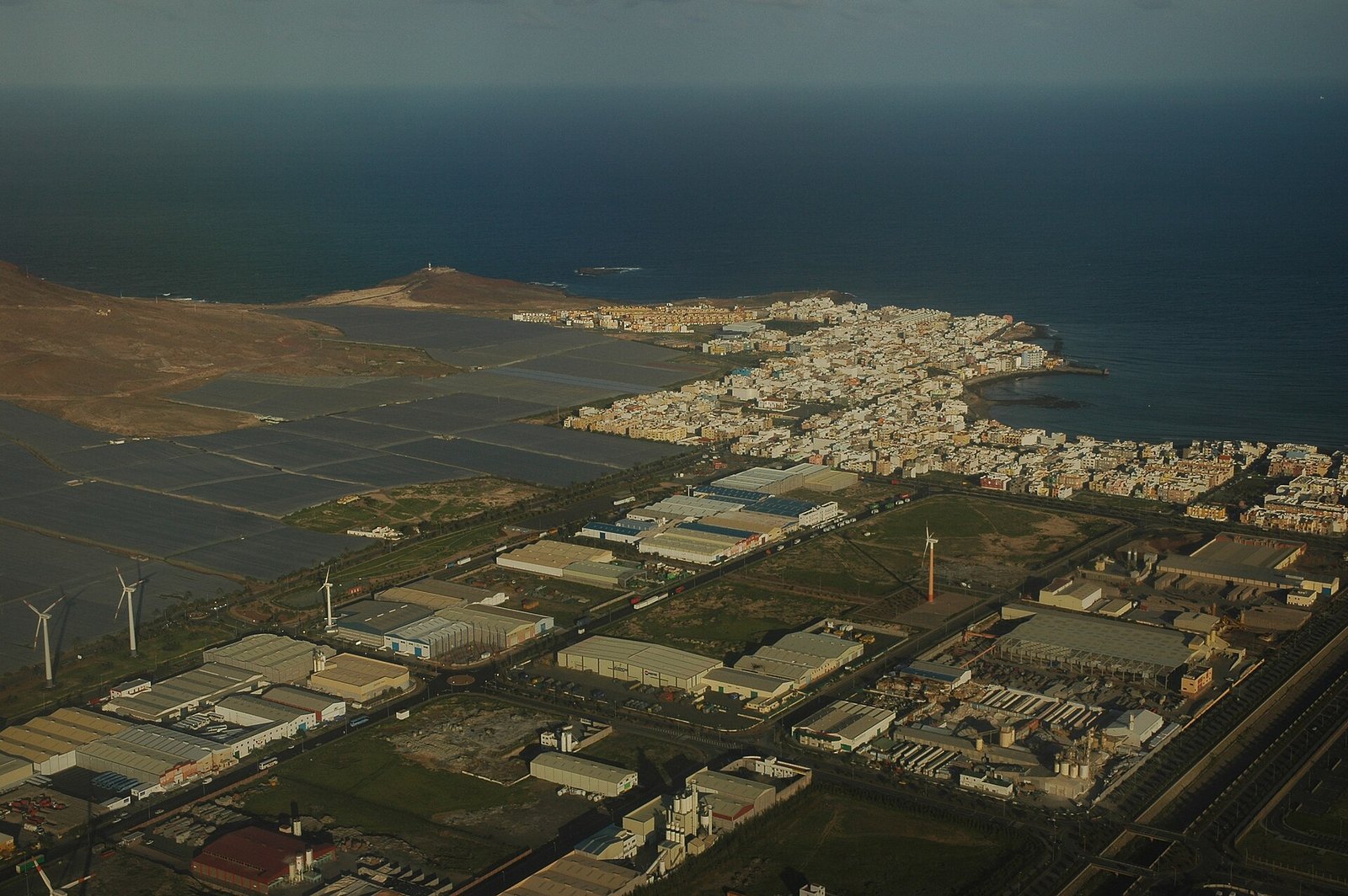
If you live in the Canary Islands, you feel the rhythm of the economy every day: the flow of visitors, the busy restaurants, the construction cranes on the horizon. What you are far less likely to notice is the slow, quiet shrinking of another part of the islands' economic fabric—its industry. A new analysis from Espiral 21 has drawn attention to this trend, estimating that the Canary Islands have lost around 8,000 industrial jobs over recent years. It is a number that deserves a closer look, not because it signals an immediate crisis, but because it tells a longer story about the structural challenges facing the islands.
The 8,000 figure is not a single-year collapse. Espiral 21 presents it as a cumulative erosion, a gradual loss from an industrial base that was never particularly large to begin with. For context, total industrial employment in the Canaries was reported at roughly 42,800 workers in early 2021. Losing 8,000 jobs from a pool that size is significant—it represents a notable shrinking of a sector that already plays a supporting role in an economy dominated by services and tourism. The analysis treats this not as a short-term blip but as a structural warning, a sign that the conditions for making things locally are becoming harder to sustain.
Why local factories are under pressure
Espiral 21 points to a familiar set of disadvantages that anyone running a business in the islands will recognise immediately. First among them is the cost of energy. The Canary Islands are not connected to the continental European grid and rely overwhelmingly on imported fuels, which creates a permanent overcost for any factory that needs power. Transport and freight add another layer: raw materials must be shipped in, and finished goods face high costs to reach mainland or international markets. These are not new problems, but they have become more acute as global competition intensifies.
Then there is the competition itself. Local producers face a constant flood of imported industrial goods manufactured at scale in larger economies and landed in the islands at prices that small Canarian firms simply cannot match. The analysis highlights how cheap imports undercut local production across a range of sectors, from food processing to manufactured goods. This is not about a lack of quality or effort on the part of Canarian businesses—it is a structural mismatch between small, insular production and globalised supply chains.
An economy built around tourism
Perhaps the deepest challenge, however, is the shape of the islands' economy itself. The Canary Islands have built a world-class tourism sector that generates employment, investment, and growth. But that success has also concentrated attention and resources. Espiral 21 argues that policy and investment have long favoured tourism and services, leaving industry in a residual and vulnerable position. The result is an economic model with a very strong engine and very few alternatives when that engine sputters.
This is what researchers call a "double vulnerability": heavy dependence on tourism demand, combined with high poverty and unemployment indicators that make diversification difficult. When tourism thrives, the pressure to build a broader industrial base feels less urgent. But the gradual loss of industrial jobs means the islands lose skills, supply chains, and the kind of economic resilience that comes from making things locally. The 8,000 jobs are not just numbers—they represent workshops, know-how, and a piece of the islands' productive capacity that is quietly disappearing.
Small firms, big challenges
Espiral 21 also draws attention to the nature of Canarian industrial firms themselves. Most are small, often family-run operations with limited capacity to invest in innovation or modernisation. In an era of digitalisation and green transition, the gap between what these firms can afford and what global competition demands is widening. The analysis suggests that many struggle to access financing for new equipment or technology, and that the administrative burden of regulations can be disproportionately heavy for small businesses without dedicated compliance teams.
This is not a story of failure—many of these firms have survived for decades against considerable odds. But survival is not the same as growth, and the gradual loss of jobs reflects a sector that is slowly being squeezed rather than one that has collapsed overnight. The question Espiral 21 raises is whether the islands are content to let this continue, or whether there is a collective interest in keeping a more diverse economic base alive.
What could change
The analysis does not present a detailed policy blueprint, but it sketches the contours of a debate that is beginning to take shape. One focus is on reducing the cost gaps that penalise local production—particularly energy and logistics. Investments in renewable energy and smarter freight connections could help level the playing field, at least partially. Another line of thinking involves promoting innovation and higher-value-added activities within existing industrial niches, rather than trying to compete with mass producers on volume.
The green transition itself is seen as a potential opportunity. Decarbonisation investments could anchor new industrial projects in energy and environmental technologies, creating jobs that are tied to the islands' own transformation rather than being captured by outside firms. Business voices are also calling for more predictable regulation and better coordination among regional agencies that support industrial investment. The message is not anti-tourism—Espiral 21 is clear that tourism will remain the islands' main economic engine—but it is a call to think more deliberately about what else the economy can do.
Common questions
- Where does the 8,000 jobs figure come from?
- It comes from an analysis by Espiral 21, which describes a gradual loss of industrial employment over several years. It is a journalistic estimate, not an official statistic.
- Is this a sudden crisis?
- No. The analysis frames it as a structural, long-term erosion rather than a short-term shock. It is a warning about the gradual shrinking of the industrial base.
- What are the main reasons for the job losses?
- High energy and transport costs, strong competition from imported goods, the dominance of tourism in the economy, small firm size, and regulatory burdens are all cited as contributing factors.
- Which sectors are most affected?
- The exact sectoral breakdown is not specified in the accessible material, but energy-intensive manufacturing and traditional industries competing with global brands are mentioned as particularly exposed.
- What is being proposed to address this?
- Debate focuses on reducing cost gaps, promoting innovation, using green transition investments to anchor new industrial projects, and improving regulatory predictability.
Read on
- Canary Islands flights this weekend: 5,640, up 420Canary Islands · 1 November
- Canaries to Dakar: Binter direct flight, entry rules, DSSCanary Islands · 30 October
- Canary Islands 16–18 October: fiestas, concerts, partiesCanary Islands · 16 October
- Canaries: 211,400 homes empty as new rental scheme opensCanary Islands · 28 October
- Canary Islands doctors' strike extended to 10 NovemberCanary Islands · 28 October
- All events on the Canary Islands →
Stand 3 August 2026. This article is based on an Espiral 21 analysis and publicly available context. The 8,000-job figure is a journalistic estimate and has not been independently verified against official statistics.