The night in Calle Faro
Residents reported a reptile in the street in the early hours of Thursday, 10 September 2026. "The reptile could be rescued without harm," reads the statement from the Policía Local, distributed by Europa Press the same day. Everything else is open: the species was not publicly identified, no destination was named, and whether the animal escaped or was abandoned is what the investigation has to establish. No possible keeper has been identified. What is fixed is the order of magnitude — a metre of caiman weighs more than two kilograms.
Not an isolated case — but not all of it from this month
On 12 September 2026 Diario de Avisos put together a chronicle of Canarian exotic-animal cases that mixes the years. Ordered by their actual dates: on 26 February 2022 the Guardia Civil and the local police seized a private collection in Telde which Canarias7 puts at 53 protected specimens — among them an African dwarf crocodile, two Cuvier's dwarf caimans and a Gila monster. On 5 July 2025 inspectors at the port of Cádiz found a backpack aboard a ferry bound for the Canaries containing three snakes, a scorpion, two large spiders, two monitor lizards and two sugar gliders; two arrests followed on 22 July in Tenerife (RTVC).
After that: the emu struck on the GC-3 (13 October 2025), five servals in Las Palmas (5 November 2025), 19 exotic animals in Santa Brígida (1 June 2026) and, on 1 September 2026, a Barbary ground squirrel on Lanzarote that had travelled in the bodywork of a hire car from Fuerteventura.
20,000 snakes: why more is at stake on an island
The squirrel explains the principle. On Fuerteventura today's population goes back to a pair released as pets in 1965; the authorities now estimate it at up to a million animals. Lanzarote has none yet — hence the alarm over a single animal in a wheel arch. The CSIC researcher Julien C. Piquet and the biologist Ramón Gallo told the magazine Climática (6 July 2025) that island species evolved in isolation and have no answer to introduced predators.
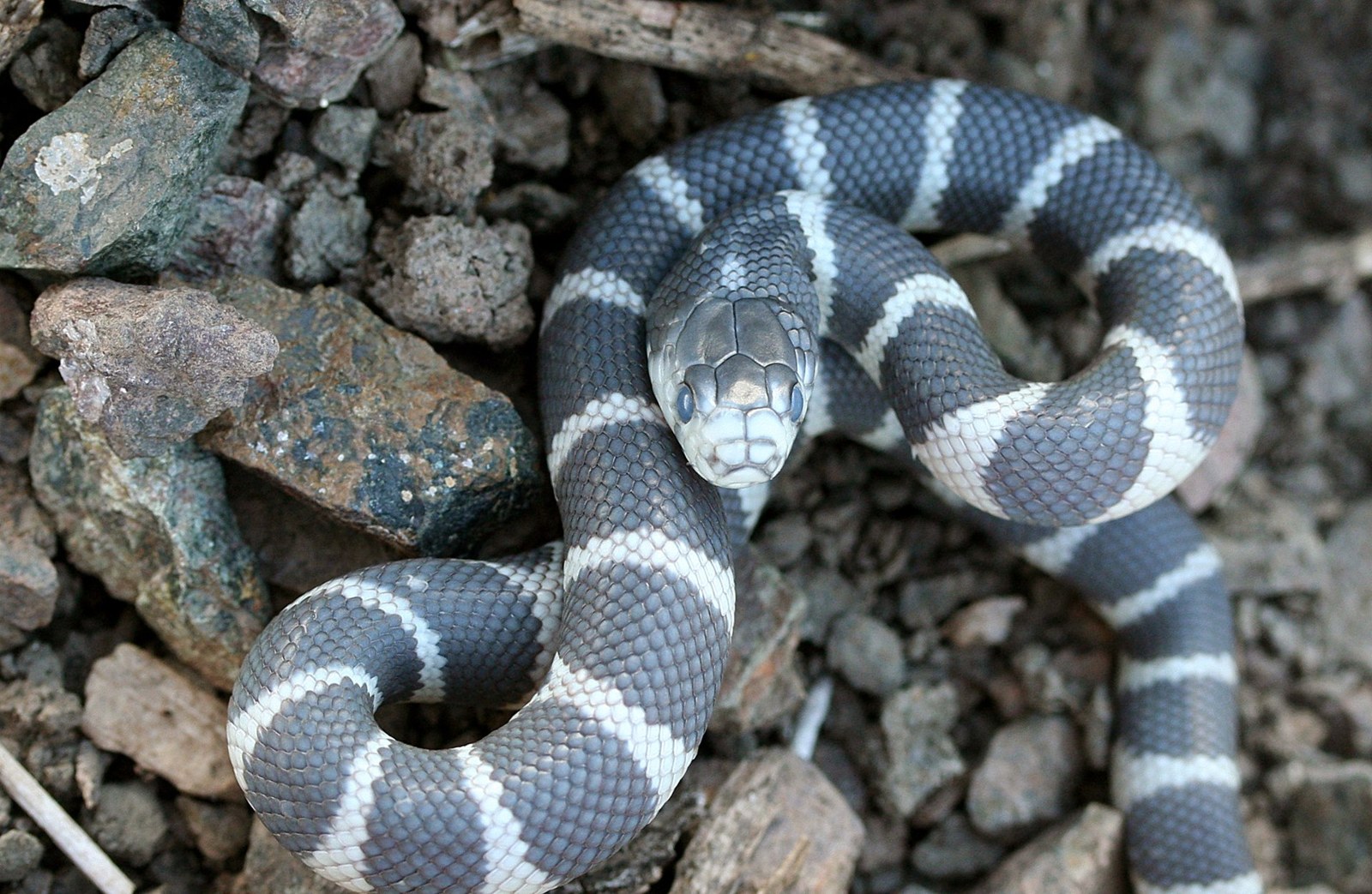
The costliest proof is the California kingsnake: "more than 20,000" specimens removed since the programme began (Gobierno de Canarias, 11 May 2026), against a cumulative 9,134 in early 2021. The consequences are documented by the Canary Islands biodiversity database, after Piquet & López-Darias (2021): in the invaded zones the giant lizard Gallotia stehlini fell by 93.5 to 99.6 per cent, the skink Chalcides sexlineatus by 82.8 and the gecko Tarentola boettgeri by 52.1 per cent. Since July 2026 the EU project Life Reptiles has been running: 8.2 million euros through 2031.
What is allowed — and what a keeper can do
The positive list that is to settle which wild animals may be kept as pets in Spain is set out in Ley 7/2023 (articles 35 to 37) but is not yet in force; the draft regulation went out to consultation on 17 April 2026. Until then transitional provision 2 applies: venomous reptiles, all reptiles over two kilograms except chelonians, all primates and wild mammals over five kilograms are prohibited. Under article 36, nothing listed in the catalogue of invasive alien species (Real Decreto 630/2013) can ever join the list, and its article 7 already bans possession, transport, trade and release. Legal keepers need paperwork: article 3 of Real Decreto 7/2018 requires a CITES permit, a certificate or an invoice giving species, number, permit number and marking.
Anyone who can no longer care for their animal finds the route in the same provision: notify the competent authority — in the Canaries the regional department for ecological transition or the island's Cabildo — which places the animal in a wildlife recovery centre, a zoo or an animal protection body. It may not be killed for that reason (article 37.3).