One show, several million
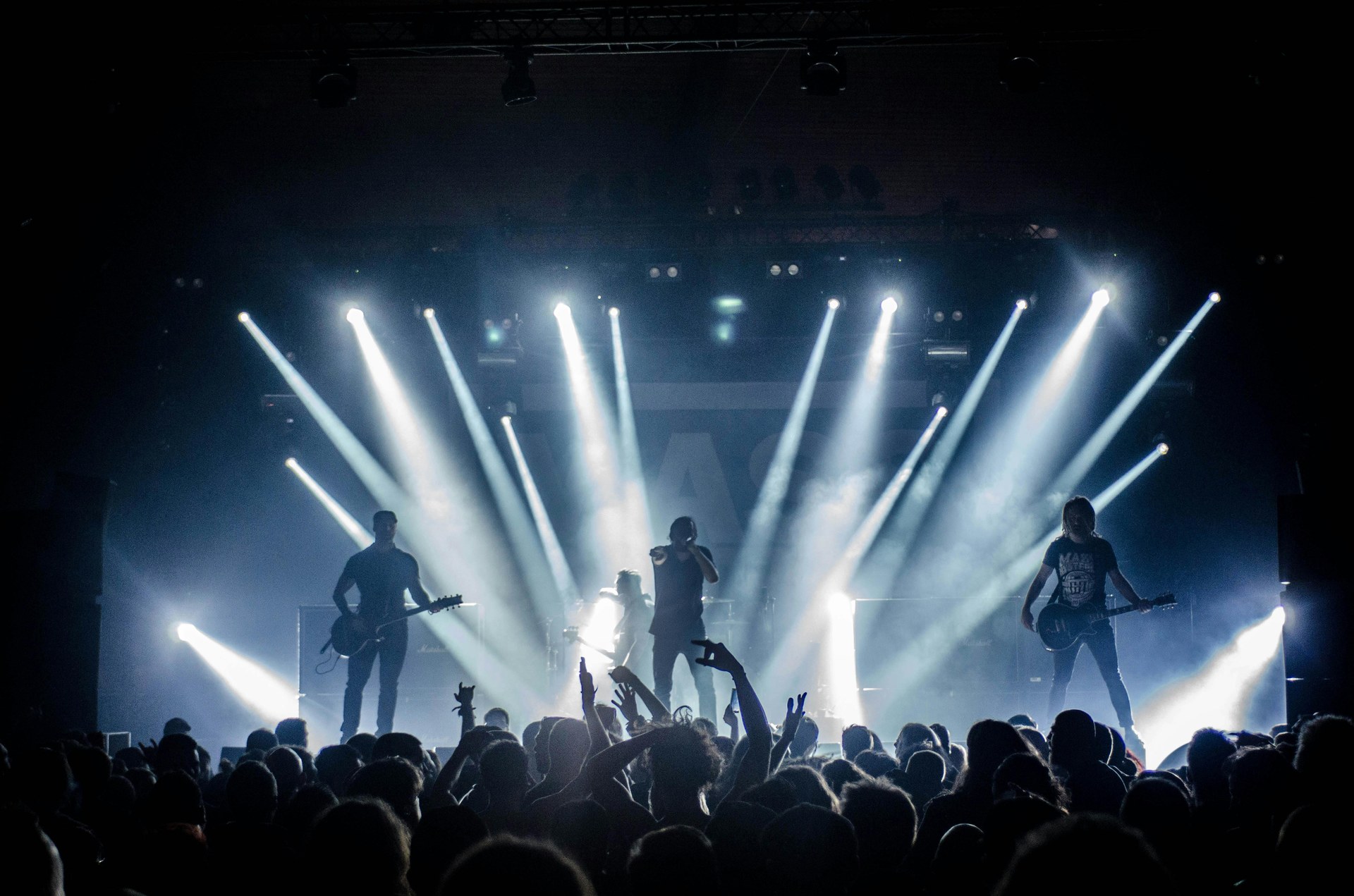
Imagine flying to Las Palmas in late May. You wander through Vegueta, drink coffee on Calle Mayor de Triana, eventually hear a band playing on the beach — four or five musicians, Canarian drums, a singer with an old song about the island. You toss a banknote in the hat, clap, walk on.
What you don't know: one in three of those musicians has been waiting almost a year to be paid by city hall. For a show they played in 2025 at one of the city's five neighbourhood festivals.
In February it was different. Marc Anthony stepped onto the stage in Parque Santa Catalina. Sixty minutes of salsa, nearly twenty thousand people, free admission. His fee — from the city's taxpayers: €1,395,860, including an Argentine support act. With fifty percent paid up front, before he stepped onto the stage. Industry standard for international stars.
The other reality
The five neighbourhood festivals — El Pilar, La Naval, Los Dolores, San Lorenzo, El Carmen — are what tourists never see. Local programming in districts where no hotel stands. Drum groups, folk dancers, local salsa bands, comedians, event technicians. Eight contracts, total value: €968,635. Roughly one fourteenth of what the Carnival cost.
How much of that got paid: for a long time, nothing. The artists had to forward their IGIC (Canarian sales tax) and autónomos contributions (self-employed social charges) anyway. «The Spanish tax office doesn't ask whether you've been paid yet», one affected artist told Canarias7. «That's only the artist's problem.»
Between March and May the pressure built — artists discussed public action, anonymous sources for fear of losing future contracts. On 14 May, the responsible councillor Betsaida González (Citizen Participation) announced: La Naval, Los Dolores, San Lorenzo, El Carmen had been paid. What's still missing: about a third of the debt for El Pilar. The opposition spokeswoman Jimena Delgado-Taramona of the PP called it «still suffocating the suppliers». For La Naval, the contract hadn't even been formally registered at one stage.
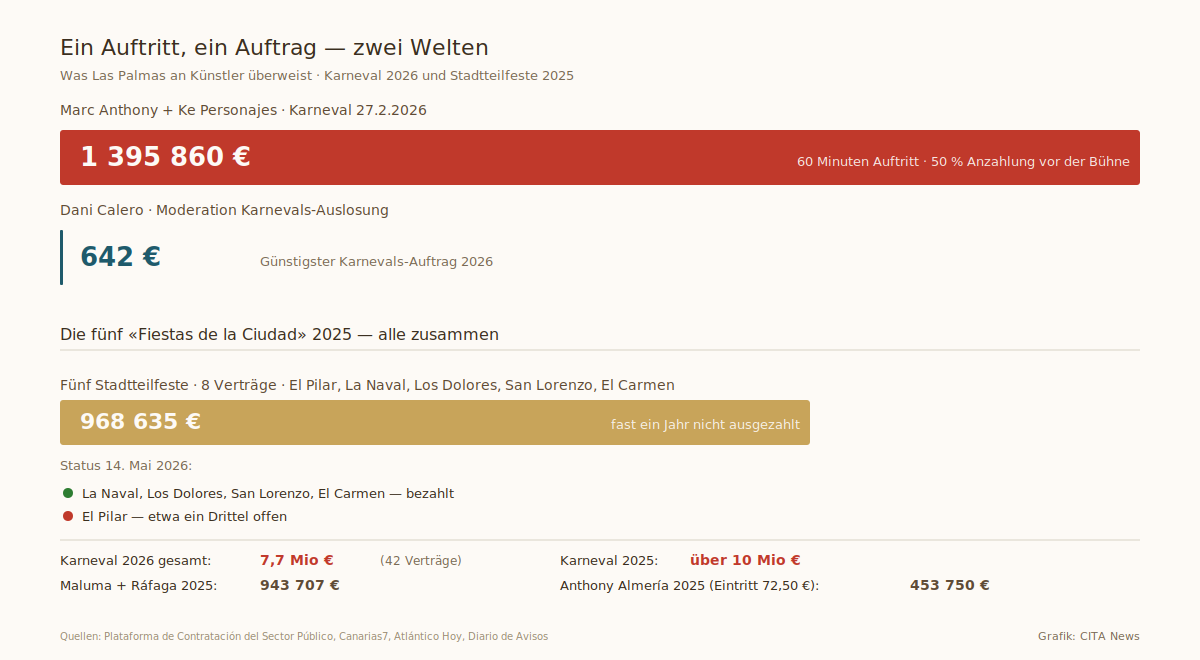
One performance, two worlds. Graphic: CITA News.
What the city can actually afford
Las Palmas is not poor. The 2026 Carnival cost €7.7 million — 18 percent more than the city had budgeted. In 2025 it was over €10 million. Marc Anthony's appearance alone cost almost double what Maluma's did the year before (€943,707). For comparison, Anthony had cost the Almería festival €453,750 — but there, visitors paid €72.50 entrance. In Las Palmas: free.
What does the Sociedad de Promoción say about the gap between stars and local bands? Canarias7 asked. There was no reply.
The contract with Big Time 2022, which holds Anthony's exclusive Spain representation, was awarded by «procedimiento negociado sin publicidad» — a single-bidder negotiation without open tender. Standard practice for stars with exclusive management, but disputed by others: VOX councillor Rafael de Juan in March demanded a review of the Carnival budget and a «cap on star fees».
What it means for visitors
Directly: nothing. You won't notice any of this on the ground in Las Palmas. Indirectly: everything. The Carnival is a major international promotion engine — financed largely from the taxes of a city whose residents spend an average 31 percent of their income on rent. And under the sparkle of the Carnival live musicians who keep Canarian folk traditions alive — and are waiting for their payment.
If you're in Las Palmas between July and October and you stumble onto one of these «Fiestas de la Ciudad» — El Carmen (July), San Lorenzo (August), Los Dolores (September), La Naval and El Pilar (October) —, drop something generous in the hat. The songs are older, smarter, closer to what the island actually is. And the musician playing them still doesn't know when his money is coming.
Frequently asked questions
- Who is Marc Anthony and why was he in Las Palmas?
- Salsa star from New York with Puerto Rican roots, one of the most successful Latin American singers of his generation. Headlined the 2026 Carnival on 27 February.
- What are the «Fiestas de la Ciudad»?
- Five neighbourhood festivals in the traditional districts of Las Palmas, held in summer and autumn — with local musicians and folk tradition. The opposite of the commercial international Carnival.
- What is the Sociedad de Promoción?
- The municipal company that organises Carnival, neighbourhood festivals, tourism promotion and cultural events. It manages the public budget for them.
- What happens if Las Palmas doesn't pay?
- Local artists can go to Spain's administrative courts. Most don't — for fear of losing future contracts.
- When do the 2026 neighbourhood festivals take place?
- El Carmen mid-July, San Lorenzo mid-August, Los Dolores September, La Naval and El Pilar October.