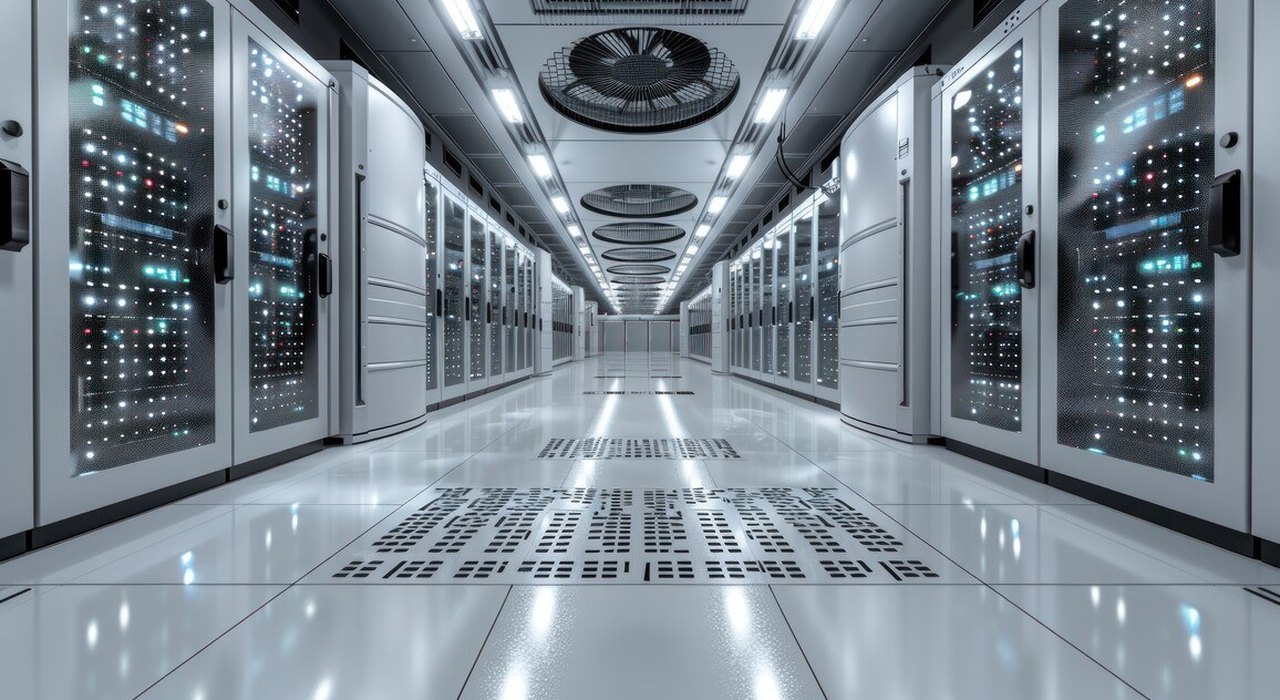
When artificial intelligence and supercomputers come up, hardly anyone thinks first of an Atlantic island known mainly for beaches and a volcano. Yet there, in the industrial estate of Granadilla de Abona in the south of Tenerife, a computing facility is taking shape that could correct the island's image. It bears the name «Centro de Supercomputación del Atlántico» — Atlantic Supercomputing Centre.
What is really happening — and what is not
First, some context, because the headlines doing the rounds are inaccurate. It is not the case that a German corporation opened a finished «AI factory» this week. In fact, the Cabildo (island council) of Tenerife, through its technological institute ITER, completed the first phase of the procurement in late May and presented the project. So this is an undertaking under way, not an inauguration. The much-cited figure of «500 jobs» does not appear in the institute's official statement either; it comes from individual media reports and should be treated with caution.
What is clearly documented is the financing: the first phase is budgeted at €5.5 million and is to grow to up to €10 million over the course of the project. Here too, individual reports diverge with far higher sums — the figure from the project promoter is authoritative.
The German partner's role
Of particular interest to our readers: the centre is being delivered in a public-private model together with the German technology company Bechtle, which has a presence in 14 countries and employs over 16,000 people. Bechtle is the specialist technology partner contributing the high-performance solutions — not, as portrayed in shorthand, the operator opening a centre of its own. The driving force and future location is the island institute ITER.
What the machine can do
And technically the project is genuinely impressive. The new computer is to reach a performance of 1.3 to 1.4 petaflops — in simple terms, well over a quadrillion calculations per second, equivalent to the capacity of around 450 powerful office computers running at once. It combines conventional processors with high-performance graphics cards (four nodes with eight NVIDIA H200 cards each), of the kind needed to train AI models, and offers around five petabytes of storage. Together with the existing TeideHPC and ANAGA systems — Tenerife has run supercomputers since 2013 — this is to become Spain's fifth most powerful computer, with prospects of a place on the global Top 500 list.
A detail that fits the islands well: the facility is to run on 100 percent renewable energy while taking up less space than the older TeideHPC, at higher performance and efficiency.
What it is all meant to achieve
Behind the prestige lies an economic idea: Tenerife wants to move away from the image of merely consuming technology and instead become a location for research, patents and tech companies itself — part of a strategy of economic diversification beyond tourism. Concretely, universities such as La Laguna and Las Palmas, along with research centres, are to be able to carry out computing tasks that today take months in a matter of hours: in climate research, genomics, biomedicine, astronomy or audiovisual production. The institute points, not without pride, to having been one of five Spanish centres able to analyse coronavirus variants during the pandemic.
The reckoning
That leaves the sober assessment. «Southern Europe's tech hub» is for now an aspiration, not an achieved status — and such labels accompany almost every major project. What is realistic: Tenerife is building on more than a decade of experience in supercomputing and is now expanding it noticeably, with a solid German partner and green power supply as a genuine locational advantage. Whether this becomes the hoped-for magnet for international tech projects will only be decided in the years ahead. But the step is real — and it shows that the Canaries can be more than a holiday backdrop.