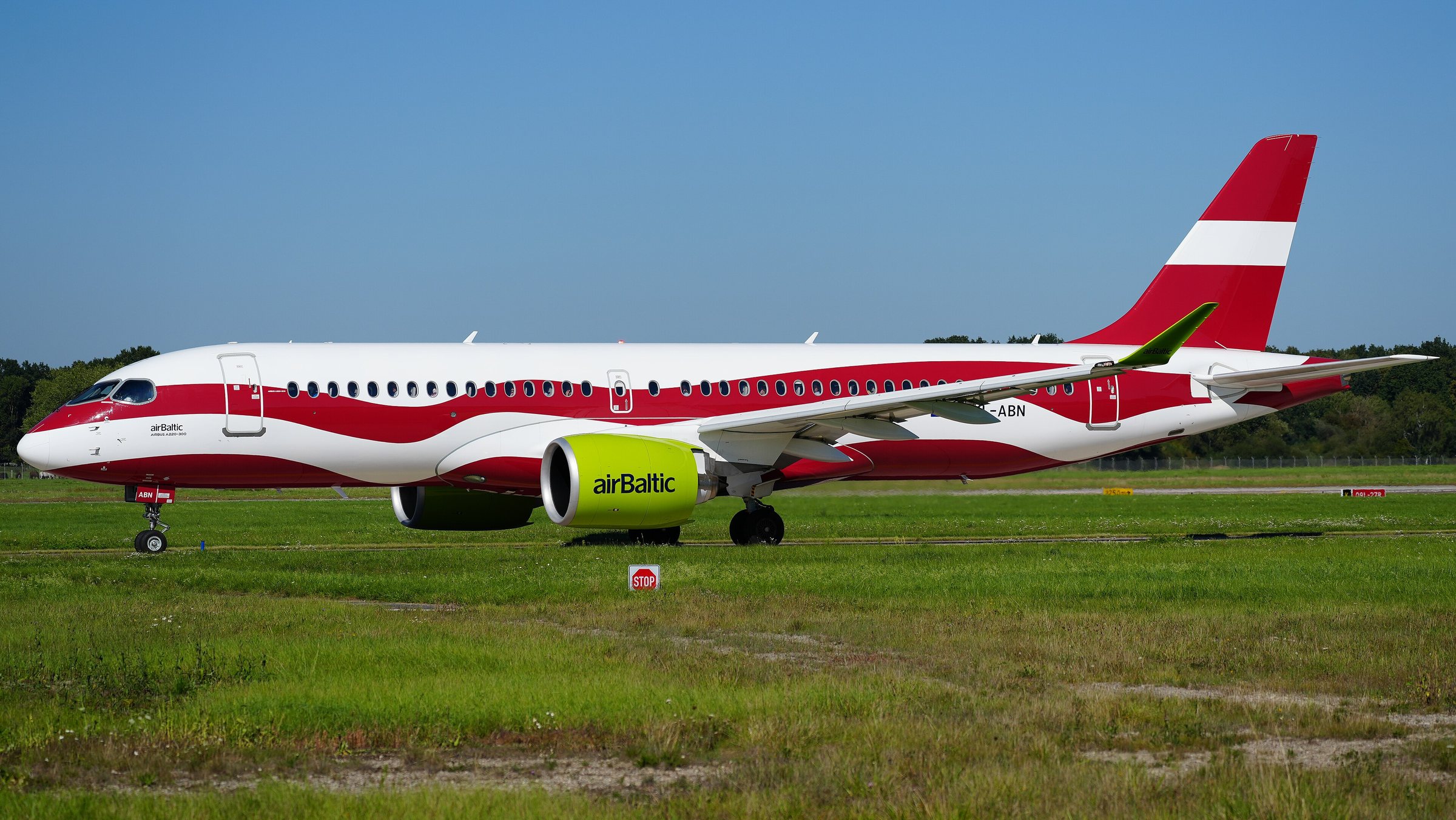
What happened to the Air Baltic flight?
An Air Baltic flight with tourists on board could not land on Gran Canaria and flew to Fuerteventura instead. The report blames strong wind at Gando airport and says the flight tracker Radar Canaria flagged the diversion.
The aircraft is due to spend the night on Fuerteventura. According to the report, the passengers must be rebooked.
The report gives no flight number, departure airport, time or passenger count. It also carries no statement from Aena (the Spanish airport operator) or AEMET (the state weather service).
No independent confirmation of the diversion had turned up by Sunday 8 November. The case stays unconfirmed, although strong wind would fit the weather on the islands.
What should travellers do now?
If you fly to Gran Canaria during the storm days, check your flight status with the airline or Aena before you leave for the airport. A diverted aircraft lands at the alternate airport, not at the booked destination.
Fuerteventura regularly serves as the alternate airport for Gran Canaria and Lanzarote. If you have booked a transfer or pick-up, tell the provider early about a delay.
According to the report, Binter flew its ATR aircraft between the islands as normal. Whether that holds in stronger wind is open, and no assurances have been given.
If you are diverted, keep your boarding pass and receipts and ask the airline for a written reason. No official advice on this from Aena or the Canary government turned up.
How stormy will the islands stay?
AEMET lists Bruna as a borrasca (storm system) named by the Portuguese weather service IPMA on 5 November 2026. The AEMET page gives no start date.
The emergency directorate of the Canary government activated the PEFMA plan. From 12:00 on 7 November it issued a wind alert for La Palma, El Hierro, La Gomera, Tenerife and Gran Canaria.
Fuerteventura, Lanzarote and La Graciosa stayed on prealerta (the preliminary warning level). For Sunday, the government expected gusts above 90 km/h.
A coastal alert applied from 18:00 and a rain alert from 21:00 for the western islands and Gran Canaria. The eastern islands stayed on prealerta.
In a special warning, AEMET sees the first phase running from late on Saturday night, 7 November, into Sunday 8 November. Around 120 litres of rain per square metre are forecast for Tenerife and 150 to 180 for La Palma.
Conditions should improve on Monday 9 November and for much of Tuesday 10 November. The second phase begins on Tuesday afternoon and lasts until Wednesday 11 November.
In that phase AEMET expects 80 to 120 litres per square metre on La Palma and Tenerife, and 40 to 80 on La Gomera and Gran Canaria. Wind reaches 70 to 90 km/h, locally 100 to 120 km/h, and from Thursday 12 November AEMET expects less instability.
How often do flights divert from Gran Canaria to Fuerteventura?
On 25 July 2025, Aena sent six international flights bound for Gran Canaria to Fuerteventura. They came from France (2), Germany (3, one from Hamburg) and Marrakesh (1).
Aena sources blamed wind shear on approach. On 9 April 2026 it was Fuerteventura's turn, as wind or poor visibility stopped landings.
Two flights returned to their departure airport. Three, from Seville, Madrid and Warsaw, diverted to Tenerife South.
In 2025 Aena counted 6,886,935 passengers on Fuerteventura, 6.8% more than in 2024. According to Aena, that was the strongest growth of any Canary airport.
Gran Canaria handled 15,826,553 passengers, up 4%. No official statistic on how often flights divert from Gran Canaria turned up, and how many aircraft diverted on 7 November is also unknown.
What rights do passengers have after a diversion?
Even in cases of force majeure, the airline must pay for meals, a hotel if needed and transfers between airport and hotel. That follows from Article 9 of EU passenger rights regulation 261/2004, which applies to scheduled flights.
Under Article 5.3 the airline can refuse compensation if it proves extraordinary circumstances. Recital 14 gives weather that rules out the flight as an example.
One lawyer argued in 2021 that weather does not automatically release the airline. It must show that the conditions affected this particular flight.
Air Baltic has not published what terms it offers its passengers on Fuerteventura. Details on a hotel, rebooking or compensation in this case are missing.
What is still unclear?
Nobody has published the flight number, departure airport, time or passenger count of the aircraft. It is also unclear whether other flights diverted and whether the aircraft has left Fuerteventura yet.
The weather data may shift with new AEMET reports. The source also does not separate which figures come from the weather service and which from the regional government.
The next storm phase begins on Tuesday afternoon, 10 November. Diversions remain possible on such days, until AEMET expects less instability from 12 November.