Why Gran Canaria for remote work
Gran Canaria sells itself in one line: it is the warmest place in Europe you can legally work from without leaving the EU. Las Palmas hovers around 21–24°C all year, and the island runs on Western European Time — the same clock as London and Lisbon. That single fact is a quiet superpower: your morning overlaps with mainland Europe and your afternoon still catches the US East Coast.
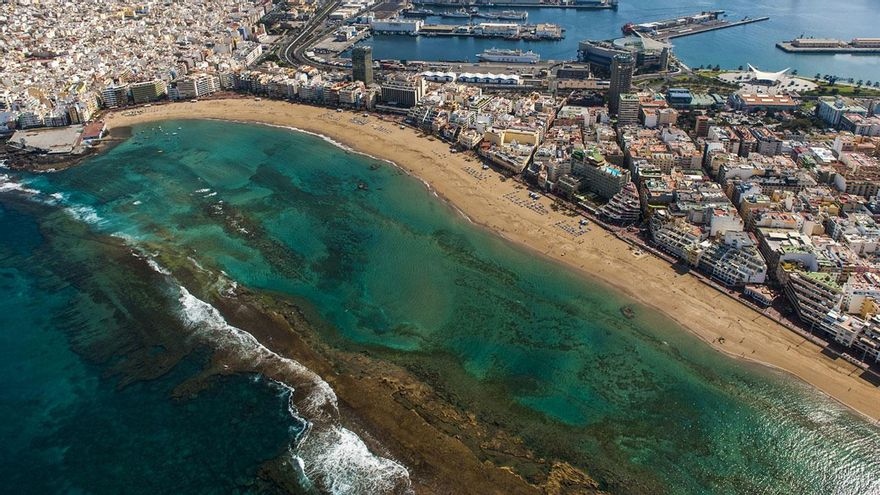
Add fast fibre in most flats, low crime and a major airport with direct flights across Europe, and you have the practical reason thousands of remote workers winter here. The less practical reason is Las Canteras, a three-kilometre city beach where the after-work plan is a swim. Las Palmas has Europe’s densest year-round nomad community — and that, more than anything, is what makes everything else easy.
The Digital Nomad Visa, decoded
EU and EEA citizens need no visa — just register your residency (see our moving guide). Everyone else has, since 2023, a purpose-built route: the Digital Nomad Visa (DNV), for people working remotely for companies based outside Spain.
The 2026 essentials
Income: about €2,849/month (€34,188/year) — 200% of Spain’s minimum wage. Add roughly €1,070 for a partner and about €357 per extra family member.
Work history: a relationship of at least 3 months with your employer or clients, and a company that has existed for at least a year.
Spanish clients: allowed on the freelancer route, but local income must stay under 20% of the total.
Also required: private health insurance with no co-payments, a clean criminal record, and proof of qualifications or experience.
Apply from abroad through a Spanish consulate for a one-year visa, or from inside Spain for a three-year residence permit straight away. It renews in two-year steps, and after five years of legal residence you can apply for long-term residency.
Tax: the 24% rate and the Canary edge
This is where the Canaries quietly win. DNV holders can opt into a special regime that charges a flat 24% on Spanish-source employment income up to €600,000, instead of progressive rates that climb toward 47%. It can apply for up to about five years and, for many remote employees, is the difference that makes the move pay for itself.
On top sits the Canary Islands’ own advantage: the local sales tax, IGIC, is just 7% versus 21% mainland VAT, and the REF/ZEC framework lets qualifying companies pay as little as 4% corporate tax under strict conditions.
What it actually costs in 2026
Gran Canaria is no longer “cheap,” but it remains a bargain against any comparable European coastal city. The honest monthly numbers for one person in Las Palmas:
Monthly budget, one person (Las Palmas, 2026)
Rent — studio / 1-bed, long-term: €600–900
Coworking membership: €125 (hot desk) to €180 (dedicated desk)
Groceries: €200–250
Eating out & leisure: €200–300
Transport (bus / occasional car): €30–60
Fibre + mobile: €40–50
Comfortable total: roughly €1,400–1,800 all-in
A coffee is about €2.10, a beer €3, a sit-down meal for two around €50. The one line that bites is rent: long-term flats in Las Palmas and the south are genuinely scarce, and short-term “nomad” lets cost far more — so start hunting early (see the checklist).
Internet, eSIMs and staying online
Connectivity is the reason this island works as an office. Fibre reaches most of Las Palmas and the southern resorts at 300–600 Mbps for around €30/month, and 5G covers the populated coast. For your first week — before you have a contract — an eSIM (Holafly, Airalo) gets you online the moment you land. Cafés along Las Canteras and in Triana are reliably laptop-friendly, but for video calls nothing beats a wired coworking desk.
Coworking and where nomads gather
Memberships start around €125/month for a hot desk, about €180 for a dedicated desk, or roughly €80/week and €20/day if you are just passing through. The established names cluster in Las Palmas: Repeople (which also runs the city’s biggest nomad community and events), Sky Coworking, White Forest and Fico. Each has a flavour, so trial a couple of day passes before committing — our deeper breakdown lives in the internet & coworking guide.
Where to live: Las Palmas vs the south
Las Palmas is the nomad capital. Base yourself near Las Canteras beach, in Puerto de la Luz, Triana or historic Vegueta, and you can live car-free: beach, coworking, supermarkets and nightlife within a walk. The south — Maspalomas, Playa del Inglés, Meloneras — trades city energy for guaranteed sun, a resort calm that suits heads-down work and bigger flats, but you will want a car.
One honest note: the influx of high-earning remote workers has pushed rents up and created real friction with locals. Be a good neighbour — take long-term contracts over short-term lets where you can, and learn a little Spanish.
Building a community fast
The fastest way to feel at home is to skip the solo-flat trap. Las Palmas runs on Slack and WhatsApp groups for every niche — surf-and-work mornings, founder dinners, language exchanges — plus weekly meetups hosted by the coworking spaces. Buy a coworking membership in week one even if your flat has a desk: it is the best money you will spend on your network and your sanity.
Healthcare and insurance
For the DNV you must hold full private health insurance with no co-payments — expect roughly €50–100/month depending on age and cover. Once you are working and paying into the Spanish system (an autónomo freelancer pays monthly social-security contributions), you also gain access to the public health service, which on the island is solid. Our health-insurance guide walks through the options.
Your first-week checklist
- ✓ Land with an eSIM already active so you are online on day one.
- ✓ Book your NIE/TIE appointment and register on the padrón at the town hall.
- ✓ Open a Spanish bank account — you will need it for rent and contracts.
- ✓ Sign a long-term rental (Idealista, Fotocasa, local Facebook groups) rather than overpaying for short lets.
- ✓ Join a coworking space and the community Slack/WhatsApp groups in week one.
- ✓ Talk to a Canaries asesor about the 24% regime and tax residency before day 183.
Frequently asked questions
- Do I need the Digital Nomad Visa?
- EU/EEA citizens do not — just register your residency. Non-EU citizens working remotely for a foreign employer use the DNV.
- How much income do I need?
- About €2,849/month (200% of the Spanish minimum wage), with more required for a partner or family.
- Is Gran Canaria cheaper than mainland Spain?
- Living costs are similar to slightly lower, but the real edge is tax: 7% IGIC instead of 21% VAT, plus the optional 24% flat regime for DNV holders.
- Where do most nomads stay?
- Las Palmas, around the Las Canteras beach — Puerto de la Luz, Triana and Vegueta.
- Is the internet reliable?
- Yes — fibre at 300–600 Mbps in most flats. Use a coworking desk for important calls.
- When is the best time to come?
- Year-round, but winter (November to March) is peak nomad season for the mild weather.