What the order covers — and what it does not
The text runs to one page and refers back to the founding order of 7 August for everything substantive. Three points matter to travellers. Direction: the checks apply to people arriving from Italy; departures from the Canaries to Italy are not covered by the Spanish order. Mode: air and sea only, land borders do not appear in the text. And the trigger: what counts is the last airport before arrival, not nationality. Passengers connecting through Munich or Madrid fall outside it; those landing directly from Milan or Rome do not.
The reason is in the BOE — but not in this order
The extension gives no reasons of its own. It states only that the “razones de urgencia y de amenaza grave para el orden público y la seguridad interior” persist. They are set out in the founding order INT/846/2026: migratory pressure on the central Mediterranean route, for which the order cites Frontex figures — 66,328 detections of irregular crossings in 2025 against 19,403 on the western route. It adds difficulties in transferring asylum seekers back to Italy, citing European Commission Communication COM (2026) 387 final of 15 July 2026, and the use of the routes by criminal organisations. Anyone treating the measure as unexplained is reading the wrong one of the three orders. What remains true: since 7 August no fresh reasoning has been published.
Which document belongs in your hand luggage
For EU citizens, a valid national identity card or a valid passport will do; either one is enough. A driving licence is not: the EU portal Your Europe states expressly that driving licences and bank or tax cards are not travel documents. Italian citizens face one further change, unrelated to these checks but biting right now: since 3 August 2026 the old paper carta d’identità is no longer valid for leaving the country, as the prefectures of the Italian Interior Ministry state; the electronic CIE and the passport are. Third-country nationals — including residents of Italy or Spain — need a passport and a residence permit together, plus a visa where applicable.
Which Canary arrival points are affected
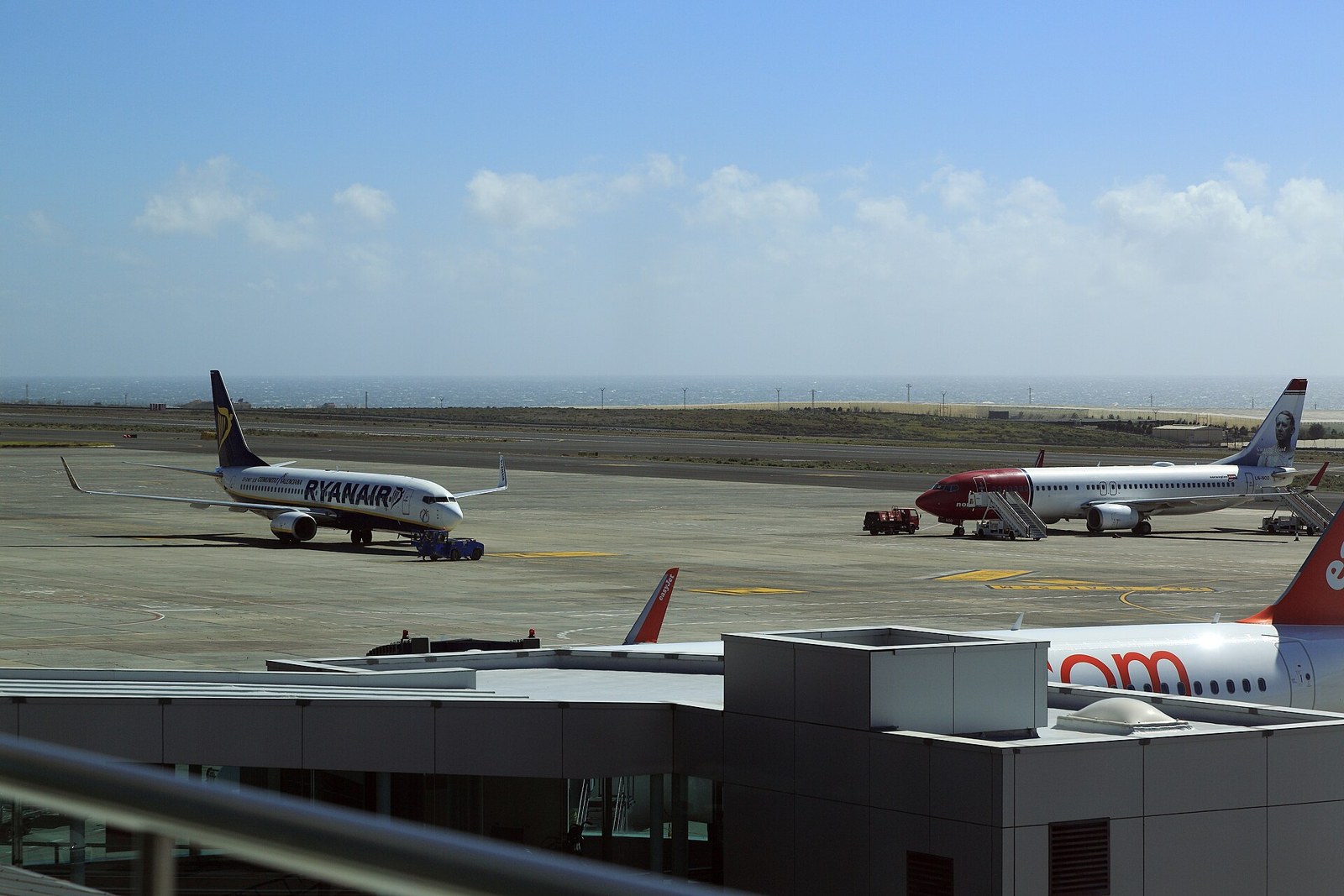
The order names no airports; article 2.4 leaves the list to instructions from the State Secretariat for Security. In practice it reaches the islands with direct connections to Italy: the Interior Ministry’s daily tallies list Tenerife South, Gran Canaria, Lanzarote and Fuerteventura — for 30 August, 30 identifications on seven flights at Tenerife South, 12 on two flights at Gran Canaria, 3 on two at Lanzarote and none on the single flight to Fuerteventura, a few dozen people a day across the whole archipelago. Diario de Avisos counted 37 direct routes and 73 weekly flights in August; some 60,000 Italians are on the islands’ municipal registers.
Spain is not alone — and two months is still a lot
The European Commission keeps every notification of temporary internal border control in a public list. The version dated 15 September 2026 names, besides Spain, Germany, Austria, Poland, France, the Netherlands, Denmark, Sweden, Norway and Italy. Italy checked first, from 1 August; Spain followed on 8 August. Interior Minister Matteo Piantedosi justified the Italian step on 13 August before parliament’s Schengen committee by the entry of around 72,000 third-country nationals into Ceuta on 30 and 31 July, in which Spain confirmed 83 deaths; he spoke of “controlli nei confronti dei soli cittadini di Paesi terzi (extra UE) provenienti dalla Spagna”. The Spanish order invokes the central Mediterranean route instead. Checks of this kind are not unusual in Europe right now — two months without free movement between two founding partners of the single market is.