What ended on 23 September
Article 74 of the 1988 Coastal Act and article 152.8 of the Coastal Regulation make a twenty-day public inspection compulsory in concession procedures. The publication that counts legally is the BOE of 26 August; the ministry's own public-participation page states the period: 27 August to 23 September 2026.
On La Oliva's board sits the document "1. Anuncio IP 21.08.2026", file 28552/2026, described as "ANUNCIO DE INFORMACIÓN PÚBLICA DE LA LEY DE COSTAS EN RELACIÓN CON FINCAS EN EL ISLOTE DE LOBOS". The publication date given is 23 September, the last day; the file's creation date is 27 August, the first. We could not open the PDF — error 403 — so we cannot say whether the municipal notice reproduces the BOE text word for word. A town-hall posting is additional publicity, not the legally required one. On 24 September we asked the council and the Demarcación why it came on the last day; no reply had arrived by the time of publication.
Which buildings are involved
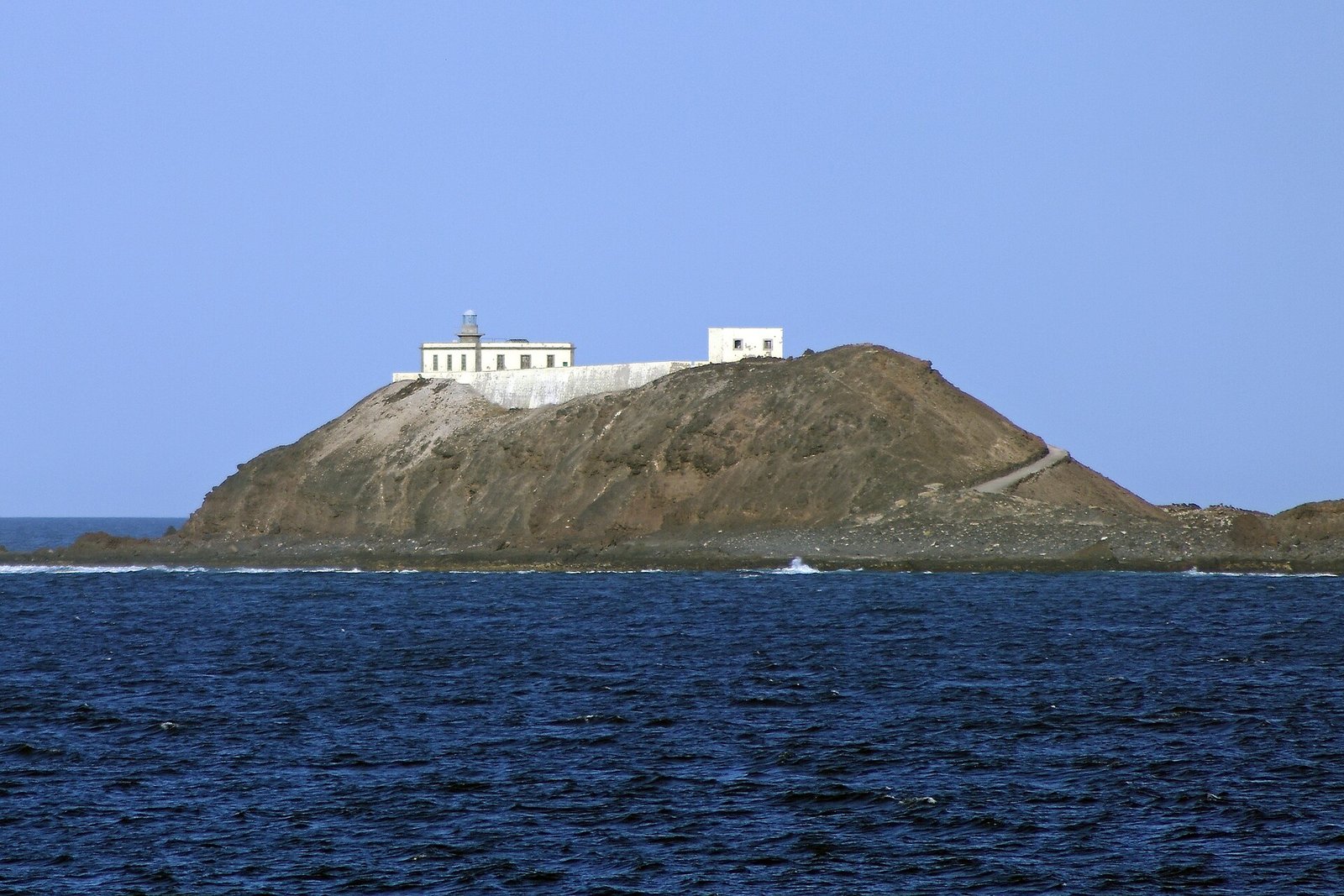
The BOE gives only numbers. The documentation published by the ministry, however, is organised by building: each of the 36 files carries the tag "Edif." and a number between 21 and 59, with 30, 31, 32, 44 and 55 missing and building 58 split into 58.A, 58.B and 58.C. The Demarcación's plans of May 2026 label the area "Casas El Puertillo". So these are the houses of the small settlement of El Puertito in the south — not the Faro de Martiño lighthouse in the north.
The basis is the coastal boundary known as "El Puertito" (C-DL-168), approved on 16 November 2001; the same plans also show an older one from 1970. How many houses stand there in total is not stated in the documents; Canarias7 wrote in February 2019 of "unas 60 viviendas", around 60 dwellings. These are private individuals' property questions: we name nobody.
Thirty years or seventy-five?
The 1988 Coastal Act turned the shoreline into public maritime-terrestrial domain. Anyone who owned land there lost it, but received a right of occupation and use instead of compensation. That is what Transitional Provision One governs. Its paragraph 1 grants the concession "por treinta años, prorrogables por otros treinta" — thirty years, extendable by another thirty, respecting existing uses and free of charge. Paragraph 4 fits the Lobos case: where a boundary existed before 1988 and a new one was drawn afterwards, the land in between falls under paragraph 1, and the one-year application window runs from approval of the new boundary. That explains the file: the applications are dated between 2002 and 2004.
The 75 years are not in that provision. They come from the 2013 reform: article 66.2 has since capped concessions at seventy-five years, and the transitional provision of Act 2/2013 extends the option of an extension to holders of a right under the 1988 provision — but only once the concession itself has been applied for.
What is still open
Any affected person could file submissions during the twenty working days. That window has closed. The files do, however, already contain submissions dated April and June 2026, lodged before the public inspection began.
What comes next is set out in article 152 of the Coastal Regulation: once the inspection is over, the competent body decides, where applicable after hearing the interested parties. The Demarcación sends the file up to the ministry with a report and a proposal; if a grant is in prospect, the applicant is told the conditions and has ten days to accept them. The maximum period is six months; if it passes without an express decision, the application is deemed refused. Decisions on concessions end the administrative route and can be challenged in the courts.
Protection, visitor quota and a pending reform
Lobos is strictly protected: a nature park coded F-1 under Canary Act 12/1994, a special protection area for birds and a Natura 2000 site coded ES7010031 covering 510 hectares. Access is capped: 200 people at a time, two four-hour slots, free LobosPass. The park's 2006 management plan recorded that some dwellings at El Puertito lie within the public maritime-terrestrial domain, carry "un expediente sancionador en Costas" — a sanction file with the coastal authority — and were pending demolition. Twenty years on, what is running instead is a concession procedure.
The same Demarcación is also under criticism over the Cueva de la Negra case in Pájara — a different procedure: that one concerns enforcement based on the 2005 coastal boundary, not a concession. On 29 April 2026 the Canary Parliament unanimously called for the state Coastal Act to be amended, eldiario.es/Canarias Ahora reported; PSOE deputy Rafael Nogales said there that the reform was "en el trámite de enmiendas", at the amendment stage in the Congreso de los Diputados.